
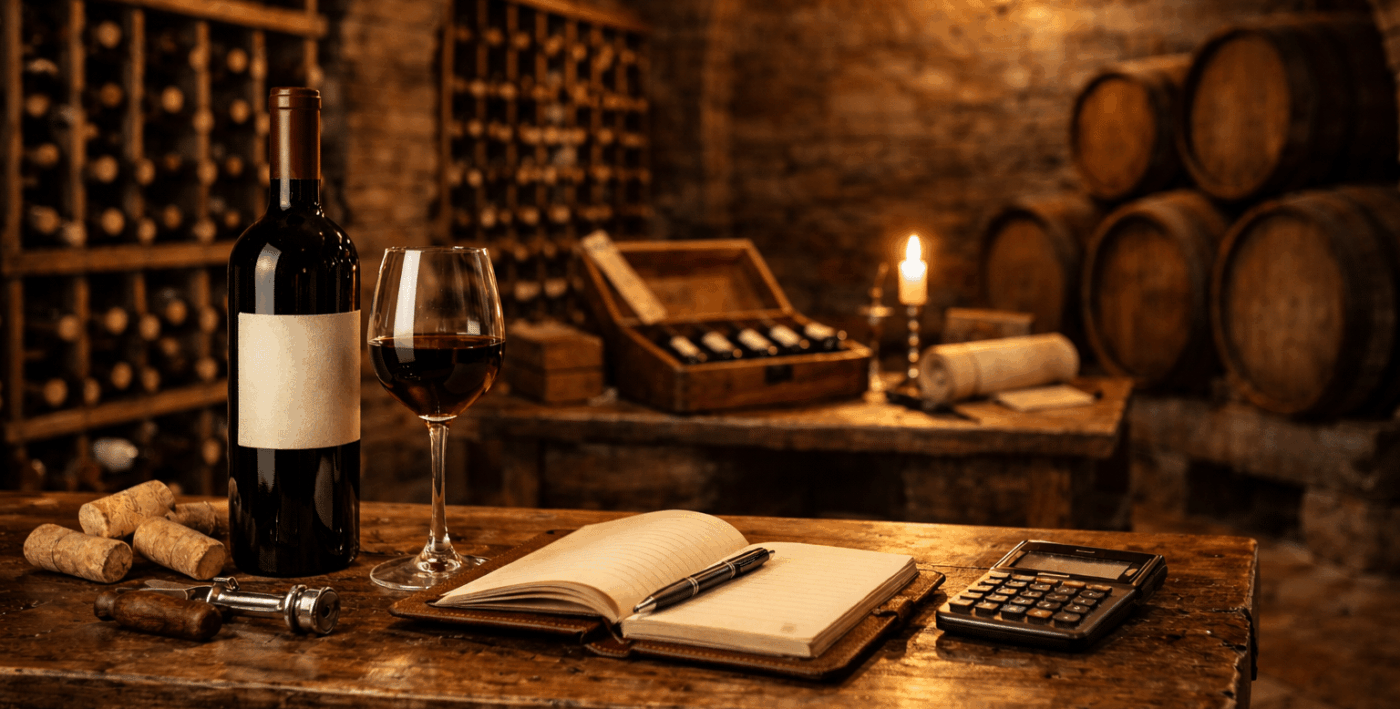
Investing in a wine cellar consists in assembling a carefully curated selection of bottles chosen for their potential to appreciate over time.
Such an investment rests upon rarity, intrinsic quality, proven ageing capacity and sustained market demand.
At once intellectually engaging and strategically sound, it allows one to reconcile personal pleasure with prudent wealth management — provided that certain fundamental principles are observed.
In this article, we shall explore why — and how — to invest in a wine cellar with coherence, discernment and long-term vision.
Why Consider Investing in a Wine Cellar?
Investment in wine is attracting growing interest for its tangible, cultural and even emotional dimension, while offering genuinely compelling prospects for appreciation.
A heritage asset capable of accruing value
Wine is a physical asset, readily stored and traded on established secondary markets. Certain rare bottles — particularly those from renowned estates — have a demonstrable capacity to increase in value over time, especially as available stocks diminish and provenance becomes ever more critical.
A passion that may become a placement
Unlike many traditional investments, fine wine allows one to reconcile pleasure with strategy. Building an investment cellar entails deepening one’s understanding of regions, vintages and stylistic nuances, whilst simultaneously constructing a portfolio of bottles with measurable resale potential. It is both an education and an asset-building exercise.
Anticipating the rise of great vintages
Truly great vintages are, by definition, produced in finite quantities. As they approach maturity and grow increasingly sought-after — whether for their critical acclaim, scarcity or optimal drinking window — prices may rise appreciably, particularly when the wines have been impeccably cellared under ideal conditions.
How to Choose the Type of Cellar Suited to Your Investment Strategy
The choice of cellar type is a decisive consideration when one intends to invest in a wine cellar. It directly determines the quality of the wines’ preservation, their capacity for appreciation, and the ease with which the collection may be managed over the long term.
Discover the various types of wine cellar available:
The electric ageing cabinet
The electric ageing cabinet is often favoured by those embarking upon their first acquisitions or seeking to secure an emerging investment. It ensures a stable temperature and appropriate humidity levels — both essential to the proper maturation of fine wines.
This type of cellar offers a dependable, adaptable and easily monitored solution, particularly well suited to urban environments or properties where space is limited.
The underground or semi-underground cellar
An underground cellar naturally benefits from stable temperatures and the darkness so conducive to the proper preservation of fine wine. It represents an ideal solution for long-term investment projects and substantial collections. Such a cellar also affords excellent protection against climatic fluctuations and vibration, both of which are inimical to graceful ageing and, by extension, to the preservation of value.
A dedicated space within a residence or estate
Designing a space expressly devoted to a wine cellar allows for a bespoke solution, tailored to the volume and style of bottles intended for storage. This approach offers considerable freedom in the selection of equipment and facilitates the monitoring and organisation of an investment cellar — particularly in the case of more ambitious, large-scale portfolios.
The dual-purpose cellar for storage and tasting
A dual-purpose cellar combines dedicated ageing zones with compartments designed to bring wines to their optimal serving temperature. It is particularly suited to investors who wish to reconcile patrimonial preservation with the pleasure of tasting.
Such a configuration enables the efficient management of a hybrid cellar — part investment portfolio, part personal reserve — while maintaining a disciplined and considered approach to asset allocation.
Key Criteria for Selecting Wines for an Investment Cellar
The selection of wines lies at the very heart of any investment strategy in a wine cellar. Choosing the right bottles ensures proper preservation, maximises potential appreciation, and mitigates the risks associated with market fluctuations.
Here are the key criteria to consider:
Renown of the estate and rarity of the cuvées
The reputation of the estate is a strong indicator of stability and potential for appreciation. Well-regarded properties enjoy consistent international demand. The rarity of the cuvées — whether due to limited production volumes or restricted allocations — further enhances the wines’ attractiveness on the secondary market.
Ageing potential of the vintage
An investment wine must demonstrate proven capacity to mature gracefully. This potential depends on the vintage, the wine’s structural balance, and the harmony between acidity, tannins and alcohol. Wines capable of evolving positively over several years — or even decades — offer the most promising prospects for value growth.
International demand and price stability
Wines sought after on a global scale benefit from superior liquidity. Stable, diversified demand helps limit price volatility and facilitates resale. Foreign markets often play a decisive role in driving the value of certain regions or appellations.
Critics’ scores and market trends
Scores awarded by wine critics directly influence perception and demand, providing a useful benchmark — though they should never serve as the sole criterion. Analysing market trends over multiple years enables investors to distinguish fleeting fads from enduring dynamics.
How to Organise an Investment Wine Cellar
Structuring an investment wine cellar involves organising purchases and storage according to a clear, patrimonial logic, with the aim of maximising the appreciation of bottles while controlling risk. We recommend following several key steps:
Balance young vintages with bottles ready to drink
A well-constructed cellar combines wines with long-term ageing potential and bottles approaching their optimal maturity. This distribution allows for resale opportunities at different horizons while maintaining flexibility in cellar management.
Diversify regions to mitigate risk
Geographical diversification is a fundamental strategy to safeguard the investment. By spreading acquisitions across multiple wine regions, the investor reduces exposure to climatic hazards, shifts in reputation, or market fluctuations specific to a single area.
Set an annual acquisition budget
Establishing a yearly budget encourages regular, disciplined investment and helps avoid impulsive decisions. This approach supports the gradual upgrading of the cellar and ensures better control over long-term expenditure.
Maintain a detailed tracking register
A comprehensive register records each bottle’s origin, purchase price, vintage, ageing potential, and market evolution. This tool is essential for managing an investment cellar effectively and facilitates any future resale.
How to Optimise the Preservation of an Investment Wine Cellar
The quality of storage directly determines the value of the wines held. Even the finest bottles lose their appeal — and their investment potential — if they are poorly conserved.
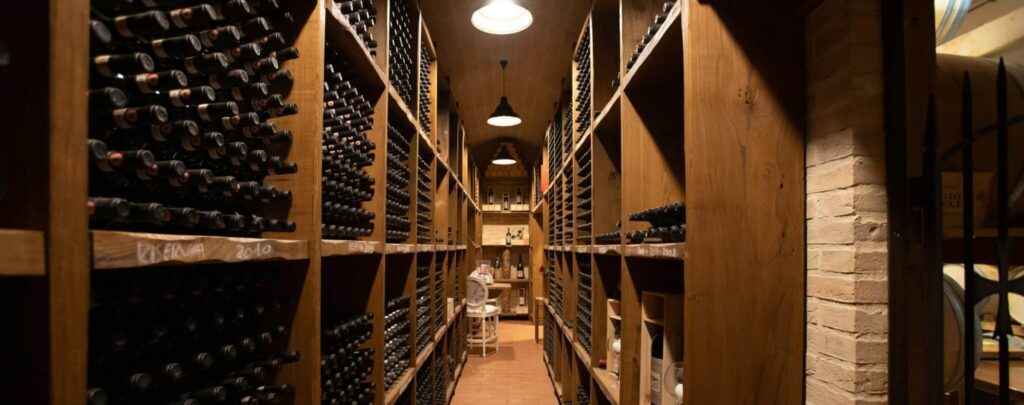
Here are some key recommendations to ensure proper conservation in an investment cellar:
Store bottles horizontally: Keeping bottles on their side ensures the cork remains in contact with the wine, maintaining a proper seal and optimising long-term preservation.
Maintain a constant temperature: Ideally around 12°C, a stable temperature is essential for harmonious ageing. Humidity must be sufficient to preserve the integrity of the corks and prevent them from drying out.
Protect from light: Exposure to light — particularly natural light — gradually deteriorates wine. An investment cellar should be kept in darkness or under very soft, occasional lighting.
Minimise vibrations and ensure ventilation: Repeated vibrations disturb a wine’s development. Adequate ventilation is also important to prevent odours and excessive humidity, both of which can harm the bottles.
How to Purchase Wines for Investment
Purchasing wine is a decisive step in the success of an investment cellar.
The chosen acquisition channel influences the purchase price, the traceability of the bottles, and their potential for future appreciation:
En primeur purchases
En primeur involves acquiring wine before it is bottled, usually shortly after the harvest. This method often allows access to highly sought-after cuvées at prices lower than those on the market once the wine is released. It does, however, require a solid understanding of estates, vintages, and long-term prospects, as short-term gains are never guaranteed.
Direct purchases from estates
Buying directly from the producer provides excellent traceability and complete knowledge of the bottles’ origin. This approach may also grant access to confidential cuvées or limited allocations and fosters a relationship of trust with the winemaker — an asset highly valued in a patrimonial investment strategy.
Auctions and specialised platforms
Auctions and dedicated wine platforms offer opportunities to acquire rare bottles, older vintages, or cuvées already at maturity. These channels demand expertise to assess the wine’s condition, provenance, and fair market value, but they represent an effective means of complementing an investment cellar.
Long-term perspective and eventual resale
Investing in wine is inherently a long-term endeavour. Resale should be anticipated at the time of purchase, taking into account the wine’s ageing potential, market demand, and the optimal moment to release bottles under favourable conditions.
Mistakes to Avoid When Investing in a Wine Cellar
Certain mistakes can undermine the value of a cellar, even when the wines themselves are of high quality:
Chasing trends without reflection
Following fleeting fashions can lead to impulsive purchases. A highly publicised wine does not always offer lasting potential. It is far preferable to rely on thorough analysis rather than being guided solely by current hype or temporary trends.
Storing under improper conditions
Inadequate storage can irreversibly damage wines and nullify any prospects for appreciation. Common errors to avoid include unstable temperatures, insufficient humidity, and exposure to light.
Selecting wines without genuine potential
Not all prestigious wines are meant for long-term ageing. Investing without assessing a wine’s longevity, structural balance, or future demand exposes the cellar to disappointment upon resale.
Neglecting insurance and bottle protection
An investment cellar represents significant financial value, which must be safeguarded. Comprehensive insurance, secure storage, and meticulous tracking of each bottle are essential components of responsible cellar management.
The Link Between Investing in a Wine Cellar and Acquiring a Wine Estate
Investing in a wine cellar can serve as a first step toward deeper involvement in the world of viticulture.
Indeed, building an investment cellar allows one to gain a clearer understanding of how wines appreciate, the dynamics of the market, and the factors that contribute to an estate’s reputation. This insight proves invaluable when considering, in the longer term, the acquisition of a vineyard.
Acquiring a wine estate offers the opportunity to oversee the entire production chain, from vineyard to cellar. Producing and ageing one’s own cuvées can thus serve as a powerful lever for both patrimonial and economic value creation.
However, such a venture requires specialised expertise.
Guidance from experienced professionals helps identify estates aligned with an investor’s objectives, assess their potential, and secure each stage of the acquisition process. Vineyards Bordeaux offers its experts to assist you in finding the right property.
Investing in a wine cellar relies on a structured approach, combining market knowledge, disciplined storage, and long-term vision. For many, this strategy represents an initial step toward a more ambitious viticultural project.
