

The Bordeaux vineyard, situated at the very heart of the Nouvelle-Aquitaine region, represents one of the most ancient and prestigious wine-producing territories in the world. Producing in excess of 680 million bottles per annum, it occupies a position of considerable importance within the global wine economy. The question arises, however: how does the Bordeaux wine region integrate itself into globalisation within an increasingly competitive and diversified wine marketplace?
This article examines the multiple dimensions of such integration, illuminating the dynamics of production, export, foreign capital investment, together with the adaptive strategies employed to meet the shifting demands of today’s consumers.
Global Production: How is the Bordeaux Wine Region Positioning Itself within Globalisation?
The Bordeaux vineyard, encompassing 57 Appellations d’Origine Contrôlée (AOC) and no fewer than 13,000 producers, stands as a true jewel in the crown of French viticulture. Annually, the region yields upwards of 680 million bottles, establishing it amongst the world’s principal wine producers. Production of this magnitude requires infrastructure and logistical arrangements of considerable scope—infrastructure capable of satisfying demand on a truly global scale.
A Production Devoted to Globalisation
A key hallmark of the Bordeaux wine region’s adaptation to globalisation resides in its ability to produce on a grand scale whilst preserving exceptional quality. Bordeaux wine finds its way to upwards of 170 countries, attesting to its truly global influence. Exportation represents some 32% of total production, thereby allowing the vineyard to secure its position across varied markets—from the most proximate in Europe to the furthest reaches of Asia and the Americas.
Globalisation has thereby afforded the Bordeaux wine region the opportunity to diversify geographically, cultivating growing demand in territories previously unacquainted with French wines. Markets such as China, Russia, India, and Brazil—witnessing considerable increases in wine consumption—have emerged as pivotal destinations for Bordeaux exports. In consequence, the local wine industry has found itself compelled to adapt, confronting new consumer profiles and the distinct demands of each marketplace.
Foreign Investment: A Catalyst for Global Integration
The Bordeaux wine region has equally become fertile ground for foreign investors, principally from China. According to a 2015 article by Nicolas Cesar, upwards of 100 Bordeaux wine estates were acquired by Chinese investors within the span of five years. The Chinese, who now represent nearly 47% of foreign investors in the region, perceive the purchase of Bordeaux châteaux as emblematic of social status and luxury. This bears witness to China’s growing influence in the world of wine, and most particularly within the Bordeaux region.
Nicolas CESAR, “How Much Weight Do Chinese Investors Carry in Bordeaux Wines?“, 10th June 2015.
The Drivers Behind Chinese Investment
Chinese investments are driven not merely by an appreciation for wine quality, but also by socio-cultural imperatives. In China, French wine—particularly that of Bordeaux—stands as a byword for social achievement and distinction. The ownership of a Bordeaux wine château serves as a vehicle for the display of considerable wealth and entrée into an exclusive élite circle. Furthermore, such investment adheres to a long-term strategic rationale. The Chinese market is undergoing vigorous expansion, and investors are seeking to secure their portion of this burgeoning demand for haute gamme wines.

European Investment: A Partnership Steeped in History
The Belgians, possessing an historical presence within the Bordeaux wine region, account for some 21% of foreign investment. Their interest in Bordeaux stems largely from familial and cultural connections, with numerous Belgian families having been engaged in Bordeaux viticulture across generations. In contrast to the Chinese, Belgian investors are frequently motivated by a passion for wine, though equally by opportunism within a market with which they are thoroughly acquainted. This illustrates that, whilst the Bordeaux vineyard undergoes internationalisation, it nonetheless preserves strong ties with traditional European investors.
Wine Tourism: A Fresh Avenue for Expansion
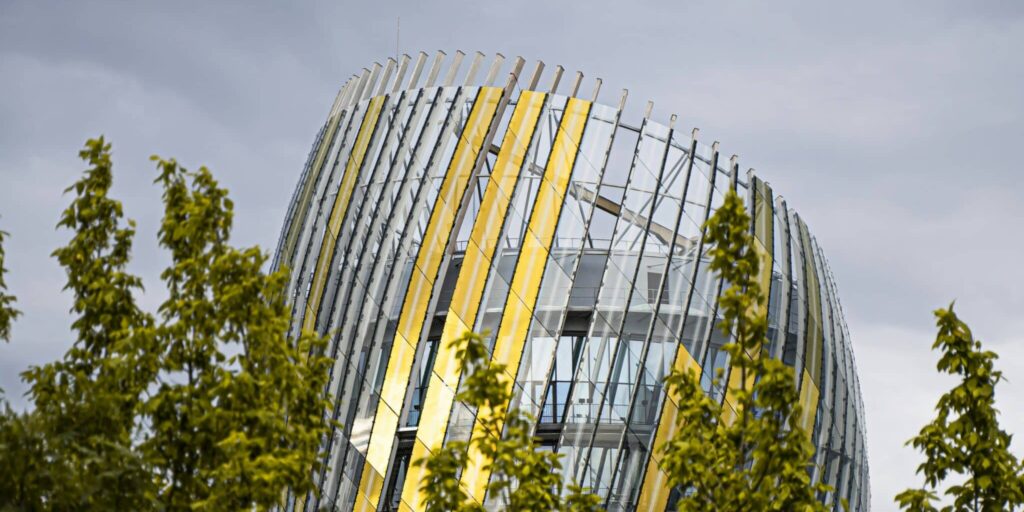
Oenotourism represents a sector which has witnessed truly explosive growth in recent years, and Bordeaux has proved no exception to this trend. The Bordeaux wine region attracts millions of visitors annually, drawn by the prospect of exploring its prestigious wine properties and sampling the celebrated reputation of its vintages. La Cité du Vin, opened in 2016, serves as an emblematic manifestation of this strategy for global integration. This interactive museum, devoted to the art of wine and viticultural cultures the world over, enables visitors to discover not merely the wines of Bordeaux, but those hailing from upwards of 80 nations.
A Public-Private Collaboration to Foster Wine Tourism
The Cité du Vin project secured financing through a blend of public funding (the European Union, central government, and regional authorities) and private investment (Bordeaux vintners and international benefactors). Such diversified patronage attests both to foreign investors’ keen interest in the viticultural patrimony of Bordeaux and to local stakeholders’ ambition to enhance Bordeaux’s lustre upon the world stage. Wine tourism thereby emerges as a novel showcase for Bordeaux excellence, drawing visitors from every corner of the earth whilst bolstering Bordeaux’s influence within foreign markets.
In Pursuit of Sustainable Viticulture: Addressing Worldwide Requirements
The Bordeaux wine region faces considerable environmental imperatives. The widespread deployment of pesticides and herbicides within viticulture has provoked censure from ecological associations and neighbouring residents. Mounting consumer pressure for sustainable and organic produce likewise obliges the Bordeaux wine industry to fundamentally reassess its agricultural methodologies.
A Commitment to Sustainable Farming
In response to these preoccupations, Bordeaux vintners have made commitments towards sustainable development. Bernard Farges, President of the Conseil Interprofessionnel du Vin de Bordeaux, has declared that the vineyard’s aim is to achieve a substantial reduction in pesticide use. Research is furthermore underway to cultivate disease-resistant grape varieties, thereby diminishing reliance upon chemical interventions. This aligns with a broader global movement designed to satisfy burgeoning consumer demand for products of greater environmental integrity. Bordeaux actors are consequently investing in innovation so as to preserve their competitive edge within international markets.
Research as a Tool for Adaptation
Globalisation implies not only an adjustment to production methodologies, but equally an ongoing adaptation to consumer expectations. Consequently, research into disease-resistant grape varieties and environmentally benign agricultural practices has emerged as a priority for the Bordeaux industry. Such initiatives serve to burnish the vineyard’s reputation, whilst concurrently addressing burgeoning demand for products that are both healthier and more ecologically sound.
The Success of Global Integration
The Bordeaux wine region stands as an exemplar of successful global integration. By means of large-scale production, a commanding presence within international markets, considerable foreign investment, the cultivation of oenotourism, and a pledge towards sustainability, Bordeaux persists in reinventing itself to confront the challenges of the twenty-first century.
In essence, the Bordeaux wine region achieves global integration through a harmonious blend of tradition, innovation, international engagement, and environmental stewardship. It represents a paradigm of successful adaptation within a viticultural landscape in the midst of profound metamorphosis.
