

“Valuing a wine estate consists of analyzing all the elements that determine a property’s true worth. It is not simply a matter of looking at the vineyard’s surface area or the aesthetics of the buildings. A proper valuation accounts for the vines, the terroir, the appellation, the buildings, production potential, financial standing, the legal framework, and the estate’s overall brand image. Prior to any transaction, this appraisal is essential to secure the purchase or sale and to analyze the property’s market positioning.
As you will have gathered, the valuation of a wine estate is a comprehensive analysis of the entire operation. It aims to measure its asset value, economic potential, the quality of its production tools, and the future prospects it offers a potential buyer.
Within the context of a transaction, this step helps avoid errors in judgment, prepare a coherent negotiation, and better understand both the estate’s strengths and its red flags. To achieve this, several key criteria must be analyzed methodically. Vineyards Bordeaux breaks them down for you!
Further reading: Why buy a wine estate?
What criteria should be analyzed when buying a vineyard?
The first step in valuing a wine estate consists of examining the vineyard itself. Indeed, the value of a vineyard property for sale rests largely on the quality and consistency of its production tool.
The total farmed surface area serves as an initial benchmark. It provides an overview of the estate’s scale, but must be interpreted with nuance: a small acreage located within a highly sought-after appellation may hold more value than a larger holding in a less prestigious area. Planting density must also be considered, as it influences vineyard management, farming costs, and, at times, qualitative positioning.
Varietal breakdown (the mix of grape varieties) is another central criterion. It partly determines the wine style, commercial potential, and the estate’s ability to meet market demands. A varietal mix that is consistent with the appellation, the terroir, and the estate’s strategy is a favorable factor in the valuation.
The average age of the vines and their sanitary status must also be studied closely. For instance, vines that are too old may require replanting in the medium term, while young plots may not yet have reached their full potential. Furthermore, the sanitary status provides insight into the level of vineyard maintenance, potential agronomic risks, and the quality of the estate’s management.
Another vital criterion is the terroir. This plays a major role when evaluating a wine estate. Soil composition, plot exposure, local climate, and topography directly influence grape quality and production consistency. A renowned terroir brings significant added value, especially when expertly farmed.
The appellation is equally decisive. A property located within a prestigious appellation generally benefits from a higher valuation than a comparable estate in a less recognized area. This reputation impacts the property’s image, wine prices, commercial appeal, and resale potential. In vineyard real estate, the appellation remains a powerful marker of value.
Production potential completes the vineyard analysis. One must observe the yields achieved, their regularity, and their alignment with the estate’s qualitative positioning. A controlled yield level can reveal professional management, whereas yields that are too low or too unstable may raise questions about the vineyard’s health or production strategy.
Finally, note that you can also identify growth prospects. Indeed, some plots offer strong potential following replanting, restructuring, or a shift in farming practices. An estate may thus present immediate value, but also a potential for upside that is particularly attractive to certain buyers.
Read: How does a wine estate work?
What criteria should be considered when analyzing buildings and facilities?
A wine estate for sale is not limited to its vines. To accurately evaluate a vineyard, one must also examine all the buildings and equipment involved in the operation.
The general condition of the cellars (chais), vat rooms, and technical facilities is essential. This assessment determines whether the production tool is operational, meets current needs, and if it requires short-term investment. An older but well-maintained vat room does not have the same financial impact as a dilapidated facility requiring a major overhaul.
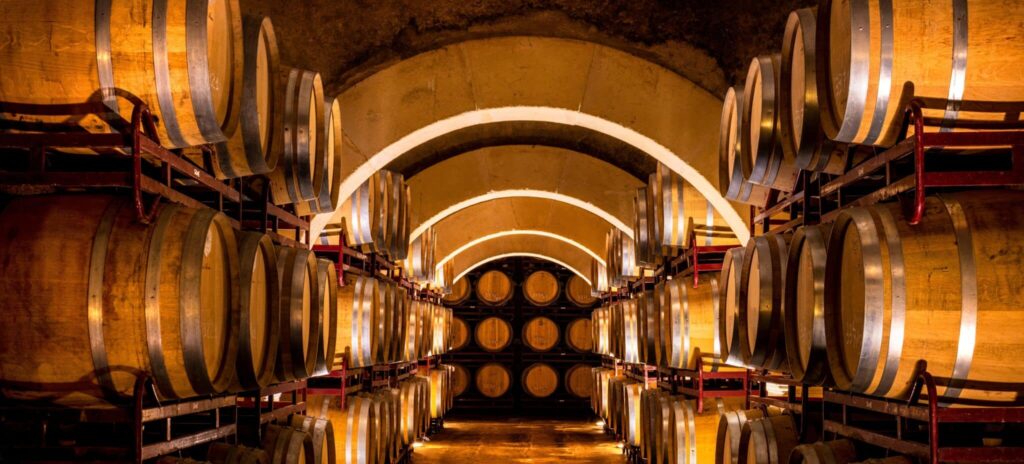
Storage capacity is another key metric to evaluate. It must be consistent with the production volume, the aging process (élevage), and the estate’s ambitions. The level of equipment modernization is also a factor. Depending on the buyer’s project, a high-performance facility can represent an immediate advantage, while a more traditional site may appeal for its authenticity, provided its operation remains viable.
Residential buildings, historic manors, and outbuildings are also included in the evaluation. A maison de maître, a château, staff housing, or annex buildings can significantly enhance the estate’s heritage value. They influence the property’s image, its utility, operational comfort, and sometimes its potential for diversification.
Assessing real estate value
This section addresses the physical structures of the estate, which are often as much an emotional investment as a financial one. Here is the professional translation:
English Translation
“The valuation of the buildings is based on their rarity, condition, and architectural significance. A property featuring a harmonious set of buildings—well-preserved and representative of local viticultural history—can command a premium valuation.
Architectural charm has a genuine influence, particularly for prestige estates. A historic manor house, a characterful winery (chai), or restored outbuildings all contribute to the property’s appeal. However, general maintenance remains the deciding factor. An attractive but heavily dilapidated site will require investments that will offset the final valuation.
How to conduct a financial analysis of the estate?
To evaluate a wine estate, financial analysis is essential. It allows one to move beyond a purely asset-based view to assess the operation’s economic strength.
While revenue (turnover) provides an initial indication, it must be put into perspective alongside expenses, the cost structure, and actual profitability. An estate generating high sales without controlling its expenditures does not hold the same value as a more modest but well-managed operation.
The production history and vintage sales also provide useful insights. They reveal the consistency of the business, the estate’s ability to move its inventory, and its market positioning. It is important to analyze this data over several years to distinguish sustainable performance from one-off results.
Available stock (inventory) must be factored into the valuation. In a wine estate, inventory can represent a significant portion of the total value, particularly if the wines are already aged, bottled, or ready for sale. Commercial contracts, the quality of the client portfolio, and the stability of distribution channels are also key structural elements.
Understanding the business model
The estate’s business model requires a specific analysis. It is essential to understand how the property is positioned in the market, its price points, the distribution channels it targets, and the brand image it is developing.
Some estates prioritize direct-to-consumer (DTC) sales, while others work with wine merchants (négociants), importers, the hospitality sector (Horeca), or specialized networks. This distribution strategy directly influences margins, revenue stability, and growth prospects. A well-positioned estate, backed by a recognized brand and a coherent commercial network, can justify a higher valuation.
How to assess the legal and administrative standing?
The legal and administrative status is one of the key points to be verified with precision. To accurately evaluate a wine estate, it is essential to ensure that the property’s perimeter, the rights attached to the asset, and all regulatory obligations are perfectly identified.
Title deeds and land boundaries must be audited. The exact consistency of the plots must be confirmed, cadastral records cross-checked, and all ambiguities regarding what is actually being transferred must be resolved.
Easements and planting rights must also be examined. These can have a direct impact on the vineyard’s operation, its future development, and its economic attractiveness. Likewise, compliance with viticultural regulations must be validated to ensure a buyer does not discover unanticipated constraints after the fact.
What external factors can influence the value of a wine estate?
The value of a wine estate also depends on factors external to the operation itself. For instance, the estate’s reputation plays a significant role. A property that is well-known, recognized for the quality of its wines, or well-established in its market often enjoys a valuation premium.
Wine tourism potential can also carry weight in the appraisal. An estate located in an attractive region, boasting a remarkable setting or buildings suitable for hosting the public, can develop a complementary, value-creating activity.

The scarcity of the appellation and local dynamism also influence the price. In certain highly sought-after areas, the limited number of available properties mechanically increases market tension. The local environment, the quality of infrastructure, the region’s image, and the economic vitality of the territory must therefore be taken into account.
Valuation methods used by experts
To value a wine estate, experts generally rely on several complementary methods. No single method is sufficient on its own, as a viticultural property combines agricultural, real estate, economic, and heritage dimensions.
The Asset-Based Approach consists of estimating the various assets that make up the estate. It takes into account the land, the vines, the buildings, the equipment, and sometimes the inventory. This method provides a concrete foundation, which is particularly useful for assessing the value of physical assets.
The Income-Based Approach focuses on the estate’s capacity to generate economic results. It analyzes revenue, profitability, development potential, and the overall performance of the operation. This method is especially relevant for buyers who view the estate as a production tool and an economic asset.
The Market Comparison Approach relies on observing similar transactions in the market. It allows the estate to be positioned against comparable benchmarks in terms of surface area, appellation, building quality, or production potential. In practice, experts often cross-reference these three approaches to build a more accurate valuation.
The importance of a comprehensive audit before purchase or sale
Before an acquisition or divestiture, a comprehensive audit remains indispensable. It allows for the consolidation of the valuation and reveals any discrepancies between the initial perception of the property and its technical or economic reality.
Technical inspections must cover the vineyard, facilities, buildings, equipment, renovation needs, and actual production capacities. A valuation made without a serious audit can lead to underestimating future costs or overestimating the estate’s potential.
The risks associated with a rough estimate are significant. A buyer may overpay for a property, while a seller may misprice their asset and delay the transaction. In both cases, a lack of precision weakens the project.
Engaging specialized viticultural, real estate, legal, and financial experts provides a more complete perspective. In the context of a high-end transaction, this support is particularly useful for securing the decision and defending the fair value of the estate.
In summary
To reliably value a wine estate, several levels of analysis must be cross-referenced. The vineyard, the terroir, the appellation, the buildings, the equipment, the financial data, the legal status, and external factors all contribute to the property’s final value. A serious appraisal can therefore never be limited to a single criterion.
In a market as specialized as vineyard properties, guidance from specialists provides a more accurate reading of the estate, secures the transaction, and helps anticipate the project’s real challenges. Whether you are a seller, an investor, or a future buyer, consulting industry experts remains the best way to move forward methodically.
To discuss your current project and discover available wine estates, Vineyards Bordeaux, an agency specializing in prestigious viticultural transactions, is available to answer all your questions!
