
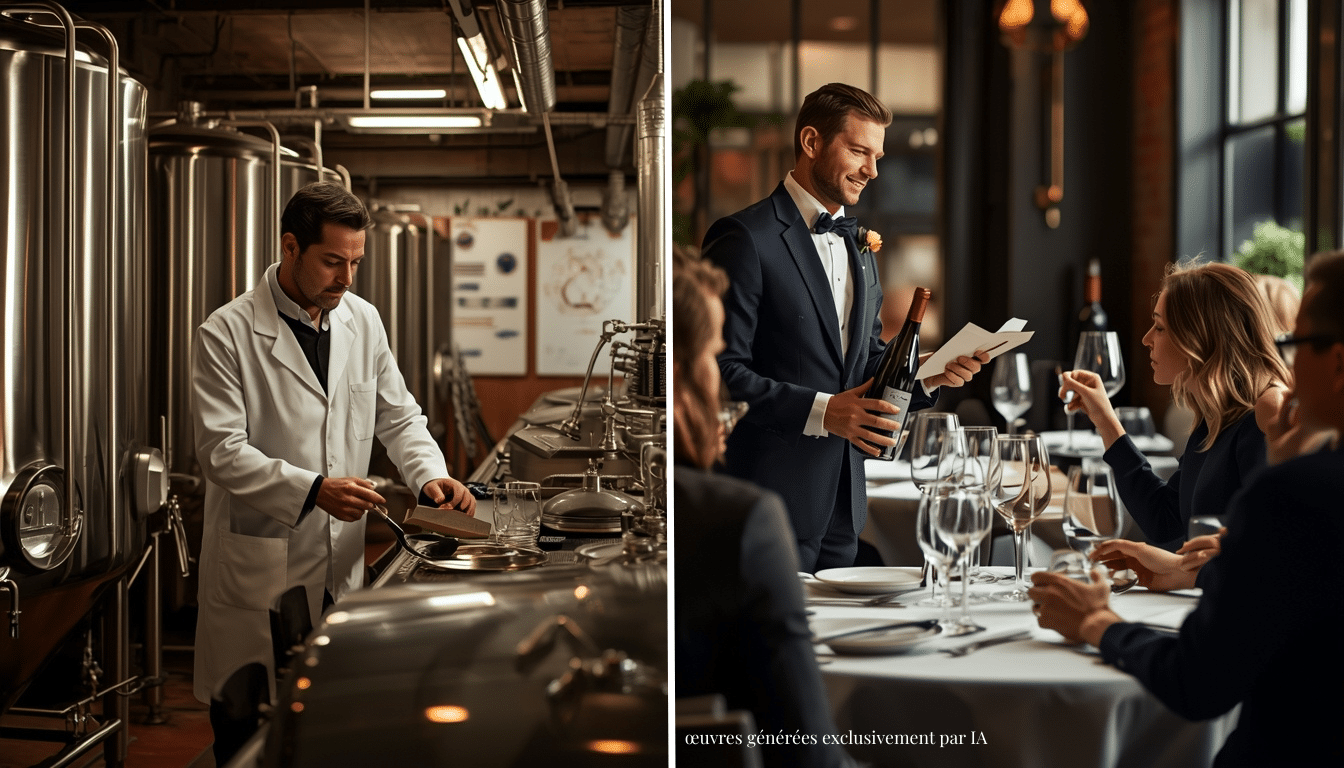
An oenologist and a sommelier work in two complementary but profoundly different professions. One is involved in the development of wine, at the heart of a winery, while the other specializes in its tasting, service and pairing with dishes. Understanding the difference between oenologist and sommelier will help you better understand the world of wine, its professions and know-how.
What is an oenologist?
The oenologist is a qualified professional with advanced scientific training. Chemistry, biology, sensory analysis, microbiology: it masters the phenomena that influence the quality of wine, from the vine to the bottle.
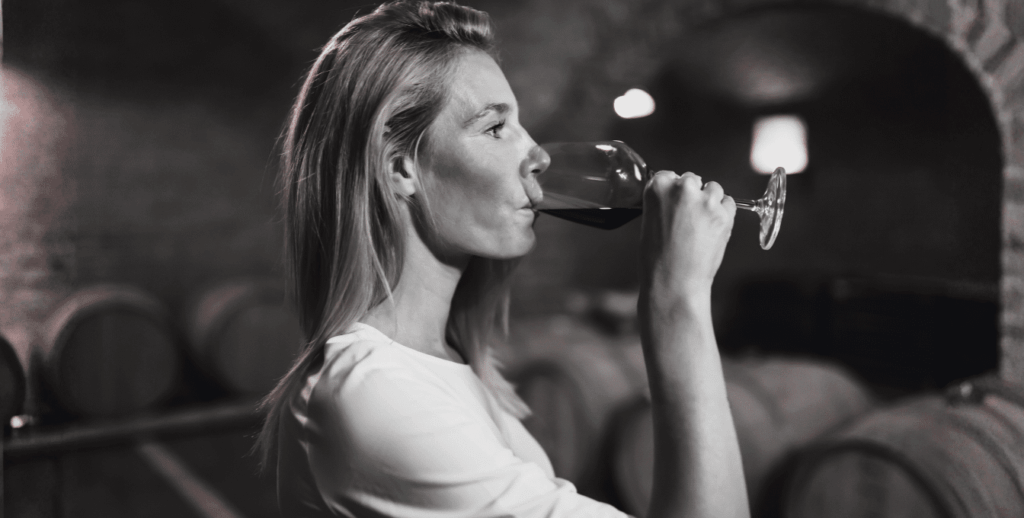
What is the role of the oenologist in making wines?
It accompanies each step of the vinification: choice of grape varieties, monitoring of fermentations, breeding, blending, control of aromatic balances and texture. Thanks to his skills, he guarantees the faithful expression of the terroir and the vintage.
What is the difference between viticulture and wine-growing?
Technical interventions in wine estates
The oenologist intervenes directly in wine properties. He advises the winemakers on the management of the vineyard, the health condition of the grapes, the grape harvest, the control of aromas or even the tannic structuring of the cuvées.
How to ensure the management of a vineyard?
What is the link between oenologist and wine quality?
Its mission is to reveal the identity of the estate and preserve the purity of the wine. His decisions influence the material, the length, the finesse and the harmony of the vintage.
What is a sommelier?
The sommelier is an expert in the wine service. Trained in tasting, wine pairings and the art of advising customers, he embodies the link between the bottle and the table.
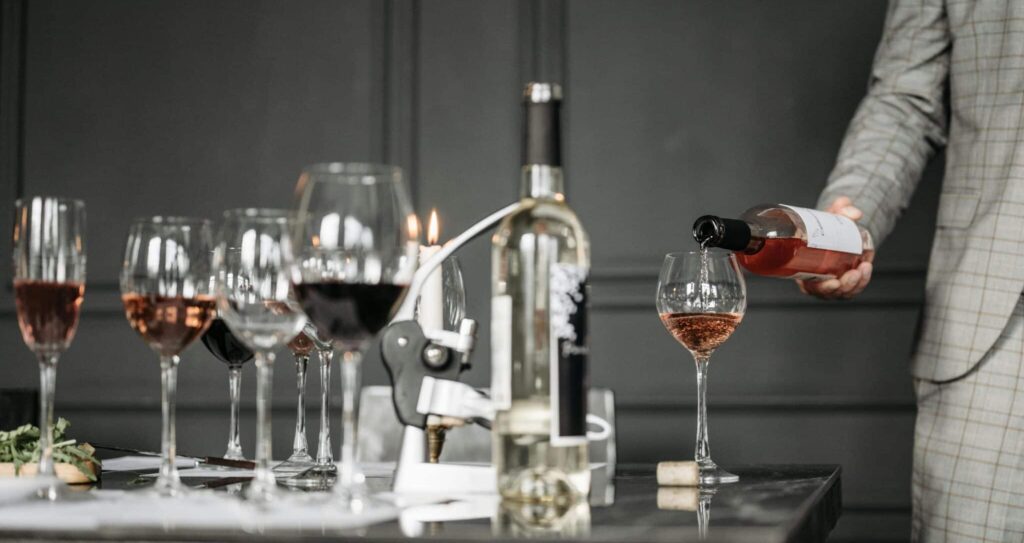
What is the role of the sommelier in restaurants and professional cellars?
Present in gourmet restaurants, upscale hotels or specialized cellars, the sommelier selects wines, composes the menu, ensures conservation and highlights the appellations.
Advice to clients and wine pairings
The sommelier can guide clients in wine pairings. He can guide them in their choice according to their tastes, their dishes and the characteristics of the wines. Its sensory expertise allows it to harmonize textures, aromas and intensities.
Cellar management in high-end establishments
The sommelier can also have different roles, usually in high-end establishments: he manages stocks, monitors vintages, organizes tastings and even offers experiences around wine.
What is the difference between an oenologist and a sommelier?
One of the main differences between an oenologist and a sommelier lies in the moment when each intervenes. Indeed, the oenologist will perform his role before the bottle arrives on the table. The sommelier, on the other hand, operates once the wine is finalized, at the time of its tasting and valorization.
Another difference concerns their relationship to the product: the oenologist creates and controls, while the sommelier selects, advises and sublimates.
The skills of each are also different: one is based on scientific rigor, the other on sensory mastery, knowledge of appellations and relationship with customers.
Finally, the working environment is not the same for everyone: the oenologist works in the vineyards, the cellars and the laboratories. The sommelier, for his part, evolves in restaurants, cellars, professional salons or prestigious establishments.
Which profession to choose according to one’s interest in wine?
Choosing to become an oenologist or sommelier depends on your interest in wine:
If you like to understand fermentations, aromas, matter and balances, oenology is an ideal path.
On the other hand, if you are looking for a profession focused on service, gastronomy and sharing, the profession of sommelier will suit you better.
On the other hand, both professions can lead to working in a wine estate. Indeed, the oenologist intervenes in the creation, while the sommelier contributes to the enhancement of wines among visitors and buyers.
Why are these two professions complementary in the world of wine?
Although different, the oenologist and the sommelier can have complementary roles in the wine sector:
Their role in enhancing a terroir
The oenologist reveals the identity of the vineyard. The sommelier tells, transmits and shares it.
A collaboration in estates and castles
In wine estates, these two professionals sometimes work together to offer a complete experience to visitors, from the vines to the tasting.
A common influence on the reputation of a wine
The technical precision of one and the sensorial staging of the other reinforce the reputation of a name or domain.
What is the link between these professions and the purchase of a wine property?
For a future owner, the opinion of an oenologist is precious: it can provide valuable information on the quality of the soil, the potential of the vineyard, the state of the cellar, the balance of the cuvées, or even the prospects for the development of the estate.
A sommelier, for his part, can guide on the creation of a tour route, a tasting room or a high-end reception strategy.
How our agents support buyers in their property projects?
Our specialized agents accompany enthusiasts in the search for vineyards for sale adapted to their objectives, whether it is an investment, a residence or a professional project.
Oenologist and sommelier occupy two essential roles in the world of wine. One shapes the wine, the other highlights it. Together, they participate in the enhancement of a terroir, an appellation and a domain. If you wish to explore the wine properties of the South West or benefit from personalized support, our experts are at your disposal.
