
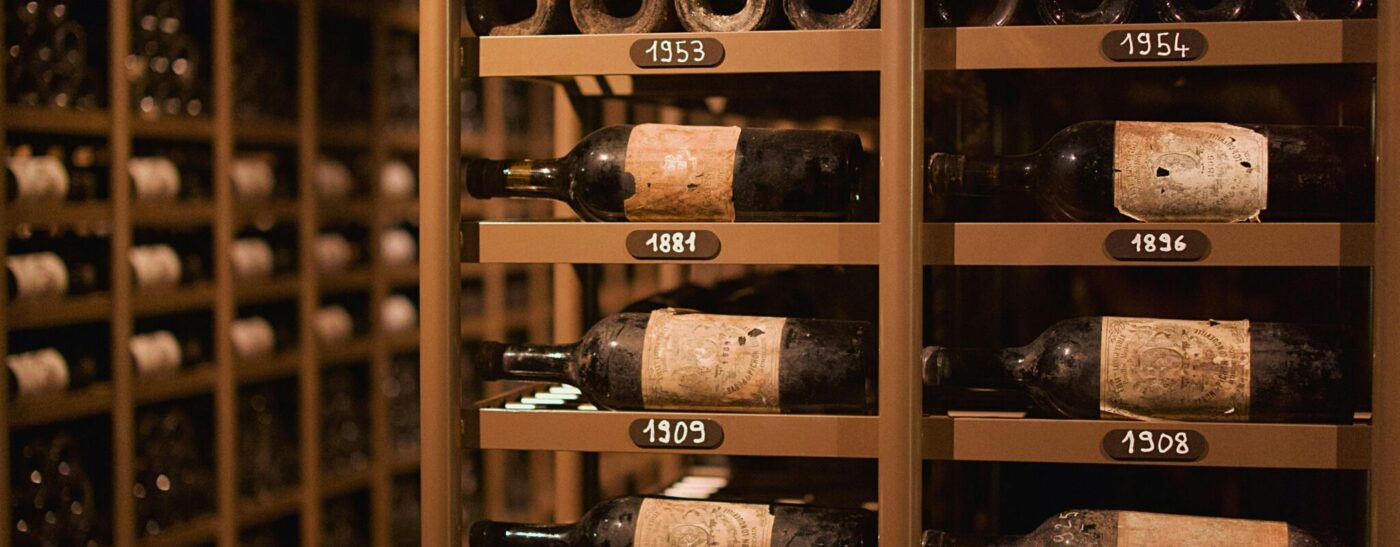
Seting up a wine cellar at home allows you to store your bottles in ideal conditions while creating an elegant space dedicated to tasting. Whether you’re a passionate enthusiast or an experienced collector, a well-designed cellar ensures the preservation of aromas, the proper aging of vintages, and a true enhancement of your wine collection.
This article explains step by step how to set up a wine cellar.
Why set up a wine cellar at home?
Creating a wine cellar on your property primarily means giving yourself the ability to store your bottles in a controlled environment, safe from temperature and light fluctuations. This dedicated space allows you to buy in larger quantities, and of higher quality, to plan your future tastings, and to monitor the evolution of your wines in the best possible conditions.
Enhance your property with a wine cellar
A well-designed cellar adds real character to a home. It can even become a signature feature that appeals during a resale or enhances the charm of a luxury property. Thoughtful fittings, inspired by vineyards, bring an aesthetic dimension to the space.

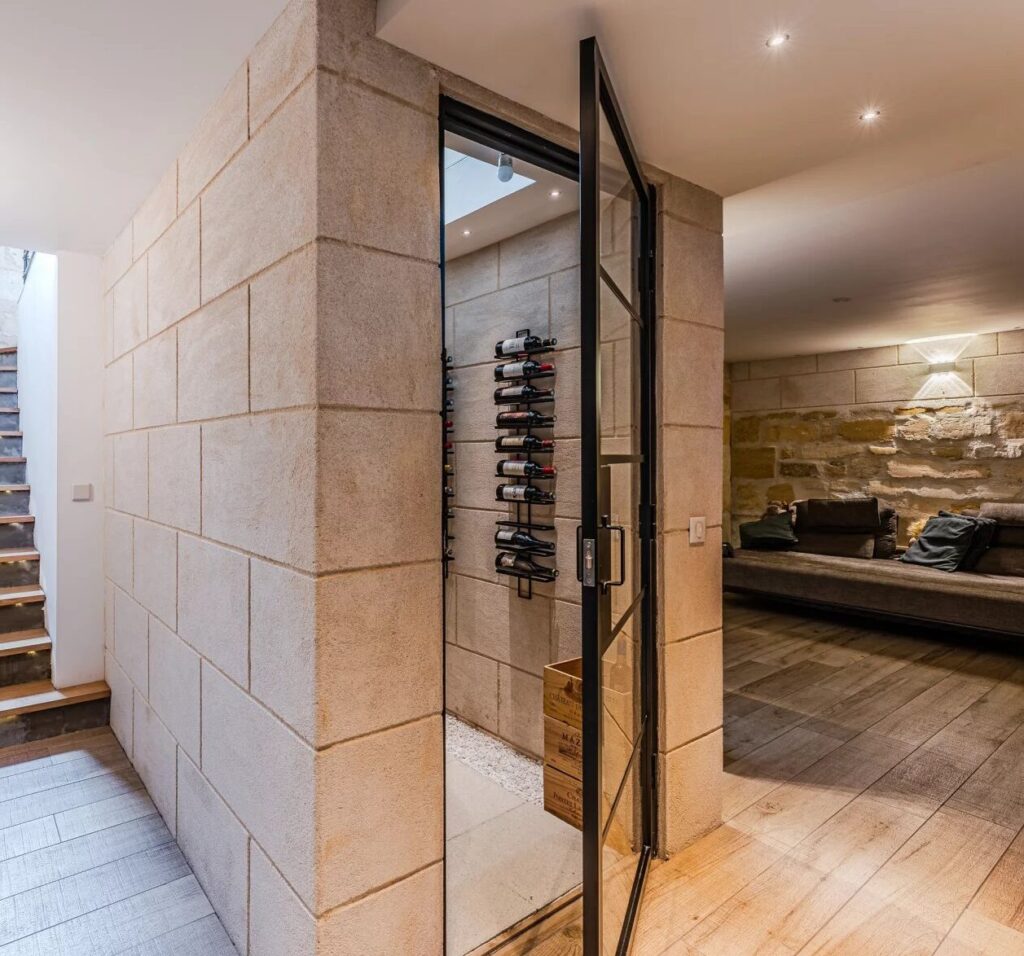

Example of a cellar in property GF1024
A first step towards a winemaking project
Having a personal cellar also paves the way for a broader passion — that of the terroir and vineyards. Many enthusiasts start by storing wine, then consider acquiring a vineyard, a wine-making facility, a plot of land, or even entire vineyards to take their interest further.

What are the criteria for an optimal wine cellar?
To properly set up a wine cellar, several factors need to be considered:
Temperature and stable thermal conditions
Wines should be stored at around 12°C (54°F), with minimal fluctuations to avoid thermal shock. This is essential for preserving their aromatic balance.
Controlled humidity to protect the bottles
A humidity level between 60% and 80% keeps corks in perfect condition. If it’s too dry, corks shrink; if too humid, labels can be damaged and mold may develop.
Absence of vibrations and light
Vibrations accelerate aging and disturb sediments, while light — especially sunlight — degrades delicate aromas. A cellar should be a quiet, dark space, isolated from the outside world.
Quality insulation and proper ventilation
Air should circulate in the cellar without excess, preventing stale odors while maintaining the ideal environment for wine storage.
Where should you install a wine cellar in a house?
When setting up a wine cellar, several locations within a property can be considered:
In a traditional basement
The basement is the ideal location: cool, stable, and naturally shielded from light. It is the preferred space for enthusiasts who have a home with a lower, underground level.
In a dedicated room converted into a cellar
If you don’t have a basement, another available room can be converted into a cellar using efficient climate control systems. Be careful, though, the insulation must be flawless.
In a fully or partially underground wine cellar
Underground cellars are inspired by traditional constructions. They provide conditions very similar to those of vineyard wine cellars.
Having a wine cellar in an apartment
Even in an apartment, it’s possible to create a cellar using high-end wine cabinets. They replicate the conditions of a wine-making facility in a compact and elegant form.
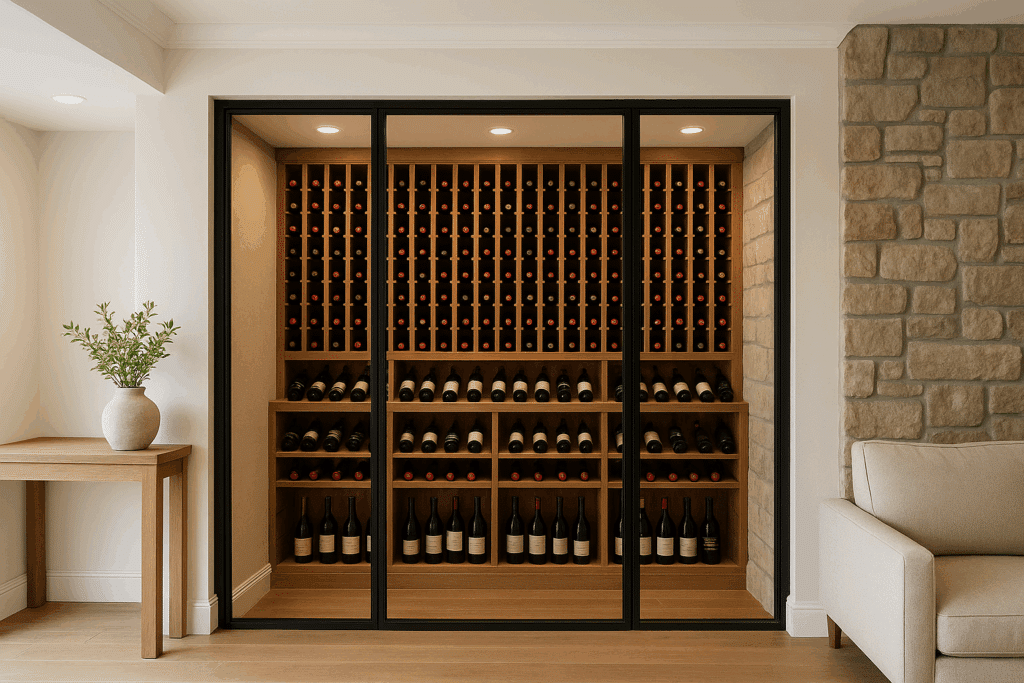
AI-generated image – this is a conceptual rendering intended to illustrate the idea.
How to organize the interior of a wine cellar?
Once the right location is chosen, it’s essential to properly arrange the interior of your cellar. Several factors need to be considered:
Choose storage suited to your collection
It’s important to select storage that fits your bottles. Modular racks made of wood or metal can accommodate different bottle sizes and make it easier to rotate your vintages.
Organize bottles by type or region
A clear organization helps you find your wines quickly and allows you to track their development over time.
Incorporate a tasting area
A small space with a table, glasses, and soft lighting turns the cellar into a place for sharing. It’s the perfect setting to showcase your wines in a professional and welcoming way!
Choose the right materials for durable design
Wood, stone, raw metal, or polished concrete provide an authentic aesthetic and adapt well to humidity fluctuations.
Which equipment to choose for a wine cellar?
Proper equipment is essential to ensure an excellent environment for your bottles:
Install temperature control systems
Specialized air conditioners, cold rooms, or integrated solutions maintain a constant temperature year-round.
Humidity control
Humidifiers or dehumidifiers ensure a stable level to protect corks and labels.
Use appropriate lighting to preserve aromas
Opt for soft, UV-free LEDs to prevent any alteration of the wine.
Security and bottle protection
A discreet locking system, an insulated door, and possibly an alarm will safeguard your collection. This is especially important for high-value bottles.
Calling on a professional to set up your wine cellar
If you want to set up a wine cellar on your property but aren’t sure how to go about it, it may be worthwhile to hire a professional to handle it for you. Investing in a home that already has a fully equipped wine cellar is also an option.
Why seek professional assistance?
An expert will ensure that all technical parameters are properly managed, from selecting materials to sizing the climate control system.
How to choose a reliable expert?
Favor professionals specializing in wine cellar design, with solid references and a deep understanding of technical requirements.
What is the difference between “viticole” and “vinicole”?
Engage a specialist agent in vineyard properties
A specialist in viticultural properties understands vineyard best practices and can support you in a broader wine-related project.
Develop your project with Maxwell-Baynes | Christie’s International Real Estate
Our specialists can help you identify estates suited to your project, whether you are seeking a professional venture or a unique living experience.
Setting up a wine cellar at home means creating an elegant and functional space that preserves your bottles and enhances the tasting experience. If you want to take your wine-related project further, feel free to explore the vineyard properties available on our website or contact an expert for personalized guidance.
