
Wine Estates · Reference Guide · Approx. 14 min read
France grows wine on roughly 750,000 hectares, across regions that share almost nothing in climate or grape. Everything in one principle: that a wine should carry the signature of its ground.
A Riesling vine in Alsace and a Grenache vine near Avignon share one rulebook and almost nothing else. This guide is for readers who want to understand that range. The traveler, the collector, the buyer weighing a few hectares: all three will find what they need here. From there, it moves through history and terroir, then region by region, then to the practicalities of visiting and buying. Bordeaux is where we work and where our judgment runs deepest. But the French vineyard is a wider country than any single appellation, and this guide covers the whole of it.
In Brief: What You Will Find in This Guide
- A clear reading of what sets a French vineyard apart: two thousand years of viticulture, the idea of terroir, and a framework of roughly 363 wine appellations run by the INAO.
- A region-by-region tour of the eight major vineyard areas, from Bordeaux and Burgundy to the Loire, the Rhône, Alsace, Provence and the rising South.
- The insider’s way to visit: private tastings, the appointment-only reality, and the right time of year.
- A grounded look at ownership in 2026, with current price benchmarks by region and the French acquisition process set out step by step.
- A practical FAQ, including where Saint-Émilion estates are listed and which Bordeaux vineyards are available now.
What Makes a French Vineyard Unique in the World
Two thousand years of viticulture, from Roman roots to modern excellence
Vines reached Gaul with Greek traders and spread under Roman rule, which is why Bordeaux, Burgundy and the Rhône all date their first plantings to antiquity. In fact, the decisive work came later, in the monasteries. Burgundian monks spent centuries comparing one slope against the next, recording which parcels ripened earliest and gave the best wine, and sometimes building walls around them. French wine grew out of that bookkeeping. For instance, generations of growers selected and named these vineyards long before they took their present form.
France holds three vineyard landscapes on the UNESCO World Heritage List, more than any other wine country: the jurisdiction of Saint-Émilion, listed in 1999; the Climats of the Burgundy vineyards and the Champagne hillsides, houses and cellars, both added in 2015. In other words, the recognition went to the culture of the vineyard, not to the view.
The French notion of terroir and why it changed the world of wine
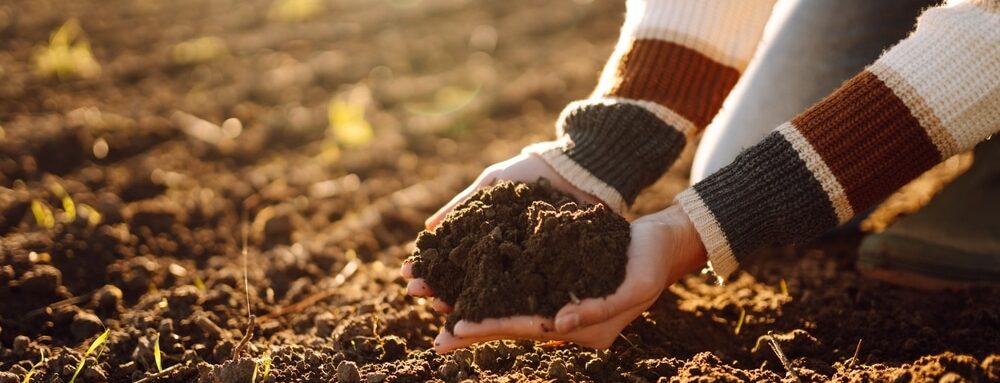
Above all, terroir (tair-wahr) is the claim that a wine should taste of its origin. Therefore, it covers soil and subsoil, slope, altitude, sun exposure and local climate, together with the grower who has learned to work them. Its boldest implication is that the site matters more than the grape variety. For instance, plant Pinot Noir on two neighboring Burgundian slopes and the wines will differ, and France will give each slope its own name and its own price. That idea reorganized how the world ranks fine wine, and put place before everything else.
Appellations, classifications and the architecture of French wine
In fact, the appellation is the legal form terroir takes. For instance, France has roughly 363 wine AOCs, now folded into the European AOP system and supervised by the INAO, which fixes the permitted grapes, maximum yields, vine density and production methods for each one. Names run from broad regional labels such as Bordeaux and Bourgogne, down through villages, to single celebrated parcels.
Several regions keep a second hierarchy of their own. That is to say, Burgundy ranks the land, with 33 Grand Cru sites in the Côte d’Or and several hundred Premier Cru parcels. On the other hand, Bordeaux ranks estates instead, most famously through the 1855 classification of the Médoc and Sauternes. However, Alsace lists 51 Grand Cru vineyards. So, knowing which logic governs a given region is the first thing that separates a knowledgeable buyer from a hopeful one.
A Tour of the Major French Vineyard Regions
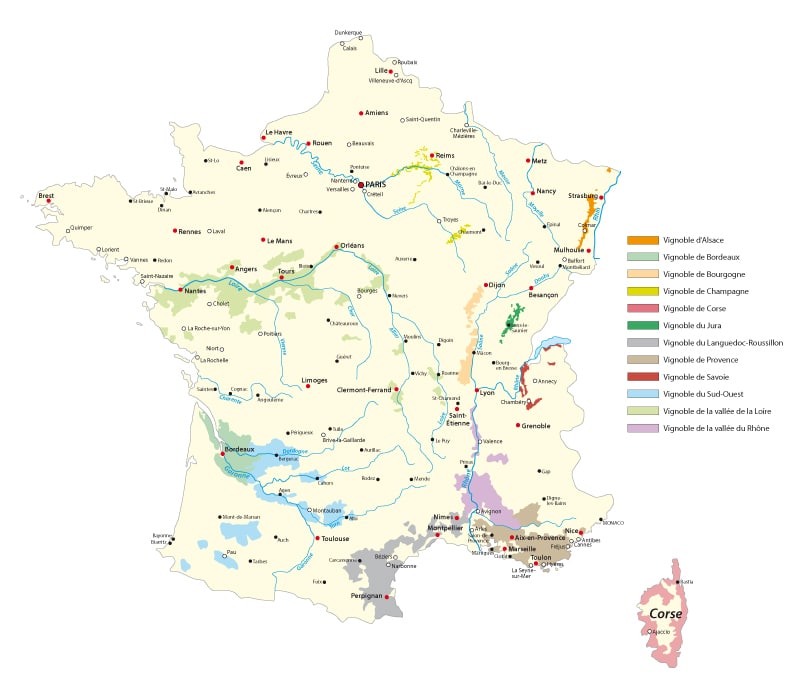
In fact, French wine shares one principle and little else. In other words, grape, climate and local custom change completely from one region to the next. The table gives the overview before we take each region in turn.
| Region | Dominant grapes | Style | Emblematic appellations |
|---|---|---|---|
| Bordeaux | Merlot, Cabernet Sauvignon, Cabernet Franc; Sémillon, Sauvignon Blanc | Structured reds; dry and sweet whites | Saint-Émilion, Pomerol, Pauillac, Margaux, Pessac-Léognan, Sauternes |
| Burgundy | Pinot Noir, Chardonnay | Single-variety reds and whites of great precision | Gevrey-Chambertin, Meursault, Chablis, Pommard |
| Champagne | Chardonnay, Pinot Noir, Pinot Meunier | Sparkling, from racy to richly aged | Aÿ, Cramant, Verzenay, Le Mesnil-sur-Oger |
| Loire Valley | Chenin Blanc, Sauvignon Blanc, Cabernet Franc, Melon de Bourgogne | Whites, reds, rosés and sparkling | Sancerre, Vouvray, Chinon, Muscadet |
| Rhône Valley | Syrah (north); Grenache, Syrah, Mourvèdre (south) | Powerful reds, some structured whites | Côte-Rôtie, Hermitage, Châteauneuf-du-Pape |
| Alsace | Riesling, Gewurztraminer, Pinot Gris, Muscat | Aromatic, mostly dry whites | Alsace Grand Cru (51 sites) |
| Provence | Grenache, Cinsault, Mourvèdre, Syrah | Fine rosé; increasingly serious reds and whites | Bandol, Côtes de Provence |
| Beaujolais, Languedoc & South West | Gamay; Carignan, Grenache; Malbec, Tannat | From bright, juicy reds to ambitious value | Moulin-à-Vent, Pic Saint-Loup, Cahors, Madiran |
Bordeaux, the global benchmark of fine wine
Firstly, Bordeaux sits entirely within the Gironde and produces around 450 million bottles a year, most of them red. The reds rest on Merlot, Cabernet Sauvignon and Cabernet Franc. Then, gravel soils on the Left Bank favor Cabernet, in the Médoc and Pessac-Léognan; clay and limestone on the Right Bank favor Merlot, in Saint-Émilion and Pomerol. Sauternes adds its sweet wines, and the dry whites deserve more attention than they usually get.
For a buyer, Bordeaux also offers the clearest market in France: a long record of comparable sales and a working culture of valuation. Then, our practice started here. Readers mapping the classified growths can turn to our guide on Bordeaux wine estates for the châteaux and their terroirs, while our page on the AOC Bordeaux vineyards explains how the regional appellation supports everything above it.
Burgundy, the most coveted terroirs on earth
Secondly, Burgundy works on a narrow strip of vines running south from Dijon, and on just two grapes, Pinot Noir and Chardonnay. In fact, that makes it a remarkable is subdivision: a single village can hold dozens of separately classified climats, each a named plot with its own reputation. The Côte d’Or is the centre, with Beaune (bohn) as its trading town and Meursault (mur-so) among its great white-wine names. Indeed, land here ranks with the most valuable farmland anywhere, and the finest Grand Cru plots almost never come to market. Burgundy demands more study than any other French region, which is part of why its wines hold their value so well.
Champagne, where every vineyard tells a story of effervescence
Then, Champagne is a place, an appellation and a brand at once, set north-east of Paris around Reims and Épernay (ay-pair-nay). Chardonnay, Pinot Noir and Pinot Meunier grow on chalk that gives the wine its acidity and its capacity to age.Thousands of growers farm small parcels and sell much of their fruit to the houses, which keeps vineyard land scarce and expensive when it does come to market. Most finished Champagnes blend wine drawn from many of those plots.
The Loire Valley, châteaux country and a mosaic of styles
The Loire follows its river through a long chain of vineyards and royal châteaux. It covers more styles than any other French region. For example, Sancerre and Pouilly-Fumé are benchmarks for Sauvignon Blanc. But, Vouvray and Savennières show Chenin Blanc across dry, sweet and sparkling versions. However, Chinon and Bourgueil make perfumed Cabernet Franc reds. Meanwhile, Muscadet, near the Atlantic, remains one of France’s best-value whites. For buyers who want a residence as much as a vineyard, the Loire pairs serious wine with some of the finest châteaux in the country.
The Rhône Valley, from northern Syrah to southern blends
The Rhône splits into two distinct halves. In the steep north, Syrah alone makes the deep reds of Côte-Rôtie and Hermitage. With Viognier behind the scented whites of Condrieu. The south opens out and turns Mediterranean, where Grenache leads generous blends, the most famous being Châteauneuf-du-Pape. One of the first appellations France ever drew up. Set against its quality, the southern Rhône stays some of the best value in the country.
Alsace, French elegance with a Germanic accent
Alsace runs between the Vosges and the Rhine and makes France’s most aromatic whites, most of them dry despite a lingering reputation for sweetness. Riesling, Gewurztraminer, Pinot Gris and Muscat are bottled by variety, which is rare in France, and the best sites carry one of 51 Grand Cru names. The half-timbered villages along the Route des Vins make Alsace the easiest region in which to spend an unhurried first few days.
Provence, the home of fine rosé and an evolving identity
Provence built its name on pale, dry rosé, and that image now travels worldwide. The interesting part sits underneath it: a new generation making structured reds and serious whites, and Bandol producing some of France’s best age-worthy wine. Provence also draws more lifestyle buyers than almost any region except the Dordogne, because the vineyard comes attached to the coast, the light and the climate.
Beaujolais, Languedoc and the South West, the rising appellations
Past the classic names sit the regions where ambition still meets reasonable prices. Beaujolais, built on Gamay, has shaken off its cheap reputation; its ten crus, led by Moulin-à-Vent, now make wine that ages. The Languedoc is the largest vineyard in the country and the most open, its hierarchy still forming, with appellations such as Pic Saint-Loup climbing fast. The South West keeps its own grapes alive: Malbec in Cahors, Tannat in Madiran. For first-time buyers, these are the regions where entry prices stay within reach.
Visiting French Vineyards: The Insider’s Approach
Choosing the right region for your taste and your travel style
Start with the kind of visit you want rather than a ranking of wines. Bordeaux and Burgundy give grandeur and a clear classified order. The Loire, Alsace and the Rhône give easier access to the growers themselves. Champagne is built for occasion; Provence suits a slower pace. Match the region to the calendar as well: the south shows best in spring and autumn, while Champagne and Alsace are at their finest around harvest.
Private tastings, cellar tours and the appointment-only reality
The best estates in France are working properties, not visitor centres, and the most rewarding tastings are arranged ahead of time. A private appointment at a classified château or a Burgundy domaine gives you someone who knows the vines, wines tasted with context, and often a look at parcels and barrels the public never sees. At the most sought-after addresses an introduction counts for a great deal, which is one practical reason buyers value people already established in the region. For a first Bordeaux itinerary, our guide on which vineyard to visit around Bordeaux is a sensible starting point.
When to visit: harvest, en primeur and the rhythm of the wine year
A vineyard looks different in every season. Late summer and early autumn bring the harvest, when estates are busiest and least free to receive visitors, so book early. Winter is quiet and well suited to slow tastings. Spring belongs to en primeur, the Bordeaux custom of tasting the newest vintage from barrel and selling it as a future, months before bottling. Our Bordeaux en primeur complete guide explains how the system works and why it matters.
Staying at a vineyard estate
A growing number of estates now take overnight guests, in a converted farmhouse or in château rooms. Staying on a working property changes how you see it. You watch the light cross the parcels through the day and drink the wines where they are made, and the place stops being an abstraction. Several of the buyers we have worked with first considered ownership seriously after a night spent on an estate.
Buying a French Vineyard: From Dream to Reality
Who buys a French vineyard today, and why
Buyers of French vineyards are a mixed group. Some are wine lovers looking for a way of life and an asset to pass down. Some are entrepreneurs who see a recognized sector and a business they can run. Others are investors drawn to tangible land behind globally traded wine names. They tend to share one trait: a long horizon, since a vineyard is measured in vintages, not financial quarters. Anyone weighing the field can study our current selection of vineyards for sale in France to get a feel for the range.
What a French vineyard estate actually includes
A vineyard estate is seldom only its vines. A typical sale combines the planted land, owned outright or partly farmed under lease, with a cellar for making and ageing wine, technical equipment, and usually a house that ranges from a farmstead to a restored château with guest quarters. Wine held in barrel and bottle, the brand, distribution contracts and staff may also be part of the deal. Reading exactly what does and does not transfer is the single most important check a buyer makes, because two estates of identical surface can be very different businesses.
Regional price benchmarks: from accessible to legendary
French vineyard land spans an enormous price range, and the market has been correcting since 2022, most sharply in Bordeaux. The figures below, drawn from SAFER reporting, are orders of magnitude; the real worth of any estate turns on terroir, vine condition and commercial standing. Our guide on how to value a wine estate sets out the method we use.
| Region / appellation | Indicative value per hectare | Market note |
|---|---|---|
| Bordeaux, regional AOC red | about 6,500 to 8,000 | Generic market reopening at low, settled prices |
| Saint-Émilion | around 200,000 | Down roughly 20% in 2025; quieter and more selective |
| Médoc communal crus (Margaux, Pauillac) | about 800,000 to 1,700,000 | Even the prestige names corrected in 2025 |
| Pomerol | around 2,000,000 (2023 reference) | Very few sales; values closely held |
| Burgundy, Côte d’Or | village level into the hundreds of thousands; Grand Cru well into seven figures | Prices rising; the finest climats rarely sell |
| Champagne | about 850,000 to 1,800,000 (around 1.2 million on average) | Stable to firm despite softer exports |
| Alsace | about 90,000 to 138,000 | Broadly stable |
| Rhône Valley and Provence | around 58,000 on average; far higher in the top appellations | Near stable; strong lifestyle demand in Provence |
The headline in these numbers is opportunity as much as warning. After several years of decline from the 2021 peak, parts of Bordeaux now trade at levels last seen a decade ago, which has brought patient, well-advised buyers back. The work lies in reading what sits behind a quoted price: the agronomic state of the vines, deferred investment, and the genuine health of the appellation.
Which Bordeaux vineyards are for sale right now
Availability changes constantly, which is why the honest answer comes from a conversation rather than a fixed page. At any given moment our Gironde portfolio runs across the whole spectrum: affordable properties in the regional and Côtes de Bordeaux appellations, working estates on the Right Bank near Saint-Émilion and Pomerol, classified and character properties in the Médoc, and turnkey wineries that include equipment and stock. Some of the strongest opportunities are never advertised, because certain owners prefer their estate shown only to qualified buyers, by private introduction. The live selection, advertised and discreet together, is the only accurate answer to what is genuinely for sale today.
Where Saint-Émilion wineries are listed, and who lists them
Saint-Émilion is a UNESCO-listed jurisdiction and one of the most prestigious appellations in the world, so its estates seldom appear on general property portals and rarely trade in the open. As the Bordeaux affiliate of Christie’s International Real Estate, Vineyards-Bordeaux, we list and handle some of Saint-Émilion wineries directly, from working winemaking businesses to château domains and estates moving toward organic certification. Some are public; others are kept off-market at the owner’s request and offered only to qualified buyers. For a search focused on Saint-Émilion, a direct and confidential enquiry is the most effective route, and it is the one we are set up to handle.
The French acquisition process: SAFER, notaire and what to anticipate
Indeed, buying a vineyard in France follows a defined legal path, and two French institutions are worth knowing from the start. The notaire is the public legal officer who draws up and registers the sale. The SAFER is the regional land agency that receives notice of agricultural transactions and can, in set circumstances, exercise a right of pre-emption. Neither needs to worry a prepared buyer; both are simply how France manages its farmland. The usual sequence runs as follows.
- Define the project. Settle whether the aim is lifestyle, production or investment, and the region and size that fit it.
- Appoint a specialist advisor. Arrange confidential viewings, including off-market estates that never reach public listings.
- Audit the property. Examine the vines and their condition, the equipment, the buildings, the stock and the commercial contracts.
- Sign the compromis de vente. This preliminary contract sets the terms, with its conditions and financing.
- Allow for the SAFER notification and its possible right of pre-emption.
- Complete the legal file and financing with the notaire coordinating the paperwork.
- Sign the acte authentique, the final deed, before the notaire to transfer ownership.
Each region adds its own wrinkles, from the treatment of leased vines to the local appetite of the SAFER, which is where first-hand guidance pays for itself. On the financial side of the decision, our guide on how to invest in a vineyard goes further into structure and returns.
From the field The biggest differences between two estates rarely show up in the price per hectare. Whether the vines have been replanted with climate-adapted varieties, the state of the winery, the strength of the distribution contracts, and the plain question of owned versus leased vines can separate a sound purchase from an expensive mistake. We read those details before we read the asking price.
The Christie’s perspective: a benchmark of trust
Buying a vineyard in a country not your own takes more than a listing. However, it takes someone who knows the appellations, the families, the notaires and the realities behind the figures. Vineyards-Bordeaux is an affiliate of Christie’s International Real Estate, with more than 15 years spent on vineyard transactions in Bordeaux and the wider South West, and a record of closing more of them than any other team in the region. Then, we handle each step from the first conversation to the final deed, and we keep every discussion private.
In Brief: Key Takeaways
- France’s strength is one idea of place applied through roughly 363 appellations, across grapes, climates and styles that share almost nothing else.
- Eight major regions suit different travelers and buyers: Bordeaux offers the clearest hierarchy, Provence the strongest lifestyle pull, and the South the best value for a first purchase.
- The finest estates are working properties. Visit by appointment, and expect the best opportunities to be discreet rather than advertised.
- 2025 brought a market correction, sharpest in Bordeaux, that has reopened the door to patient, well-advised buyers.
- French acquisition runs through the notaire and the SAFER on a clear path; specialist guidance is where confidence and value are secured.
Frequently Asked Questions About French Vineyards
FAQ
In fact, no single count exists: a vineyard can mean a parcel, an estate or an appellation. For instance, France has roughly 363 wine AOCs, tens of thousands of estates, and around 750,000 hectares under vine.
Burgundy would say Romanée-Conti. Bordeaux would name its five First Growths. Both have a fair claim, and the disagreement is part of the pleasure.
A vineyard is the land. A domaine owns, farms and vinifies its vines, mostly in Burgundy and the Rhône. A château is the Bordeaux word for the same thing, grand house or not.
Start with Saint-Émilion, Beaune, Épernay or the Alsace wine route. All four are welcoming, and none requires prior expertise.
Sometimes. Cooperatives, larger Champagne houses and Alsace estates welcome walk-ins. In Bordeaux and Burgundy, an appointment is the minimum, and an introduction is better.
For the right buyer with a long horizon, yes. The asset is tangible, the demand durable, but operating risk and climate exposure are real. Our guide on why and how to invest in wine examines the case in full.
Saint-Émilion estates rarely appear on general portals. Vineyards-Bordeaux, Christie’s Bordeaux affiliate, handles them directly, many off-market. A confidential enquiry is the only way to see the full picture.
The range runs from affordable regional properties to classified Médoc estates and turnkey wineries. The best are never advertised. Ask directly.
A Closing Word
The French vineyard does not reduce to one picture, and that is the reason to learn it region by region. For a traveler, the range is a reason to keep coming back. For a buyer, it is a map of options, and in 2026 several parts of that map are more open than they have been in years.
Vineyards-Bordeaux, with sister agency Maxwell-Baynes, is the Bordeaux affiliate of Christie’s International Real Estate. For more than 15 years we have guided wine lovers, entrepreneurs and investors through buying and selling vineyard estates, in several languages and at every stage from the first conversation to the final deed. Whether you are still learning the regions or ready to start your search, our team is here to help and treats every enquiry in confidence.
Sources
- SAFER and FNSafer, market for vines and land values, 2024 and 2025 reporting (le-prix-des-terres.fr).
- INAO, Institut National de l’Origine et de la Qualité: appellation framework and AOC/AOP figures.
- UNESCO World Heritage List: jurisdiction of Saint-Émilion; Climats of the Burgundy vineyards; Champagne hillsides, houses and cellars.
- Vitisphère, Bordeaux vineyard land market reporting, 2025.
- CIVB, Conseil Interprofessionnel du Vin de Bordeaux: regional production data.
- Christie’s International Real Estate: vineyard market commentary.
