
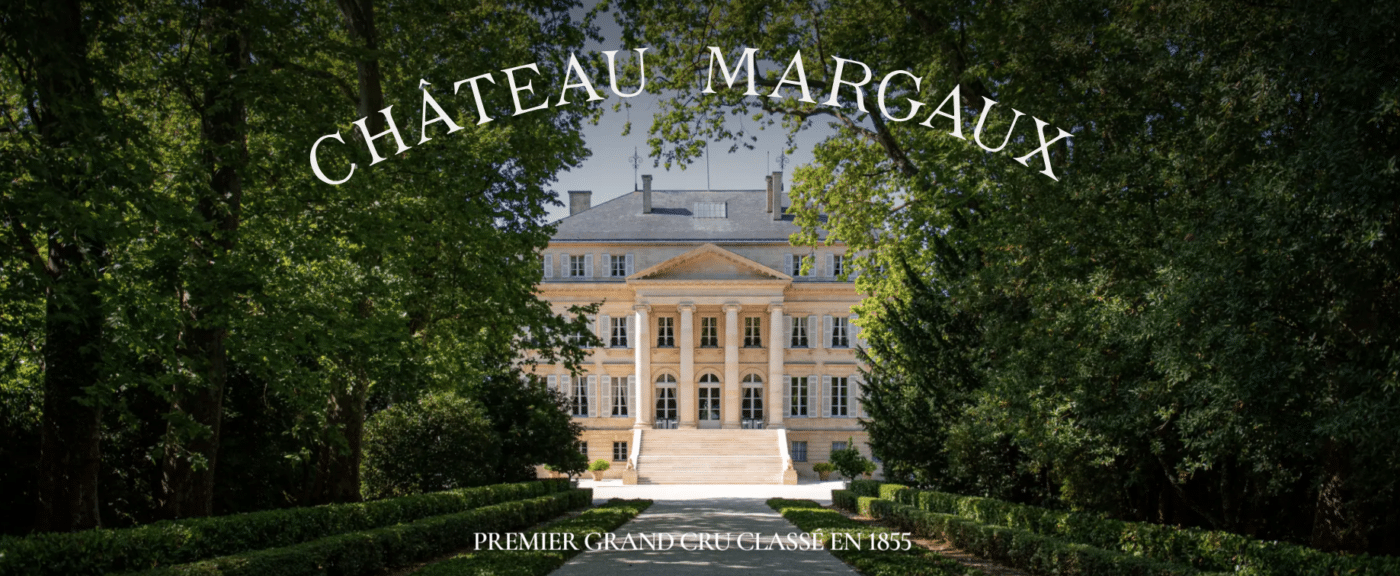
Few names carry as much weight in the world of fine wine as Château Margaux. For more than five hundred years, this Left Bank estate has shaped what elegance means in Bordeaux, and its wines remain a reference point for collectors, sommeliers and anyone drawn to the story behind the bottle. This guide walks through the estate’s history, its terroir, the character of its wines, its greatest vintages, and everything a curious reader needs to know before buying, cellaring or visiting.
In Brief
- Château Margaux is a Premier Grand Cru Classé, one of only four estates awarded First Growth status in the original 1855 Classification.
- The property spans 262 hectares in the Margaux appellation, with roughly 82 hectares planted to red varieties on deep gravel soils.
- Owned by the Mentzelopoulos family since 1977, the estate produces three wines: the Grand Vin, Pavillon Rouge and the rare Pavillon Blanc.
- Bottle prices range from roughly 350 to over 800 euros on release, climbing considerably higher for mature and trophy vintages.
- Visits are by appointment only, offered free of charge, Monday to Friday, and should be booked several months ahead.
What Is Château Margaux? An Introduction to the Estate
A First Growth Bordeaux estate in the Margaux appellation
Château Margaux sits at the heart of the Margaux appellation, on the Left Bank of the Gironde estuary, roughly thirty minutes north of the city of Bordeaux. It is one of the four original estates classified Premier Grand Cru Classé in the 1855 Classification, alongside Lafite Rothschild, Latour and Haut-Brion, a distinction that has never been revised for these founding names. The wine produced here is built around Cabernet Sauvignon, grown on the gravel mounds that define the appellation, and it is widely regarded as the most perfumed and refined expression among the First Growths, prized for a silkiness that has become something of a signature.
The estate today: key figures
A handful of numbers help frame the scale and identity of the property today.
- Total estate size: 262 hectares, of which around 82 hectares are planted with red grape varieties and 12 hectares with Sauvignon Blanc for Pavillon Blanc.
- Grape varieties: approximately 75% Cabernet Sauvignon, 20% Merlot, with Cabernet Franc and Petit Verdot completing the blend.
- Ownership: the Mentzelopoulos family, who acquired the estate in 1977.
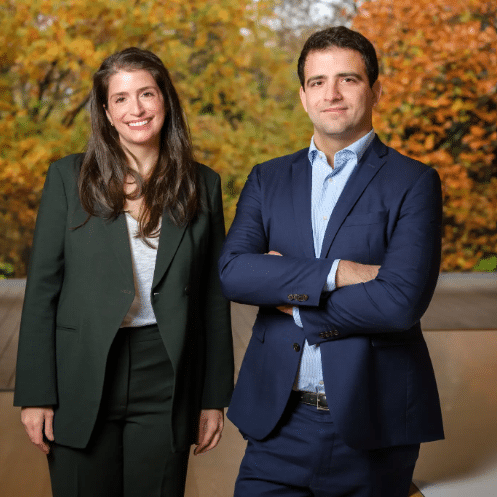
- Leadership: Alexis Leven Mentzelopoulos serves as chief executive, continuing the family’s stewardship of the property.
The History of Château Margaux: Five Centuries of Winemaking
Medieval origins: from “La Mothe de Margaux” to a wine estate
The land on which Château Margaux stands has been recognised since the Middle Ages, when a fortified structure known as La Mothe de Margaux occupied the site. Wine was not yet the focus. It was the Lestonnac family, and in particular Pierre de Lestonnac at the end of the sixteenth century, who began converting the estate from cereal farming toward viticulture, laying the groundwork for what would eventually become one of Bordeaux’s most storied properties. Over the following two centuries, successive owners refined the vineyard and gradually built the reputation that would carry Château Margaux into the modern era.
The 18th century, the 1855 Classification and the birth of a legend
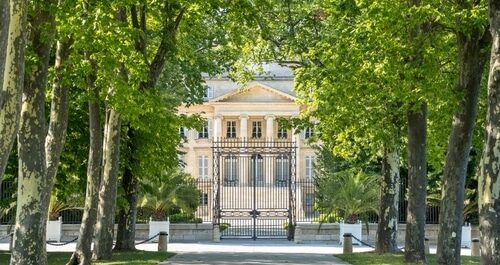
By the eighteenth century, Château Margaux wines were already commanding attention among European connoisseurs, including, according to correspondence of the period, Thomas Jefferson himself. The construction of the neo-Palladian château in the early nineteenth century, designed by architect Louis Combes, gave the estate the imposing silhouette that remains one of the most photographed in Bordeaux. When the 1855 Classification was drawn up for the Paris Exposition Universelle, ranking the region’s estates for the Emperor Napoleon III, Château Margaux was named a Premier Cru, a rank shared by only three other properties.
For readers wanting the fuller picture of how this hierarchy came about and how it still shapes the market, our First Growth Bordeaux: the complete guide traces the classification’s origins and its five tiers in detail.
The Mentzelopoulos era (1977 to today): renewal and modern excellence
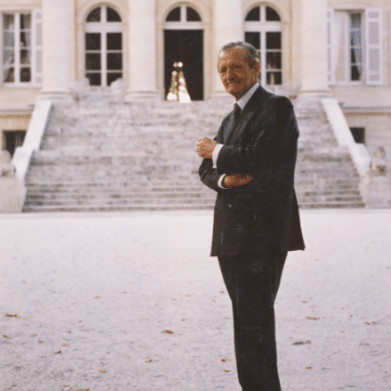
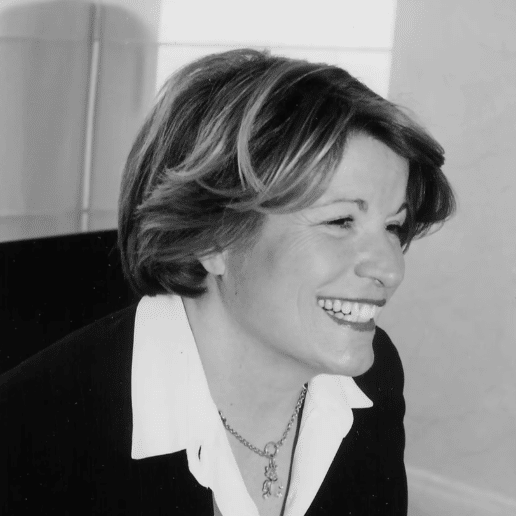
The twentieth century was not always kind to Château Margaux. By the 1970s, the estate had drifted from its former glory, and it was the purchase by André Mentzelopoulos in 1977 that marked the beginning of its revival. Working closely with the celebrated oenologist Émile Peynaud, Mentzelopoulos rebuilt the vineyard, modernised the cellars and restored discipline to every stage of winemaking. He did not live to see the full result of his investment, but the 1978 vintage, released shortly after his death in 1980, confirmed that Château Margaux had reclaimed its place among Bordeaux’s finest. His daughter, Corinne Mentzelopoulos, took the estate forward for decades, and the family’s commitment continues today under Alexis Leven Mentzelopoulos, alongside long-serving technical director Philippe Bascaules.
Château Margaux Terroir and Vineyard
The gravel soils of the Margaux appellation
The character of Château Margaux begins in the ground. The vineyard sits on deep beds of gravel, deposited by the Garonne over hundreds of thousands of years, resting on a subsoil of sand which warms up quickly, helping the grapes to ripen while providing excellent drainage.
The excellent drainage of gravel soils encourages the vines to develop deep root systems and experience moderate water stress. This naturally limits vine vigour, promoting concentrated fruit, fine-grained tannins and the aromatic finesse for which Château Margaux is renowned.
The appellation itself is home to a cluster of celebrated neighbours, and readers exploring the broader landscape of AOC Margaux vineyards will find a terroir defined by this same gravel, shared unevenly across dozens of estates of varying renown.
Grape varieties and vineyard management
Cabernet Sauvignon dominates the red vineyard, typically making up around 75% of plantings, with Merlot bringing roundness and Cabernet Franc and Petit Verdot adding aromatic complexity with and structure in small proportions. The vines average several decades in age, and the estate has invested heavily in precision viticulture, including plot-by-plot harvesting and a striking underground barrel cellar, designed by architect Norman Foster, that allows each parcel to be vinified and aged separately before the final blend is assembled.
The Style of Château Margaux Wines: What Makes Them Distinctive
Aromatic profile and structure
If Bordeaux’s First Growths each have a signature, Margaux’s is considered the most delicate, perfumed and elegant of all the Medoc communes. The wines are typically marked by violet, iris and dark berry aromatics, layered with cedar, graphite and a touch of crushed mint or eucalyptus in riper years. On the palate, the tannins are notably fine rather than powerful, giving a sensation of silk more than force, even in vintages built for long ageing. This combination of intensity and restraint is what critics most often point to when explaining why Château Margaux is considered the most elegant of the Left Bank First Growths, a wine of nuance rather than sheer weight.
Ageing potential and drinking window
Great vintages of Château Margaux are built for the long term, often improving over three, four or even five decades. Young bottles can seem tightly wound, with the tannic structure taking a decade or more to soften, while the aromatic complexity continues to build for years afterward. Collectors generally recommend patience: a great Margaux rarely shows its full character before ten to fifteen years of bottle age, and the finest vintages can continue to reward cellaring well beyond that.
The Great Vintages of Château Margaux
Legendary vintages: from 1900 to 1990
Château Margaux’s reputation for longevity rests on a run of exceptional vintages across the twentieth century. The 1900 is still spoken of with something close to reverence among collectors, while 1953, 1961 and 1990 are widely considered high points of their respective decades. The 1978, the first vintage fully shaped by André Mentzelopoulos’s renovation, is often cited as the moment the modern era of the estate began, and it remains a benchmark for what the property could achieve once restored to its full potential.
Modern vintages: 2000 to today
The years since 2000 have been remarkably consistent, with several vintages considered among the finest the estate has ever produced.
| Vintage | Style | Drinking window |
| 2000 | Structured and aromatic, with violet and iris notes gaining full expression with age | 2020 to 2045 |
| 2005 | Pure, fresh and refined, a benchmark year of great consistency | 2022 to 2050 |
| 2009 | Opulent, concentrated and generous, among the most powerful modern vintages | 2024 to 2055 |
| 2010 | Precise and deep, with floral lift and considerable structure | 2025 to 2060 |
| 2015 | Widely regarded as one of the finest vintages in the estate’s modern history | 2023 to 2050 |
| 2016 | Refined and dense, dominated by Cabernet Sauvignon, needing patience | 2028 to 2055 |
| 2019 | Fresh, complete and long on the palate, a classic vintage | 2029 to 2055 |
| 2020 | Floral and vivid, with fine tannic grip from a small selection of the crop | 2030 to 2055 |
Grand Vin, Pavillon Rouge and Pavillon Blanc: The Wines of Château Margaux
Château Margaux Grand Vin (the first wine)
The Grand Vin is the estate’s flagship, produced only from the finest plots and the most rigorously selected lots of each vintage. In some years, less than a third of the harvest qualifies for the final blend, a discipline that has become central to the wine’s consistency. It is this bottling that carries the reputation described throughout this guide, the one collectors seek and critics measure First Growth Bordeaux against.
Pavillon Rouge du Château Margaux (the second wine)
Pavillon Rouge is the estate’s second wine, made from parcels and lots not selected for the Grand Vin, though produced with the same care and philosophy. It typically represents around 30% of the harvest and offers a more approachable entry point into the Château Margaux style, with the same aromatic signature in a lighter, earlier-drinking frame.
Pavillon Blanc du Château Margaux (the rare white)
Pavillon Blanc is something of an anomaly on the Left Bank, a pure Sauvignon Blanc produced from a dedicated eleven-hectare plot planted on gravel soils unusual for white wine production in the Médoc. Only a portion of the harvest is bottled under the Pavillon Blanc label each year, making it a genuine rarity even among Bordeaux’s white wines, prized as much for its scarcity as for its bright, mineral character.
| Wine | Annual production | Style | Release price (approx.) |
| Grand Vin | 12,000 to 15,000 cases | Powerful yet silky, built for decades of ageing | 350 to 800+ EUR |
| Pavillon Rouge | Around 20,000 cases | Fresh and aromatic, drinkable earlier | 70 to 120 EUR |
| Pavillon Blanc | Around 1,000 cases | Precise and mineral, pure Sauvignon Blanc | 150 to 250 EUR |
How Much Does a Bottle of Château Margaux Cost?
Release prices and secondary market
Prices for Château Margaux move with each vintage’s reputation and with the broader fine wine market. The 2023 vintage, for example, was released at 360 euros per bottle ex-négociant, a notable correction from the 516 euros asked for the 2022 the year before, reflecting a wider softening across Bordeaux’s en primeur campaigns. Most buyers encounter the wine either through this early release system, explained in full in our Bordeaux en primeur: the complete guide, or later on the secondary market once a vintage has been bottled and shipped.
Roughly speaking, three price tiers define the market for Château Margaux:
- Release and recent vintages: typically between 350 and 600 euros per bottle, depending on the year’s critical reception.
- Mature, well-regarded vintages with a decade or more of age: generally 600 to 1,500 euros per bottle.
- Trophy vintages, such as 1900, 1961 or 1990, in strong provenance: prices that can reach several thousand euros and beyond at auction.
Château Margaux at auction: notable sales
The auction record book for Château Margaux includes some remarkable entries. A bottle believed to be from the 1787 vintage and linked to Thomas Jefferson’s collection sold for around 225,000 dollars in 1989, at the time the highest price ever recorded for a bottle of wine, before it was accidentally broken at a New York dinner. More conventionally, a bottle of the 1900 vintage fetched over 61,000 dollars at a Sotheby’s sale, and large-format bottles of acclaimed modern vintages, such as a Balthazar of the 2009, have sold for close to 100,000 dollars. These results place Château Margaux firmly among the small handful of wines that regularly command headline prices at international auction.
Visiting Château Margaux: Access, Tours and Booking
How to book a visit at Château Margaux
Visits to Château Margaux are by appointment only and are offered free of charge, a policy that reflects the estate’s preference for a controlled, unhurried experience over volume tourism. Requests should be made directly through the château, ideally several months in advance, since the estate welcomes visitors only on weekdays, with the first tour of the day typically beginning around 10 am and lasting roughly an hour. Tastings, when offered, are generally reserved for wine trade professionals rather than casual visitors.
When to visit and where to base yourself
The estate is closed on weekends, public holidays, throughout August and during the harvest period in early autumn, which narrows the practical booking window considerably. Many visitors choose to base themselves in the town of Margaux itself or in central Bordeaux, combining a visit to the château with stops at neighbouring properties across the appellation. Our guide to which vineyard to visit around Bordeaux offers a broader itinerary for readers planning a multi-estate trip through the region.
Frequently Asked Questions About Château Margaux
Yes. Château Margaux was named a Premier Grand Cru Classé in the 1855 Classification, one of only four estates to receive this top rank, alongside Lafite Rothschild, Latour and Haut-Brion.
The estate has been owned by the Mentzelopoulos family since 1977, when André Mentzelopoulos acquired the property. His daughter Corinne Mentzelopoulos led the estate for many years, and it is now overseen by Alexis Leven Mentzelopoulos.
Prices vary widely depending on the vintage and where the bottle is purchased. As a rough guide:
Recent releases: roughly 350 to 600 euros per bottle.
Mature vintages with strong reputations: 600 to 1,500 euros per bottle.
Rare or historic vintages at auction: several thousand euros and above.
Château Margaux, or the Grand Vin, is made from the estate’s best plots and most rigorously selected lots, built for decades of cellaring. Pavillon Rouge is the second wine, made from remaining parcels with the same philosophy, offering similar aromatic character in a lighter style meant to be enjoyed earlier.
The estate is located in the commune of Margaux, in the Margaux appellation on the Left Bank of the Gironde estuary, roughly thirty minutes’ drive north of the city of Bordeaux.
Yes, but only by appointment. Visits are free, offered on weekdays, and should be booked well in advance, ideally several months ahead of the planned trip.
Great vintages age for thirty to fifty years or more. Even in lighters years, the wine typically needs a decade of bottle age before showing its full character.
There is no singular answer as taste and budget both play a role, but 1900, 1990, 2000, 2009, 2010 and 2015 are among the vintages mot consistently cited by critics and collectors as the finest the estate has produced.
In Brief
Château Margaux stands apart even among Bordeaux’s four First Growths, prized for a perfumed, silky style that has defined the Margaux appellation for centuries. From its medieval origins through the 1855 Classification and its revival under the Mentzelopoulos family since 1977, the estate has built a body of work anchored in gravel terroir, meticulous selection and remarkable patience. Whether the interest lies in a great modern vintage, a rare bottle of Pavillon Blanc, or simply the story of the property itself, Château Margaux rewards a closer look, and the estate remains the clearest reference point for what elegance means in Bordeaux wine.
Vineyards-Bordeaux specialises in the acquisition of Bordeaux vineyards for sale, including estates in the Margaux appellation, for those drawn beyond the bottle and toward the terroir itself.
Sources
- Château Margaux, official estate website, chateau-margaux.com
- The Wine Cellar Insider, Château Margaux producer profile
- Liv-ex, Château Margaux 2022 and 2023 en primeur release coverage
- Decanter, Bordeaux 2023 market analysis
- Millesima USA, vintage guides to Château Margaux
- Sotheby’s, Château Margaux: The Complete Guide and auction records
- Wine-Searcher, Château Margaux and Pavillon Blanc pricing data
- Wine Scholar Guild, French Wine Scholar
