
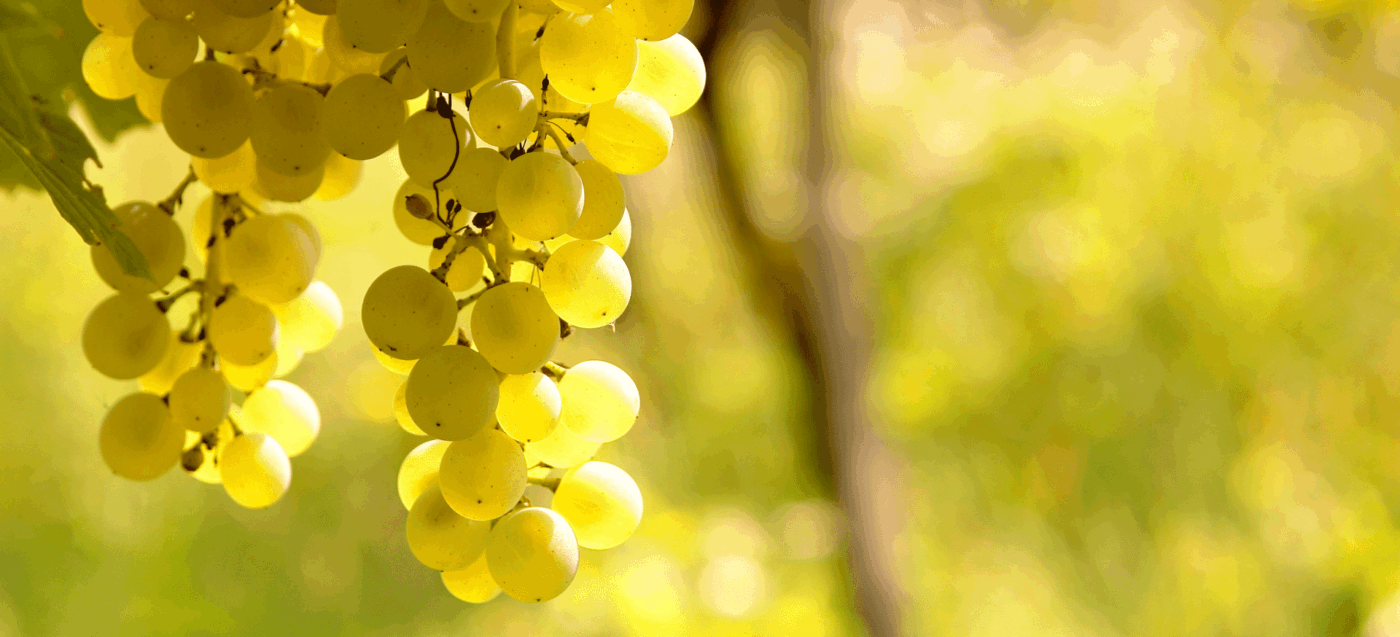
Grande Champagne has no connection with sparkling wine. The name belongs to a band of soft, pale chalk in the Charente, laid down in the Upper Cretaceous. That chalk shapes an eau-de-vie which ages slowly and gains depth over decades. It also explains a price hierarchy that runs from the soil to the bottle and on to the land market. This essay follows that chain.
In Brief
- Grande Champagne is the first of the six Cognac crus. It is centred on Segonzac, in the Charente department.
- Its vines grow on Campanian chalk, softer and richer in lime than the soils of the surrounding crus.
- The eaux-de-vie are floral, firm in youth and built for long ageing.
- “Fine Champagne” is a blend with at least 50% Grande Champagne. Petite Champagne makes up the rest.
- About 13,000 hectares are planted. Vineyard land across the appellation lost a large share of its value in 2025.
The Chalk Beneath the Vines
Campanian chalk and the geology of the Charente basin
The Charente bassin rests on Upper Cretaceous limestone. The geologist Henri Coquand studied these strata in the 1850s and named the Campanian stage in 1857. His soil work of 1860 became the basis for Cognac’s quality zones. A decree of 1 May 1909 delimited the appellation, and the six crus have been recognised since 1938.
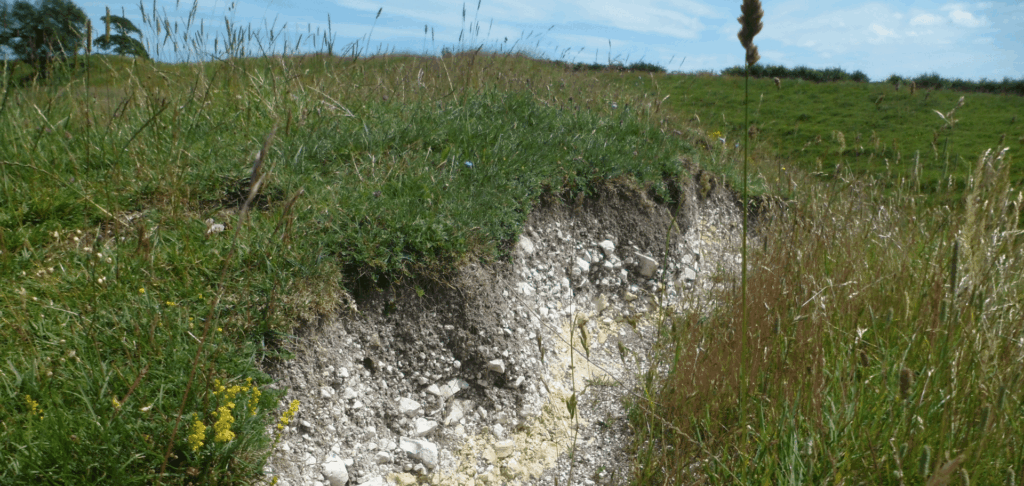
Grande Champagne sits on the Campanian layer: a clay-limestone topsoil over soft, crumbly chalk. The lime content can exceed 60%. Around 13,000 hectares are planted, all in the Charente department, around Segonzac. For readers mapping out the wider French landscape of appellations and growing regions, our guide to French vineyards covers the full picture.
How soil composition determines eau-de-vie structure
Chalk stores winter rain and releases it slowly. Roots follow the fractures deep into the rock, so the vines cope with dry summers. Grapes ripen gradually and keep a high acidity with modest sugar. That profile is what distillers want. Acidic, low-alcohol wine yields fresh eaux-de-vie with the structure to age.
Petite Champagne lies on the older Santonian stage. Its rock is harder and holds less chalk. The difference in texture is visible in the field and audible in the glass.
Grande Champagne, Petite Champagne, Borderies: the six crus ranked
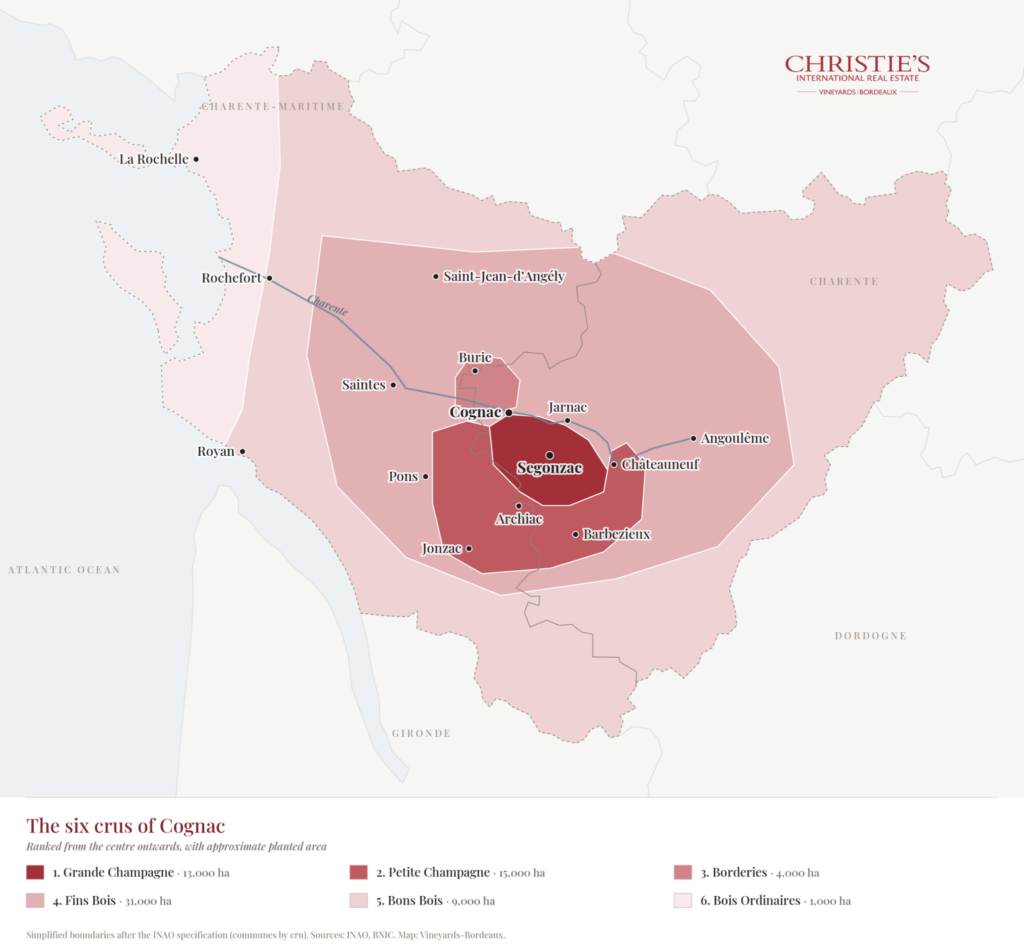
The six crus form rings around the towns of Cognac and Jarnac. Grande Champagne occupies the centre. The rank follows the soil and declines toward the periphery.
| Cru | Planted area (approx.) | Dominant soil | Style noted by the BNIC and producers |
|---|---|---|---|
| Grande Champagne | 13,000 ha | Clay-limestone over soft Campanian chalk | Floral, built for very long ageing |
| Petite Champagne | 15,000 ha | Similar limestone, harder, less chalky | Floral and fruity |
| Borderies | 4,000 ha | Decalcified flint clays | Violet and iris, ages faster |
| Fins Bois | 31,000 ha | Clay-limestone, some heavy clay | Fruity, with slight floral notes |
| Bons Bois | 9,000 ha | Mostly sandy soils | Fruity |
| Bois Ordinaires | 1,000 ha | Mostly sandy, coastal | Fruity |
Areas are rounded. Published figures vary with the year and the method of measurement.
Why “Champagne” Has Nothing to Do With Sparkling Wine
The Latin campania and the open chalk plains
The word comes from the Latin campania, open country. Two regions of France took it for their flat, chalky plains. Cognac fixed its own use in the 1909 delimitation. The sparkling-wine region shares the word and an Upper Cretaceous subsoil. It lies several hundred kilometres to the north-east.
That is the short answer to “why is cognac called champagne”. A Grande Champagne label names a place in the Charente.
Fine Champagne: the blend that confuses everyone
Fine Champagne blends Grande and Petite Champagne eaux-de-vie. At least half must come from Grande Champagne.
A bottle labelled “Grande Champagne” holds eaux-de-vie from that cru alone. “Petite Champagne” follows the same logic for the second cru, around Barbezieux, Archiac and Jonzac.
What the Chalk Does to the Spirit
Ugni Blanc on limestone: high acidity, low alcohol, ideal distillation base
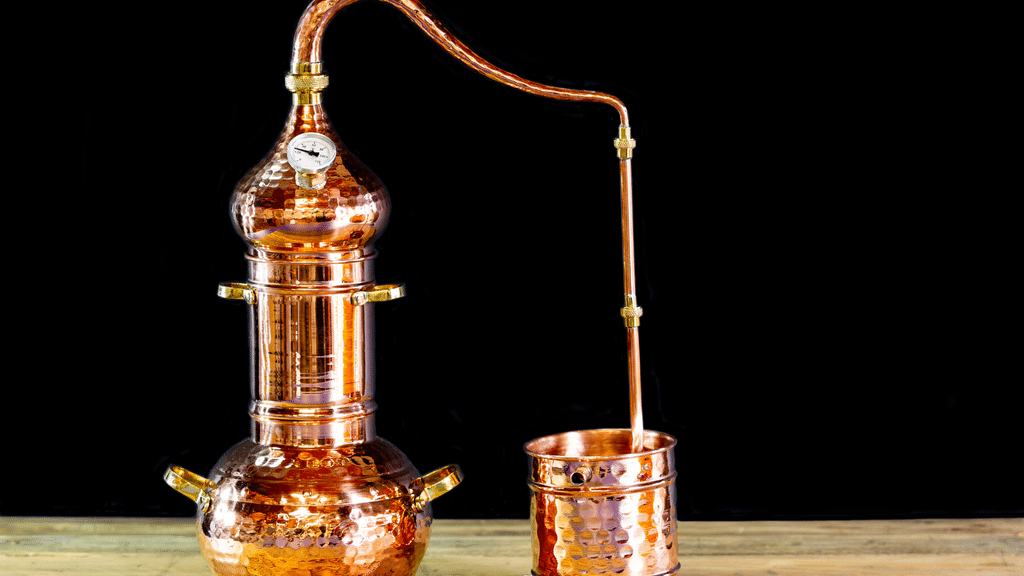
Ugni Blanc dominates the vineyards of Cognac. Its wine is acidic and low in alcohol, which suits the still. Producers distil it twice in copper Charentais pot stills. The spirit leaves at about 70% alcohol.
Cognac Frapin plants Ugni Blanc alone across 240 hectares of its Segonzac estate, all inside the cru.
Slow ageing: why Grande Champagne cognacs need decades
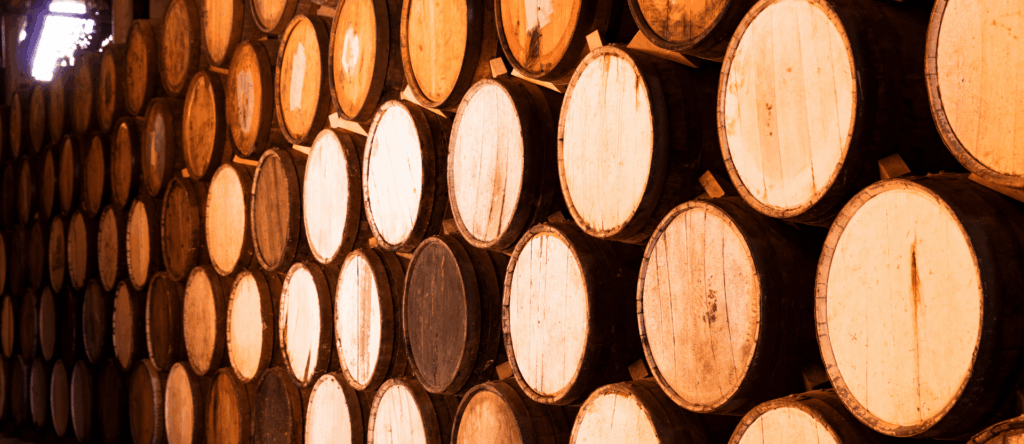
Young Grande Champagne eaux-de-vie can taste austere. Borderies matures faster, and the fruitier crus open earlier. Grande Champagne needs years in Limousin or Tronçais oak.
Louis XIII shows the extreme. Its blend draws on up to 1,200 eaux-de-vie from the cru, aged between 40 and 100 years. Stocks of that age require cellars, capital and patience. Distillation and ageing impose operational constraints that differ markedly from still wine production, as our overview of how a wine estate actually operates makes clear.
The floral signature: what tasters consistently identify
The BNIC describes floral aromas as the dominant note of Grande Champagne. With age, tasters add dried fruit, honey and rancio, the nutty, slightly fungal note of very old eaux-de-vie.
Some critics ask whether the cru’s reputation is inflated. The advantage shows over time. A young VS reveals little about it, and a fifty-year-old bottle reveals a great deal.
The Houses That Define the Cru
| House | Status | Grande Champagne share |
|---|---|---|
| Frapin (Segonzac) | Family estate | 100%, from its own 240 ha of vines |
| Louis XIII (Rémy Martin) | Grande maison, flagship blend | 100% |
| Rémy Martin (range) | Grande maison | At least 50% in every Fine Champagne blend |
| Delamain (Jarnac) | Historic house | Grande Champagne focus, share to be confirmed |
| Hine (Jarnac) | Historic house | Fine Champagne cuvées, share not published |
| Jean Fillioux (Juillac-le-Coq) | Family estate | 100%, single estate of 25 ha |
| François Voyer (Verrières) | Family house | Grande Champagne range |
| Grosperrin (Saintes) | Négociant | Selection from all six crus, including Grande Champagne bottlings |
Frapin: the only major house entirely within Grande Champagne
The Frapin family has grown vines in the region since 1270. The Château de Fontpinot at Segonzac anchors a 300-hectare estate, with 240 hectares planted. Gustave Eiffel’s team built an iron-framed warehouse on the property.
Rémy Martin, Hine, Delamain: the blenders who built the reputation
Rémy Martin dates from 1724. About 90% of its eaux-de-vie come from the Alliance Fine Champagne cooperative, created in the 1960s. Paul-Émile Rémy Martin launched the blend that became Louis XIII in 1874. Hine and Delamain, both based in Jarnac, blend aged stocks from the Champagne crus into a house style.
Grosperrin, François Voyer, Jean Fillioux: the small independent producers
Jean Fillioux works a single estate, La Pouyade, in the cru’s “golden triangle”. The family has owned it since 1894, and every bottle is made there. François Voyer, in Verrières, has been led by cellar master Pierre Vaudon since 2017. Grosperrin, founded in 1999, works as a négociant. Guilhelm Grosperrin selects barrels from more than 150 producers.
Reading a Grande Champagne Label
VS, VSOP, XO, Hors d’âge: what the age statements really mean
The age on the label is that of the youngest eau-de-vie in the blend. In April 2018 the BNIC raised the XO minimum from six to ten years. It also set the XXO category at fourteen.
| Mention | Minimum age of the youngest eau-de-vie |
|---|---|
| VS | 2 years |
| VSOP | 4 years |
| Napoléon | 6 years |
| XO | 10 years (since April 2018) |
| XXO | 14 years |
| Hors d’âge | Officially equal to XO, used for premium bottlings |
Older guides still quote six years for XO and thirteen years for XXO. Those figures are out of date.
Single cru vs Fine Champagne vs blended cognac
A generic “Cognac” may draw from any of the six crus. Most entry-level bottles from large houses do. A “Fine Champagne” bottle guarantees the 50% minimum of Grande Champagne. A “Grande Champagne” bottle guarantees the cru alone, and this is the label with the narrowest sourcing.
Vintage cognac: a rare and regulated category
A vintage cognac comes from a single harvest, and the BNIC oversees the records that document it. Bottlings are few. Most Cognac is blended across years to keep a house style constant.
The Economics of the Cru
What a hectare of Grande Champagne costs, and why
Land prices follow the value of the eau-de-vie that the vines feed. When export demand falls, the land adjusts first. In 2025 the SAFER recorded an average of about €25,600 per hectare of vines in the Charente and €20,900 in Charente-Maritime. Grande Champagne lies entirely in the Charente. Tax records analysed by ma-propriete.fr show median prices falling from about €50,000 per hectare in 2022 to about €28,600 in 2025.
Published data rarely isolate Grande Champagne, and the best parcels trade above the averages. Properties in the Charente rarely change hands publicly, and buyers generally work through a specialist to access Cognac vineyard estates for sale.
Bottle prices: from accessible VSOP to Louis XIII
Prices rise with age and scarcity. Independent Grande Champagne VSOP and XO bottlings sit well below the great blends. At the summit, US listings for Louis XIII commonly run from about $22,000 to $40,000, depending on the format.
The Cognac market in 2026: growth, correction and land values
The market is in correction. China imposed provisional duties of up to 34.8% on Cognac in 2024. The United States has applied a 15% tariff on most European exports, Cognac included, since July 2025. Raphaël Delpech, director of the BNIC, has described the sector as “collateral damage” in a trade dispute between Brussels and Beijing.
Growers also faced a drought in 2025 that cut harvests sharply. Applications to grub up vines under the removal scheme cover 560 hectares. Assessing such a property requires looking well beyond hectares, a method we detail in our guide to valuing a wine estate.
Visiting the Grande Champagne
Segonzac and the heart of the cru
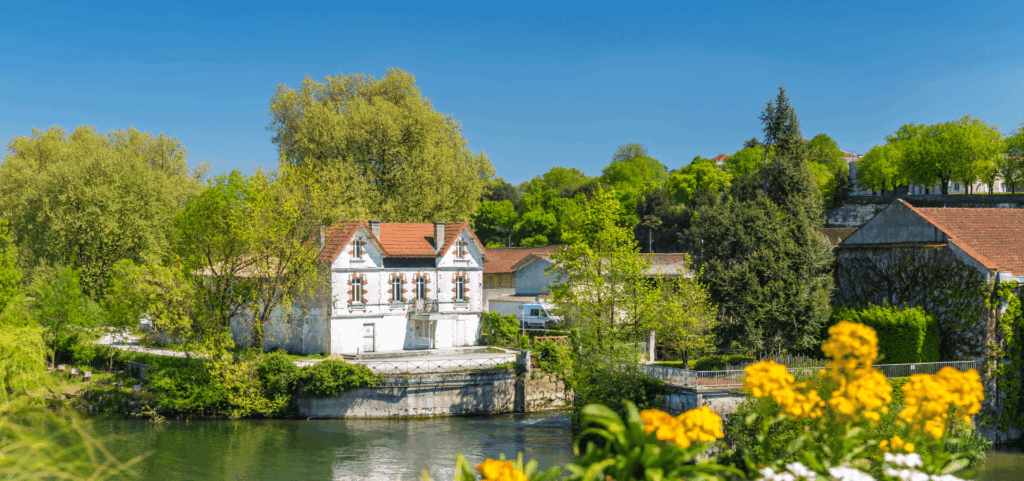
Segonzac is the central town of the cru. A circular walking route traces its Protestant heritage. La Maison de la Grande-Champagne offers regional products and documentation. The Salon des Sites Remarquables du Goût takes place on the first weekend of February.
Houses open to visitors, and how to book
Destination Cognac lists Painturaud Frères, which takes bookings online, and Barbot-Marcadier as houses that welcome visitors in Segonzac. Frapin receives guests at Château de Fontpinot. Book ahead and check each house’s site for current hours.
Conclusion
Grande Champagne rewards attention to the ground. The chalk sets the acidity, the acidity allows decades of ageing, and the ageing supports the price. The land market follows the same chain, since a hectare reflects what its eaux-de-vie can earn.
For readers who wish to look closer at the vineyards of the Charente, Vineyards-Bordeaux follows the estates of the Cognac appellation and is available for a discreet conversation.
In Brief
- Campanian chalk defines Grande Champagne and tops the six-cru hierarchy.
- “Grande Champagne” on a label means 100% from the cru. “Fine Champagne” requires at least 50%.
- Age statements count the youngest eau-de-vie. XO now means ten years minimum.
- Charente vineyard land fell sharply in 2025 as tariffs weighed on exports.
Grande Champagne Cognac: Common Questions
What does Grande Champagne mean on a cognac bottle?
Grande Champagne is the first and most prestigious of the six Cognac crus. A bottle carrying this name contains eaux-de-vie from that cru alone. The cru is centred on Segonzac, in the Charente, and is unrelated to sparkling wine.
Is Grande Champagne cognac better than other crus?
It is the most sought after for long ageing. Its chalk soils give acidic wines and firm, floral eaux-de-vie that improve over decades. Other crus have their own qualities: Borderies matures faster, and Fins Bois offers fruit earlier.
What is the difference between Grande Champagne and Fine Champagne?
Grande Champagne comes entirely from one cru. Fine Champagne blends Grande and Petite Champagne, with at least 50% from Grande Champagne.
Why is Grande Champagne cognac more expensive?
Long ageing, a limited planted area and strong demand raise the price. About 13,000 hectares are planted, and the eaux-de-vie often rest for decades in oak.
Which cognac houses use only Grande Champagne grapes?
Frapin and Jean Fillioux work entirely within the cru on their own estates. Louis XIII by Rémy Martin is also made only from Grande Champagne eaux-de-vie. Several other houses bottle Grande Champagne cuvées next to blends from other crus.
How should Grande Champagne cognac be served?
Serve it at room temperature in a tulip glass, without ice. Let the glass rest a few minutes so the floral notes open.
Sources
- Crus de cognac, Wikipédia
- Cognac, Wikipedia
- Grande Champagne, Wikipedia
- Henri Coquand, Wikipedia
- Frapin, Wikipedia
- Rémy Martin, Wikipedia
- Louis XIII (cognac), Wikipedia
- Les crus de l’appellation Cognac, BNIC
- Terroir, Louis XIII
- Soil, Cognac-ton
- Cognac Appellation: Crus, Grapes and Age Marks, Cognac Tasting Tour
- Types of Cognac Explained, Cognac-Expert
- Estate of La Pouyade, Jean Fillioux
- François Voyer, Premium Grands Crus
- Grosperrin N°76, Cognac-Expert
- Segonzac, Grande Champagne, Destination Cognac
- Un marché foncier charentais-maritime qui reflète l’état des filières, Caracterres (données SAFER 2025)
- Les prix des vignes à Cognac depuis 1991, ma-propriete.fr (données DVF)
- Caught in the crossfire: Cognac pays the price for Europe’s trade wars, Euronews, 26 September 2026
