
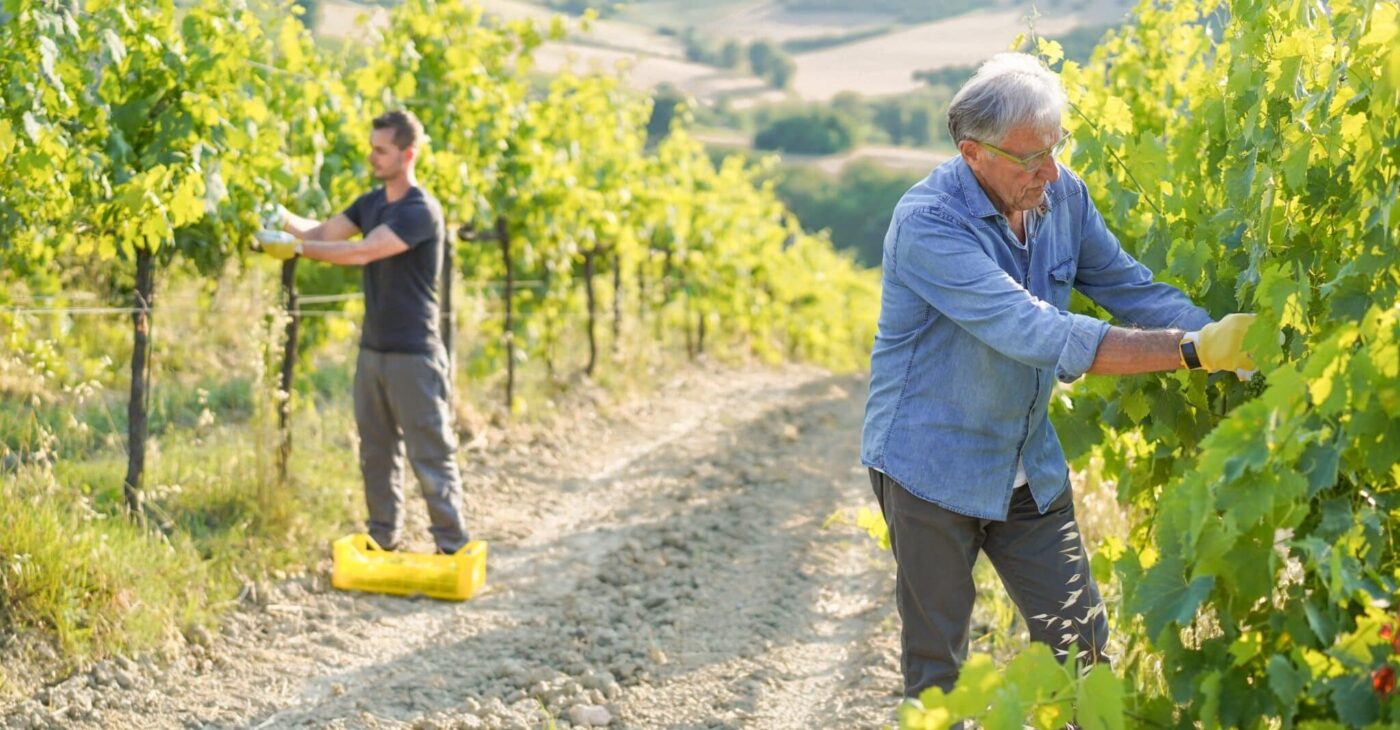
Biodynamic wine sits at the intersection of philosophy, agronomic practice, and real market value. The term is everywhere, yet rarely explained with any precision. This article does not advocate for biodynamics, nor dismiss it. It maps what the approach actually entails, who applies it rigorously, what the science says, and why a growing number of estate buyers now factor certification into their acquisition criteria.
In Brief
- Biodynamic viticulture is rooted in Rudolf Steiner’s 1924 agricultural lectures; it goes beyond organic farming by treating the vineyard as a self-regulating ecosystem governed by natural rhythms.
- The nine biodynamic preparations (BD 500 to BD 508) and the planting calendar are the two most distinctive practical pillars.
- Two main certifications govern the category: Demeter International and, in France, Biodyvin. Demeter requires that 10% of the estate’s land be dedicated to biodiversity.
- Scientific evidence on wine quality remains inconclusive; evidence on soil health is more solid.
- Among Bordeaux estates, Château Palmer and Château Pontet-Canet are the most prominent certified converts. Château Climens followed suit.
- Biodynamic certification is increasingly treated as a value indicator by buyers of wine estates, particularly in the premium segment.
What Is Biodynamic Wine?
A definition beyond the marketing
Biodynamic wine is produced from grapes grown following the principles of biodynamic agriculture, a holistic farming system developed in the early twentieth century. The term “biodynamic” is not a marketing label open to interpretation; it is a certified designation governed by strict protocols. A wine labeled biodynamic must, at minimum, come from a vineyard that avoids synthetic pesticides, herbicides, and fertilizers, applies a set of specific plant and mineral preparations to the soil and vines, and follows a planting calendar tied to lunar and cosmic cycles.
The word itself combines “biological” and “dynamic.” The underlying idea is that a farm, including a vineyard, is not a production unit but a living organism whose health depends on the balance of its internal forces rather than external chemical inputs. As wine writer Jamie Goode has put it, biodynamics is “a philosophy or worldview that then impacts on agricultural practice.”
One further distinction is worth noting from the start. A wine labeled “made from biodynamic grapes” indicates only that the fruit was grown to Demeter farming standards. A wine labeled “biodynamic wine” goes further: the grapes are biodynamically farmed and no cellar manipulations have been applied, including yeast additions or acidity adjustments.
How biodynamic wine differs from organic and natural wine
| Criterion | Biodynamic | Organic | Natural |
|---|---|---|---|
| Synthetic pesticides/herbicides | Prohibited | Prohibited | Generally avoided, no legal standard |
| Specific soil preparations | Required (BD 500–508) | Not required | Not required |
| Planting calendar | Required | Not required | Sometimes practiced |
| Certification | Demeter or Biodyvin | AB, EU Organic, USDA Organic | None (no legal definition) |
| Copper and sulfur use | Limited, permitted | Permitted within limits | Often avoided, no fixed rule |
| Cellar intervention | Strictly limited | Moderate limits | Minimal, by principle |
| Additive sulfites | Strictly limited | Permitted within limits | Often zero-sulfite, no standard |
Organic is a regulated legal category. Natural wine is not: there is no official definition, no certifying body, and no enforceable standard. Natural wines are generally made from organic or biodynamic grapes, using indigenous yeasts, with minimal or no added sulfites — but variability from bottle to bottle is inherent to the approach. Biodynamic sits between these two in regulatory terms but demands far more than organic in terms of agronomic philosophy.
The Origins: Rudolf Steiner and the 1924 Agricultural Lectures
Who was Rudolf Steiner and what did he propose?
Rudolf Steiner (1861–1925) was an Austrian philosopher, architect, and social reformer, founder of the anthroposophical movement. In June 1924, at the request of farmers concerned by the declining health of their soils and livestock, he delivered eight lectures in Koberwitz (now Kobierzyce, Poland). These became the foundational text of biodynamic agriculture — notably, they preceded most of the organic farming movement by several decades.
Steiner’s argument was that industrial farming, then still young, was severing the connections between the soil, the plant, the animal, and the cosmos. He proposed a set of preparations made from plant, mineral, and animal materials, and he suggested that planting and harvesting decisions should align with lunar and astronomical rhythms. He died in 1925, before any formal system was established around his ideas.
From general agriculture to viticulture: the wine adaptation
Steiner addressed farming broadly. The application to viticulture came later, through practitioners in Germany, Austria, and France. The first significant transfer to wine was in Alsace, where winemakers in the 1960s and 1970s began experimenting with biodynamic protocols. By the 1980s and 1990s, the approach had spread to Burgundy, the Loire, and eventually to Bordeaux and the wider international wine world.
The Core Practices of Biodynamic Viticulture
The nine preparations: horn manure, horn silica, and herbal ferments
The preparations are numbered BD 500 to BD 508. Some are fermented inside animal organs: cow horns, deer bladders, animal skulls. They are used in extremely small quantities, stirred dynamically into water before application, a process called dynamization.
| Number | Main ingredient | Primary use |
|---|---|---|
| BD 500 | Horn manure (cow dung fermented inside a cow horn) | Stimulates root growth and soil microbiology |
| BD 501 | Horn silica (ground quartz fermented inside a cow horn) | Stimulates above-ground growth and light assimilation |
| BD 502 | Yarrow (Achillea millefolium), in a deer bladder | Potassium and sulfur regulation in the soil |
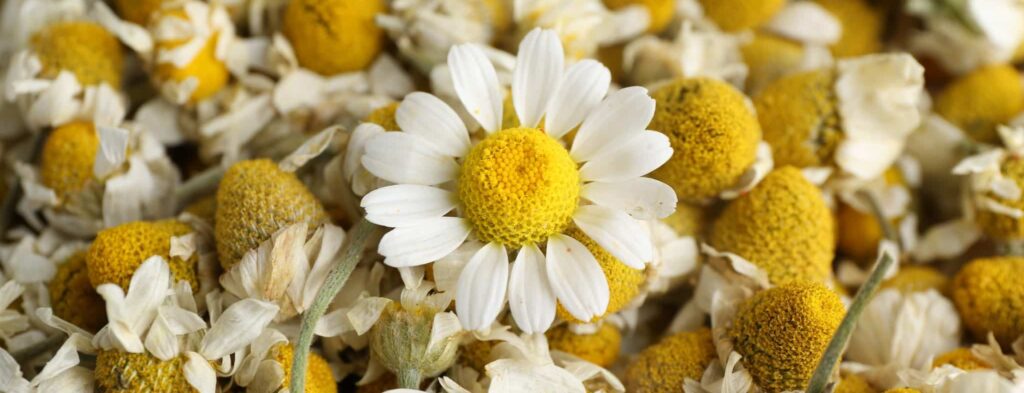
| BD 503 | Chamomile (Matricaria chamomilla) | Nitrogen stabilization |
| BD 504 | Stinging nettle | Iron availability and overall soil health |
| BD 505 | Oak bark, in an animal skull | Calcium regulation, disease resistance |
| BD 506 | Dandelion (Taraxacum officinale) | Silicon and potassium mediation |
| BD 507 | Valerian (Valeriana officinalis) | Phosphorus regulation, frost protection |
| BD 508 | Horsetail (Equisetum arvense) | Silica enrichment, fungal disease suppression |
BD 502 to BD 507 are combined to produce biodynamic compost. BD 500, 501, and 508 are applied directly in the vineyard.
The biodynamic calendar: fruit, root, flower, and leaf days
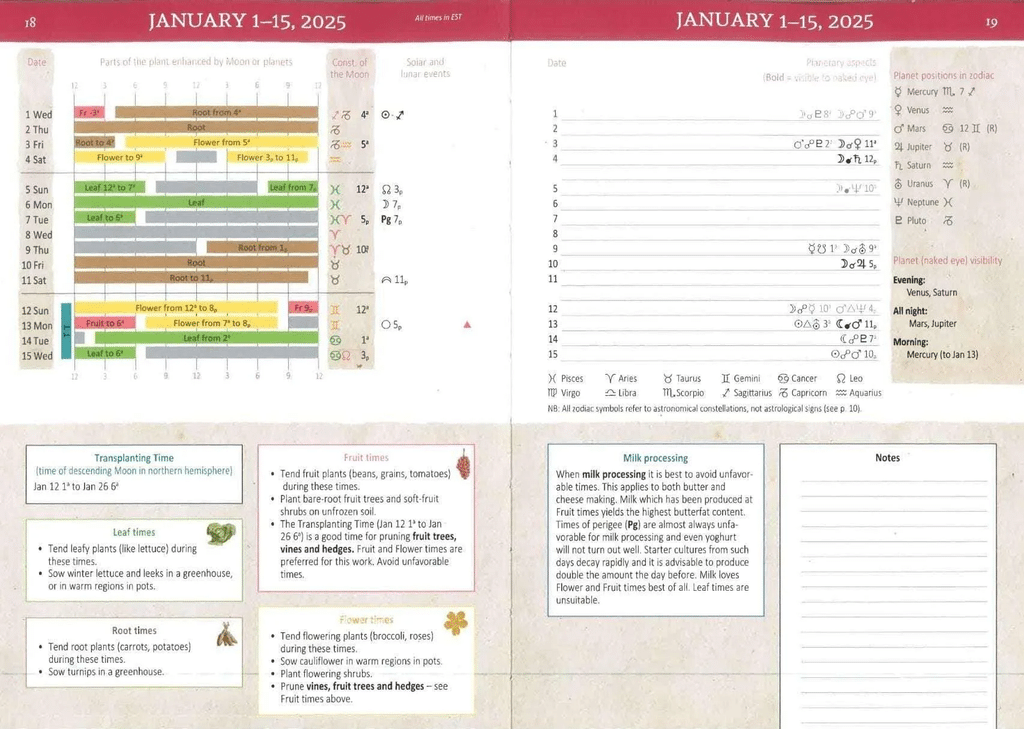
The biodynamic calendar, developed primarily by Maria Thun based on Steiner’s indications, classifies each day according to one of four elements: fire (fruit days), earth (root days), air (flower days), or water (leaf days). Practitioners prefer to harvest, rack, or taste wines on fruit and flower days. The scientific validity of this calendar has not been established, though some practitioners remain firm believers in the observable differences.
Treating the vineyard as a closed ecosystem
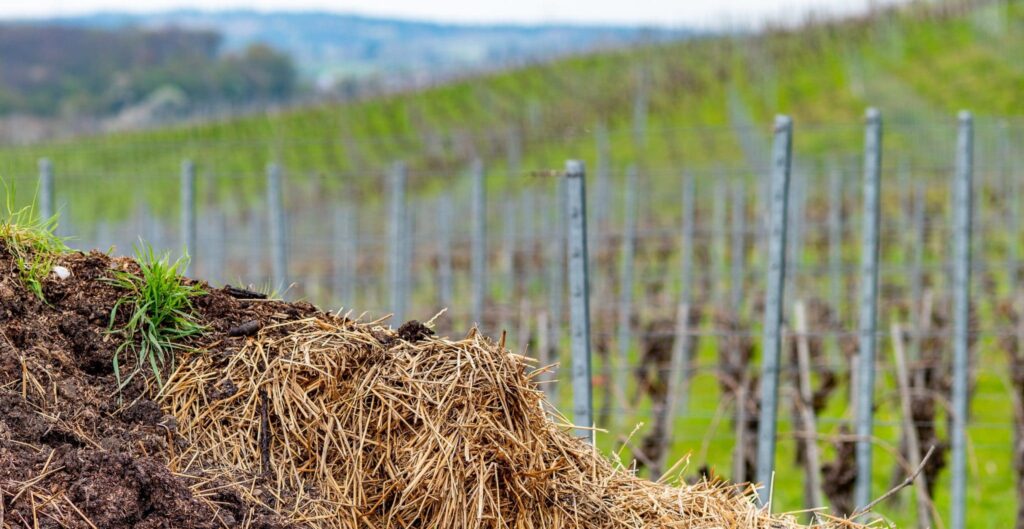
Beyond preparations and the calendar, biodynamic viticulture requires the vineyard to function as a self-sustaining system. Cover crops, composting on site, livestock where possible, and a structured avoidance of off-farm industrial inputs are all part of the approach. The goal is a closed nutrient cycle in which the estate produces what it needs.
How Biodynamic Wine Is Certified
Demeter International: the reference certification
Demeter International is the global certifying body for biodynamic agriculture, present in over fifty countries. For a vineyard to obtain Demeter certification, it must complete a two-year conversion period, meet detailed requirements for both vineyard management and winery practices, and submit to annual third-party inspections. Critically, certified estates must also dedicate at least 10% of their land to biodiversity — hedgerows, wildflower strips, forests, or other non-productive habitat. In the cellar, Demeter standards limit permitted additives significantly below conventional or even organic thresholds.

The organization uses a trefoil as its logo;
its presence on a label signals full compliance with the above.
Biodyvin: the French winegrower-driven certification
Biodyvin was created in 1995 by producers in Burgundy and the Loire. It applies specifically to wine, with standards comparable to Demeter’s for the vineyard and somewhat different cellar provisions. Several hundred French domains carry the certification, with a strong concentration in Burgundy, Alsace, and the Loire.
Certified versus practicing without certification
A meaningful share of biodynamic viticulture happens outside certified estates. Romanée-Conti, perhaps the most frequently cited biodynamic domain in the world, works to Demeter standards without pursuing formal certification. The presence of a Demeter or Biodyvin logo signals transparent accountability; its absence does not imply the opposite.
Does Biodynamic Farming Actually Improve Wine? What the Evidence Says
What scientific studies have found and not found
Research on biodynamic viticulture remains limited in scope. Some findings are encouraging on soil health: biodynamic plots have shown higher microbial diversity and improved organic matter levels in several European trials. Others are less clear-cut: a California study found no significant difference between biodynamic and general organic farming methods across soil quality, vine yield, cluster metrics, and berry weight.
On wine quality specifically, the evidence points in different directions. A blind tasting of ten wine pairs — biodynamic versus conventional — saw nine of the ten biodynamic samples rated higher by judges citing “terroir” expression. Such tastings are difficult to replicate under rigorous conditions, and no scientific consensus exists on whether biodynamic viticulture produces measurably better wine.
What winemakers themselves report
Practitioners who have converted describe improved expression of terroir, faster response to vineyard treatments, and more resilient vines under climatic stress. These observations are consistent across regions and estates, but they are difficult to separate from the effects of greater overall attentiveness and reduced chemical dependency generally.
The honest verdict: soil, biodiversity, and the taste question
The agronomic case for biodynamic viticulture rests most solidly on soil health and biodiversity. A healthier soil structure supports vine health, improves water retention, and reduces erosion risk — all of which matter to an estate’s long-term productivity. As Wine Spectator notes, “biodynamic farming isn’t a guarantee of quality, but it does mean that a lot of effort was put into it.” Whether this translates into a perceptibly different or better wine remains genuinely open.
The World’s Great Biodynamic Wine Producers
France: from Loire and Burgundy to Alsace, Rhône, and Bordeaux
France holds the highest concentration of biodynamic estates of any wine-producing country. The movement took root first in the Loire (Nicolas Joly at Coulée de Serrant, certified in the 1980s) and in Burgundy (Domaine Leroy, Domaine Leflaive). Alsace, the Rhône, and Champagne — notably Louis Roederer — followed, along with producers across the south from the 1990s onward. Bordeaux converted late, slowed by estate size, the labor intensity of biodynamic protocols, and the historically conservative culture of the region.
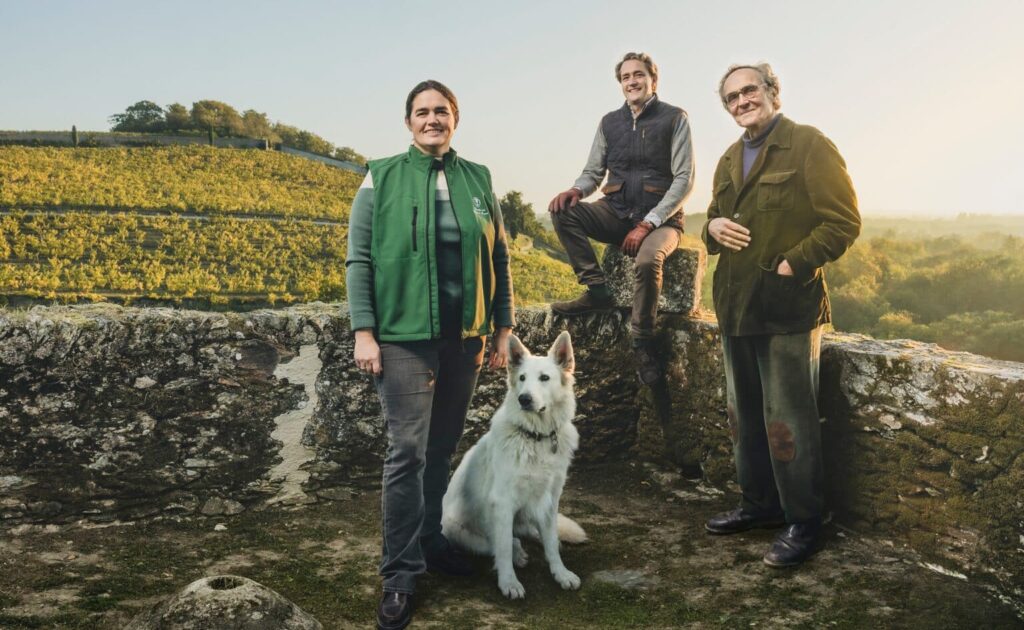
Portrait of the Joly family, Coulée de Serrant
A documentary project celebrating family-owned businesses passed down through generations in the Anjou region. Published in the Département de Maine-et-Loire journal. Source: coulee-de-serrant.com
Notable biodynamic estates in Bordeaux
- Château Palmer (Margaux, 3rd Grand Cru Classé): Demeter certified since 2018; one of the most documented and publicly communicated conversions in the Médoc, with conversion beginning in 2008.
- Château Pontet-Canet (Pauillac, 5th Grand Cru Classé): Biodyvin certified; consistently cited for quality gains since conversion.
- Château Climens (Barsac, 1st Grand Cru Classé de Sauternes): Demeter certified; a reference for biodynamics in the sweet wine segment.
- Château La Tour Figeac (Saint-Émilion): Demeter certified.
- Château Fonroque (Saint-Émilion, Grand Cru Classé): among the earliest Bordeaux conversions.
This shift takes place against a backdrop of profound transformation, which we analyse in our essay on the current crisis and reinvention of the Bordeaux wine region.
Global leaders
| Producer | Country/Region | Certification | Year of conversion |
|---|---|---|---|
| Domaine de la Romanée-Conti | France, Burgundy | Biodynamic (not certified) | 1990s |
| Domaine Leflaive | France, Burgundy | Demeter | 1997 |
| Domaine Leroy | France, Burgundy | Demeter | 1988 |
| Nicolas Joly / Coulée de Serrant | France, Loire | Demeter | 1984 |
| Zind-Humbrecht | France, Alsace | Demeter | 1997 |
| Chapoutier | France, Rhône | Demeter | 1991 |
| Louis Roederer | France, Champagne | Biodynamic (partial) | 2000s |
| Nikolaihof | Austria | Demeter | 1971 |
| Bonterra Organic Vineyards | USA, California | Demeter | 1987 |
| Frey Vineyards | USA, California | Demeter | 1980 |
| Cristom Vineyards | USA, Oregon | Biodynamic (practicing) | 2004 |
The Cost of Biodynamic Wine: For the Producer, for the Buyer
Why biodynamic wine is often more expensive
Biodynamic viticulture is labor-intensive by design. The dynamization of preparations, the maintenance of biodiversity strips, compliance with the planting calendar, and the livestock and composting requirements all demand more hours per hectare than conventional management. Yields are typically lower: vines under biodynamic management tend to produce less fruit per plant, concentrating quality at the cost of volume. Certification adds administrative and inspection costs. Most producers pass this structural cost difference on to buyers, at least in part.
The operational reality of running such an estate is demanding, as we explain in our overview of the daily management of a wine estate.
Conversion costs and yield impact
Conversion from conventional to biodynamic typically takes three to five years, during which the estate absorbs the full cost of new protocols without the ability to label wines as biodynamic. Yield reductions of 15 to 30 percent during conversion are not unusual. Some estates report permanent yield reductions of 10 to 20 percent post-certification, relative to their pre-conversion baseline.
Biodynamic Conversion and Vineyard Value
How Demeter or Biodyvin certification changes an estate’s valuation
Certification is one of the criteria that can meaningfully alter an estate’s price, alongside the other factors discussed in our practical guide on valuing a wine estate. In the premium market, certified estates command a differentiated positioning. The key driver is what certification signals: a commitment to long-term soil health, reduced chemical dependency, and alignment with the values of an increasingly sustainability-conscious international buyer base. The effect on valuation is most pronounced in the 2 to 8 million euro segment, where buyers are often lifestyle investors or high-net-worth individuals with an existing interest in organic or regenerative practices.
The market appetite for certified biodynamic vineyards
Demand for certified biodynamic estates has grown measurably since 2018 and accelerated after 2020. Buyers seeking this profile combine genuine interest in sustainable farming with the expectation of long-term capital resilience: estates that require fewer chemical inputs carry lower exposure to regulatory tightening on pesticide use, a live policy risk in France and across the EU.
For a general framework on how to approach a vineyard investment, our dedicated guide walks through the strategic questions to consider first: how to invest in a vineyard.
Buyers looking for certified estates can browse our current selection of organic and biodynamic vineyard estates for sale.
How to Buy, Taste, and Enjoy Biodynamic Wine
Reading a biodynamic wine label
A Demeter trefoil on the label indicates full estate certification under international biodynamic standards. A Biodyvin logo indicates certification under the French scheme. Note also the distinction between “made from biodynamic grapes” (farming only) and “biodynamic wine” (farming plus no cellar manipulation): the latter is the more stringent claim.
Serving temperature, decanting, tasting differences
Serve biodynamic wines at the same temperatures as their conventional counterparts: reds between 14 and 18°C, whites between 8 and 12°C, depending on style. Some practitioners recommend tasting on fruit or flower days according to the biodynamic calendar. Biodynamic reds from Burgundy or Bordeaux often benefit from decanting in their youth. Limited use of stabilizing additives in the cellar means some bottles may show light sediment — a natural consequence of minimal intervention, not a defect.
Where to buy biodynamic wine
Specialist wine merchants, organic food stores, and direct estate purchases are the most reliable channels. Online retailers focused on natural and organic wines — Vivino, The Wine Society, Millesima for investment-grade bottles — carry documented biodynamic selections. At the top end, auction houses handle certified-estate bottles with full provenance records.
Synthesis
- Certified practice defines biodynamic wine, not marketing. Demeter and Biodyvin are the two certifications to look for; Demeter requires 10% of estate land reserved for biodiversity.
- “Made from biodynamic grapes” and “biodynamic wine” are two distinct label claims; the latter is more demanding.
- Evidence supports the agronomic case, particularly soil health and biodiversity, more strongly than the sensory one.
- Bordeaux estates including Palmer, Pontet-Canet, and Climens have completed full conversions. The movement is now mainstream at the classified level.
- Biodynamic certification adds measurable value in the estate market, particularly in the 2 to 8 million euro segment.
- Conversion is costly and yield-reducing; it represents a long-term agronomic commitment.
Frequently Asked Questions About Biodynamic Wine
What is biodynamic wine exactly?
Biodynamic wine comes from grapes grown under biodynamic agriculture, a farming system Rudolf Steiner developed in 1924. It prohibits synthetic inputs, requires the application of nine specific preparations (BD 500 to BD 508), and follows a planting calendar tied to lunar cycles. Demeter International governs production worldwide; in France, Biodyvin holds that role. A wine labeled “biodynamic wine” (as opposed to “made from biodynamic grapes”) also excludes cellar manipulations such as yeast additions or acidity adjustments.
Is biodynamic wine organic?
Biodynamic wine always meets organic standards: it excludes synthetic pesticides, herbicides, and fertilizers. However, organic wine is not biodynamic. Organic farming does not require the biodynamic preparations, the planting calendar, or the 10% biodiversity land allocation that Demeter certification demands. Biodynamic is the more demanding of the two designations.
What is the difference between biodynamic and natural wine?
Biodynamic wine is certified and governed by precise, enforceable standards. Natural wine has no legal definition, no certifying body, and no fixed standard. Natural wines generally use organic or biodynamic grapes and indigenous yeasts, with minimal or no added sulfites — though bottle-to-bottle variability comes with the territory. The two approaches are compatible but not equivalent.
Does biodynamic wine contain sulfites?
Most biodynamic wines contain low levels of added sulfites. Demeter certification permits sulfite additions but at levels significantly below conventional limits. A small number of biodynamic producers choose to add none at all. The label will indicate “contains sulfites” when total sulfur dioxide exceeds 10 mg/L, including naturally occurring sulfites from fermentation.
Is biodynamic wine better than conventional wine?
The evidence is genuinely mixed. Biodynamic viticulture is associated with improved soil health and higher biodiversity, which are meaningful agronomic indicators. On wine quality specifically, a blind tasting of ten wine pairs found nine biodynamic samples rated superior; a California study found no measurable difference between biodynamic and organic viticulture on several technical criteria. The honest answer: more effort does not automatically mean better wine, but the conditions for better wine are more deliberately cultivated.
What are the main certifications for biodynamic wine?
The two principal certifications are Demeter International (global, present in over fifty countries) and Biodyvin (France-specific, created by producers in Burgundy and the Loire). Demeter requires a minimum two-year conversion period, annual inspections, and the dedication of 10% of estate land to biodiversity. Biodyvin operates under comparable vineyard standards with somewhat different cellar provisions.
Which famous wine producers are biodynamic?
Among the most recognized: Domaine de la Romanée-Conti, Domaine Leflaive, and Domaine Leroy in Burgundy; Nicolas Joly at Coulée de Serrant in the Loire; Zind-Humbrecht in Alsace; Chapoutier in the Rhône; Louis Roederer in Champagne. In Bordeaux: Château Palmer, Château Pontet-Canet, and Château Climens. Internationally: Nikolaihof in Austria, Bonterra and Frey in California.
Why is biodynamic wine more expensive?
Biodynamic viticulture requires significantly more labor per hectare than conventional farming. Yields are typically 10 to 30 percent lower. Certification adds inspection and administrative costs. The result is a higher cost of production that most producers pass on, at least partially, in their pricing.
Conclusion
Biodynamic wine is neither mysticism nor miracle. It is a documented, certifiable farming approach with a coherent agronomic rationale, a set of verifiable practices, and a growing body of evidence on its soil-level benefits. Whether the lunar calendar influences fermentation is a question science has not resolved. What is documented: biodynamic estates tend to have healthier soils, lower chemical dependency, and increasing market appeal among buyers who treat sustainability as a long-term investment criterion.
For Bordeaux in particular, the conversion wave of the past decade has moved biodynamic viticulture from fringe experiment to mainstream classified-estate practice. Estates that converted early are reaping both the agronomic benefits of a restored soil ecosystem and the commercial benefits of a differentiated positioning.
If you are considering acquiring a vineyard estate in southwest France, the biodynamic question is worth addressing directly with your advisor. Our team at Vineyards Bordeaux is familiar with the certified estate market and can guide you toward acquisitions where the certification is genuine, documented, and agronomically meaningful. Browse our current selection of organic and biodynamic estates or contact our team to discuss your criteria.
Sources
- Steiner, R. Spiritual Foundations for the Renewal of Agriculture. Bio-Dynamic Farming & Gardening Association, 1993 (original lectures: June 1924, Koberwitz).
- Demeter International. Production Standards for the Use of Demeter, Biodynamic and Related Trademarks. demeter.net.
- Biodyvin. Specification and certified producers list. biodyvin.com.
- Reeve, J.R. et al. “Soil and Winegrape Quality in Biodynamically and Organically Managed Vineyards.” American Journal of Enology and Viticulture, 2005.
- Döring, J. et al. “Research on Biodynamic Viticulture: A Review.” Biodynamics, 2015.
- Thun, M. The Biodynamic Sowing and Planting Calendar. Floris Books, annual publication.
- Goode, J. “Biodynamics: What Is It?” Wine Anorak. Cited in The Sourcing Table, thesourcingtable.com.
- Wine Spectator. “What Are Biodynamic Wine Grapes?” winespectator.com.
- Wikipedia. “Biodynamic wine.” en.wikipedia.org/wiki/Biodynamic_wine.
- CIVB (Conseil Interprofessionnel du Vin de Bordeaux). Market data and estate reports.
- Château Palmer. Conversion documentation. chateau-palmer.com.
- Château Pontet-Canet. Biodynamic conversion records. pontet-canet.com.
