
Ask any wine drinker to name a French region and Bordeaux comes first. Bordeaux red wine built that reputation, one glass at a time, across three centuries of trade with London, Antwerp and New York. Yet the term covers a surprisingly wide range of wines, from a ten-dollar Bordeaux Supérieur to a First Growth that sells for the price of a car. This guide explains what actually defines a Bordeaux red, from the blend in the bottle to the property that grew it.
In Brief
- Bordeaux red wine is always a blend, built mainly from Merlot, Cabernet Sauvignon and Cabernet Franc.
- The region splits into a Left Bank, favoring Cabernet Sauvignon, and a Right Bank, favoring Merlot.
- Appellations such as Médoc, Saint-Émilion and Pomerol each impose their own rules and reflect distinct soils.
- Prices range from under $20 for everyday Bordeaux to several thousand dollars for a First Growth.
- Vintage quality varies year to year, but recent decades have produced an unusual run of strong harvests.
What Is a Bordeaux Red Wine?
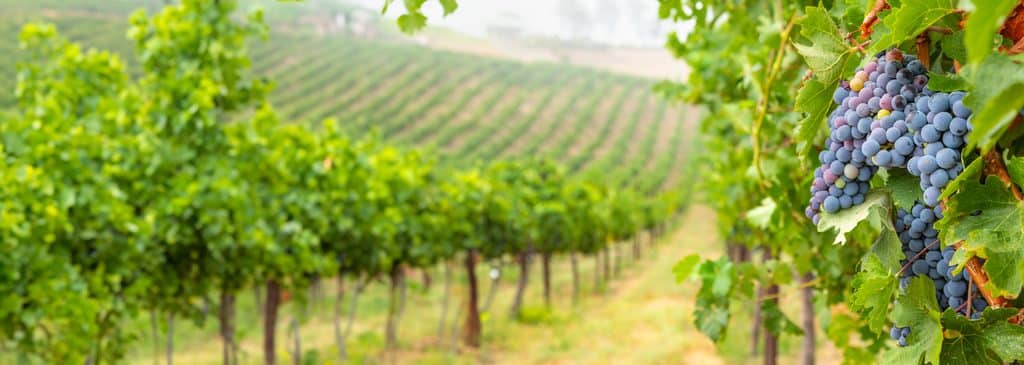
A wine from the Bordeaux region, defined by an appellation and a blend
A Bordeaux red wine is a wine produced within the Bordeaux appellation system, in southwestern France, using grape varieties authorized by French law. The label always names an appellation, whether the broad Bordeaux AOC or a narrower one like Pauillac. That appellation tells the buyer where the grapes grew and, indirectly, what style to expect. For a general orientation to the appellations, châteaux and grape varieties that define the region, our overview of the Bordeaux vineyards at a glance is a good place to start.
Bordeaux sits along the Gironde estuary, where the Dordogne and Garonne rivers meet before reaching the Atlantic. This geography created distinct banks with different soils, and those soils, more than any winemaker’s preference, decided which grapes would dominate on each side.
Why Bordeaux is a region of blends, not single varieties
Unlike Burgundy, which built its reputation on Pinot Noir alone, Bordeaux relies on blending. Estates plant several red varieties in the same vineyard and adjust the final proportions after each harvest, depending on how each grape performed that year. A cool, wet September might favor Merlot over Cabernet Sauvignon; a long, dry summer often does the opposite. This flexibility lets a château maintain a consistent house style even as conditions shift from one vintage to the next.
The Grapes Behind Every Bordeaux Red Wine
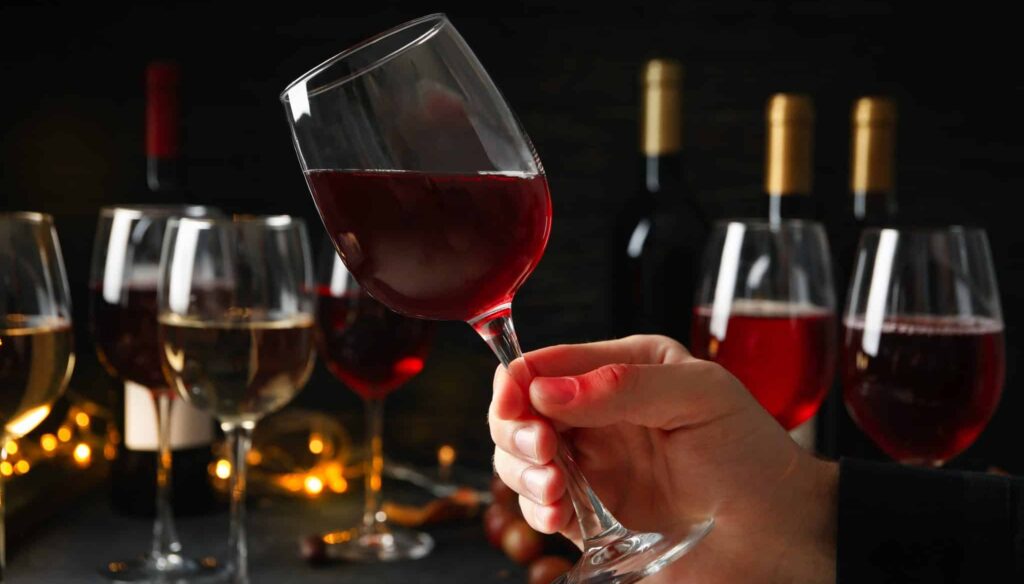
Merlot: the most planted red grape in Bordeaux
The Merlot covers roughly two-thirds of Bordeaux’s red plantings, making it the backbone of the regional blend. It ripens early, yields generous fruit and produces wines with soft tannins and flavors of dark cherry and plum. Merlot thrives on the clay and limestone soils of the Right Bank, where it often makes up the majority of a wine, and it also plays a supporting role in many Left Bank blends.
Cabernet Sauvignon: the backbone of the Left Bank
Cabernet Sauvignon accounts for roughly a fifth of red plantings, concentrated mainly on the gravel soils of the Left Bank. It ripens later than Merlot and needs sun and drainage to reach full maturity, conditions the gravel mounds of the Médoc provide naturally. The grape brings firm tannins, dark fruit and a structure built for long aging, which is why the great Left Bank estates, including the First Growths, lean on it heavily.
Cabernet Franc, Petit Verdot and Malbec: the supporting cast
Cabernet Franc contributes aromatic lift, with notes of raspberry and violet, and plays a starring role in parts of Saint-Émilion. Petit Verdot adds color and spice in small proportions, particularly in the Médoc, while Malbec appears occasionally in Right Bank and Entre-deux-Mers blends. None of these varieties typically leads a blend, but each shapes its character in a specific vintage or appellation.
Bordeaux Red Grape Varieties
| Grape Variety | Typical Share of Red Plantings | Aromatic Character | Preferred Appellations |
|---|---|---|---|
| Merlot | ~66% | Dark cherry, plum, soft tannins | Saint-Émilion, Pomerol |
| Cabernet Sauvignon | ~22% | Blackcurrant, cedar, firm tannins | Pauillac, Margaux, Saint-Julien |
| Cabernet Franc | ~9% | Raspberry, violet, herbal notes | Saint-Émilion, Graves |
| Petit Verdot, Malbec | ~2-3% combined | Deep color, spice, added structure | Médoc, Entre-deux-Mers |
Left Bank vs Right Bank: Two Different Styles of Bordeaux Red
Left Bank: Cabernet Sauvignon and structured wines
The Left Bank, home to the Médoc and Graves, sits on deep gravel that drains quickly and forces vine roots to dig deep for water. This stress produces small, concentrated berries and wines built for decades in the cellar. Left Bank estates typically favor Cabernet Sauvignon, giving these wines their characteristic firmness and slow evolution.
Right Bank: Merlot-driven, softer and more approachable
Across the Gironde, the Right Bank appellations of Saint-Émilion and Pomerol sit on clay and limestone that retain moisture and suit Merlot far better than Cabernet Sauvignon. The resulting wines tend to be plusher and more approachable in their youth, though the best examples from top estates age just as gracefully as their Left Bank counterparts.
How to tell a Left Bank Bordeaux from a Right Bank in the glass
A Left Bank wine typically shows firmer tannins, higher acidity and aromas leaning toward blackcurrant, tobacco and cedar. A Right Bank wine tends toward plum, dark chocolate and a rounder, more immediate texture. Neither style is superior; they simply reflect different soils and different grapes.
Left Bank vs Right Bank at a Glance
| Region | Dominant Grape | Dominant Style | Signature Appellations |
|---|---|---|---|
| Left Bank | Cabernet Sauvignon | Structured, tannic, built to age | Pauillac, Margaux, Saint-Julien, Saint-Estèphe |
| Right Bank | Merlot | Plush, approachable, softer tannins | Saint-Émilion, Pomerol |

The Great Appellations of Bordeaux Red Wine
Médoc and its communes: Pauillac, Margaux, Saint-Julien, Saint-Estèphe
The Médoc peninsula stretches north from Bordeaux city along the Gironde estuary, and its finest communes read like a roll call of fine wine history. Pauillac alone is home to three of the five First Growths. Margaux is prized for perfume and finesse, Saint-Julien for balance, and Saint-Estèphe for firmer, longer-aging structure. The Médoc peninsula alone accounts for the majority of Bordeaux’s classified estates, and we regularly assist buyers looking at Médoc wine estates for sale.
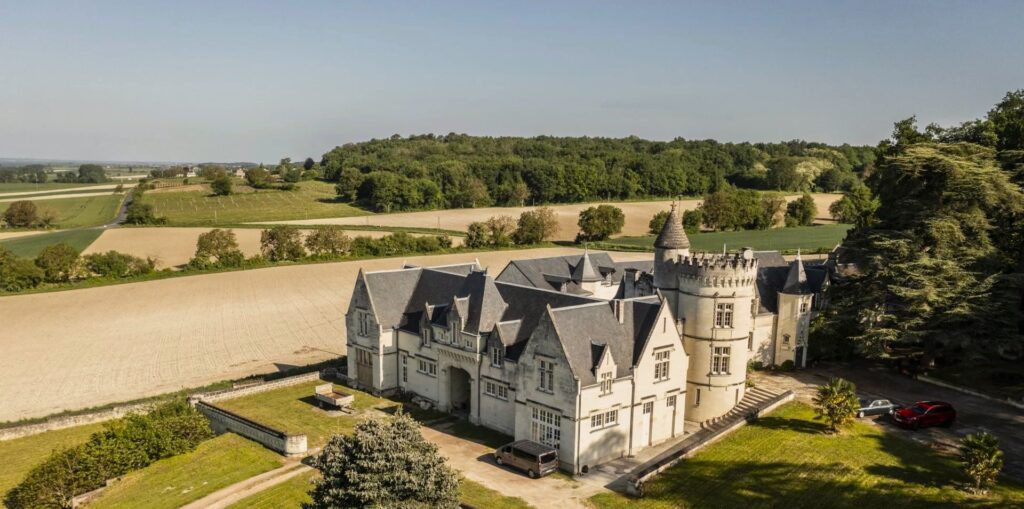
Saint-Émilion and Pomerol: the Right Bank icons
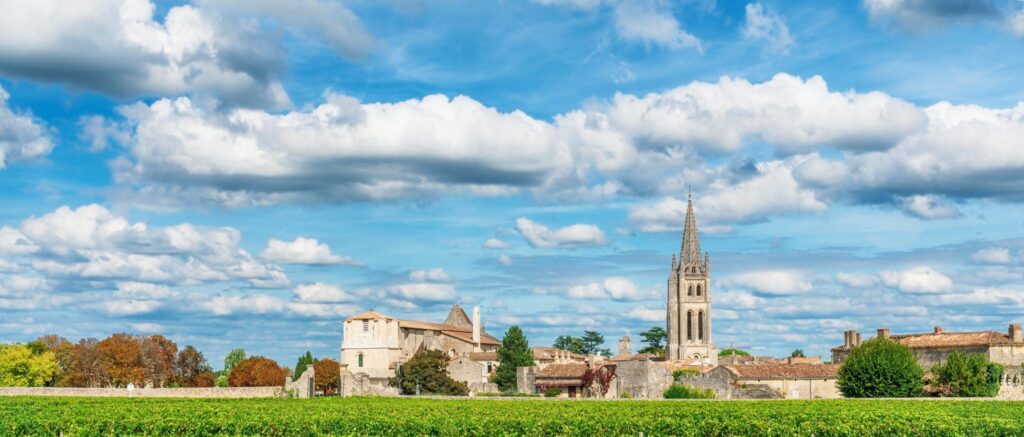
Saint-Émilion, a UNESCO World Heritage site, produces Merlot-based wines ranging from village-level bottlings to icons like Château Ausone and Château Cheval Blanc. Neighboring Pomerol has no official classification, yet it holds some of the most sought-after names in Bordeaux, headed by Château Pétrus, on a tiny surface of clay-rich vineyard.
Pessac-Léognan and Graves: gravel terroir south of Bordeaux
South of the city, the Graves region gave Bordeaux its name for gravel and remains one of the few areas producing celebrated reds and whites side by side. Pessac-Léognan, carved out of northern Graves in 1987, is home to Château Haut-Brion, the only property outside the Médoc ranked among the 1855 First Growths.
Bordeaux and Bordeaux Supérieur: the accessible tier
The broad Bordeaux and Bordeaux Supérieur appellations cover vineyards across the wider region and account for the majority of the area’s production by volume. Bordeaux Supérieur requires lower yields and slightly longer aging than basic Bordeaux, which often translates into more concentration for a modest price. These wines represent the most practical entry point into the region’s character.
The Great Vintages of Bordeaux Red Wine
How Bordeaux vintages are rated
Bordeaux’s maritime climate brings genuine vintage variation, shaped by rainfall during flowering and sunshine at harvest. Merchants and critics assess each year on ripeness, tannin balance and aging potential, though qualitative judgment matters more than any single score. A vintage can also perform unevenly between banks, since Merlot and Cabernet Sauvignon respond differently to the same weather.
Legendary vintages of the 20th century
Certain years remain benchmarks decades later. 1961 produced wines of extraordinary concentration from a tiny harvest. 1982 marked a turning point toward riper, more generous styles that reshaped critical taste. 1990 combined heat and structure in a way still discussed among collectors today.
The best modern vintages: 2000 to today
The past two decades gave Bordeaux an unusually consistent run of excellent years. 2000, 2005 and 2010 produced classically structured wines suited to long cellaring, while 2009 offered a rounder, more immediately generous style. 2015, 2016, 2018 and 2019 confirmed the trend, with 2016 in particular praised for combining freshness and depth. 2020 and 2022 have both drawn early praise, though it will take years to know how they age.
Notable Modern Vintages
| Vintage | General Character | Suggested Drinking Window |
|---|---|---|
| 2000 | Structured, classic, built to age | Now through 2035 |
| 2005 | Concentrated, precise, tannic | Now through 2040 |
| 2009 | Ripe, opulent, approachable young | Now through 2035 |
| 2010 | Powerful, dense, long-lived | 2028 through 2050 |
| 2016 | Fresh, balanced, harmonious | Now through 2045 |
| 2019 | Fresh yet structured, modern classic | Now through 2040 |
| 2022 | Promising, still developing in bottle | 2027 onward |
How to Read a Bordeaux Red Wine Label
The appellation and the château name
Every Bordeaux label leads with two pieces of information: the château name and the appellation. The appellation, printed prominently, indicates the legal zone and its production rules, while the château name identifies the estate. Vintage year appears just as prominently, since it shapes both style and price more than almost any other single factor.
Grand Vin, Second Wine, Grand Cru Classé: understanding the hierarchy
Many estates produce a Grand Vin, their flagship wine made from the best barrels, alongside a Second Wine made from younger vines or less concentrated lots. Classification terms add another layer: Grand Cru Classé in Saint-Émilion, Cru Bourgeois in the Médoc, and the historic 1855 Classification that ranked Médoc and Sauternes estates into five growth tiers. At the top of that hierarchy sit the five First Growths of Bordeaux, whose history and terroir we explore in a separate guide.
How Much Does a Bottle of Bordeaux Red Wine Cost?
From everyday Bordeaux to First Growth prices
Bordeaux red wine spans an unusually wide price spectrum for a single region. Everyday Bordeaux and Bordeaux Supérieur bottles typically sell for $10 to $20. Classified growths from well-regarded communes generally run from $40 to $150, depending on reputation and vintage. First Growths and a handful of Right Bank icons command four figures per bottle in strong vintages, reflecting both scarcity and demand from collectors worldwide. Many great vintages are actually purchased two years before release, through the Bordeaux en primeur system, which lets buyers secure allocations before bottling.
How to choose a good Bordeaux under $50
Below $50, Cru Bourgeois wines from the Médoc offer some of the best value in the region, along with Saint-Émilion Grand Cru bottlings from lesser-known producers. Look for a recent, well-regarded vintage rather than a famous name, since a strong year from a modest château often outperforms a weak year from a prestigious one.
How to Serve, Pair and Enjoy Bordeaux Red Wine

Serving temperature, decanting, glassware
Serve Bordeaux red wine around 60 to 65 degrees Fahrenheit, slightly cooler than room temperature. Young, tannic wines benefit from an hour or two of decanting, which softens tannins and opens aromatics. A large-bowled glass helps concentrate the wine’s perfume, particularly for Cabernet-dominant blends that need room to breathe.
Classic food pairings: beef, lamb, cheese
Bordeaux red wine pairs naturally with roasted or grilled red meat, particularly lamb and beef, where fat and protein soften the tannins. Right Bank Merlot-driven wines suit richer dishes like duck or braised short rib, while firmer Left Bank wines match well with aged hard cheeses such as Comté or mature cheddar.
How long to cellar a Bordeaux red wine
Everyday Bordeaux is best enjoyed within three to five years of the vintage. Classified growths generally need eight to fifteen years to soften, and top First Growths can improve for thirty years or more in good storage conditions. Patience remains the defining virtue of serious Bordeaux collecting.
In Brief
- Bordeaux red wine is a blend, shaped primarily by Merlot and Cabernet Sauvignon, and always tied to a specific appellation.
- The Left Bank favors structured, Cabernet-driven wines; the Right Bank favors softer, Merlot-driven ones.
- Appellations such as Pauillac, Saint-Émilion and Pomerol each carry a distinct identity rooted in soil and grape choice.
- Prices range from everyday bottles under $20 to First Growths reaching several thousand dollars.
- Recent vintages, particularly 2016, 2018 and 2019, offer strong quality at more accessible prices than older benchmark years.
Frequently Asked Questions About Bordeaux Red Wine
What is Bordeaux red wine exactly?
Bordeaux red wine is a blended wine made from grapes grown within the Bordeaux appellation in southwestern France, mainly Merlot, Cabernet Sauvignon and Cabernet Franc. The exact blend varies by estate, vintage and which bank of the Gironde the vineyard sits on.
Is Bordeaux red wine dry or sweet?
Bordeaux red wine is dry. Bordeaux does produce sweet wines, most famously Sauternes, but these are white wines made from botrytized grapes and belong to a separate category entirely.
What grapes are in a Bordeaux red wine?
A Bordeaux red typically blends Merlot, Cabernet Sauvignon and Cabernet Franc, with smaller additions of Petit Verdot and Malbec. The proportions shift depending on the appellation and the character of the vintage.
What is the difference between Bordeaux and Burgundy red wine?
Bordeaux red wine is a blend of several grape varieties, while Burgundy red wine is made almost exclusively from a single variety, Pinot Noir. Bordeaux also organizes its finest properties around château ownership, while Burgundy classifies individual vineyard plots. For a wider look at how Bordeaux compares to the other great French wine regions, see our complete guide to French vineyards.
How long can a Bordeaux red wine age?
Everyday Bordeaux ages well for three to five years, while classified growths can improve for fifteen to thirty years, and top First Growths from strong vintages can continue developing for fifty years or more.
What is a good Bordeaux red wine under $50?
Cru Bourgeois bottlings from the Médoc and Grand Cru wines from lesser-known Saint-Émilion producers both offer strong quality under $50, particularly from recent, well-regarded vintages such as 2018 or 2019.
What is the best vintage of Bordeaux red wine?
There is no single best vintage, since quality depends on region, grape and personal taste, but 2000, 2005, 2009, 2010, 2016 and 2019 are widely regarded as among the finest of the past three decades.
What food goes best with Bordeaux red wine?
Bordeaux red wine pairs best with roasted lamb, grilled beef and aged hard cheeses. Right Bank wines also suit duck and braised dishes, while Left Bank wines favor richer cuts of red meat.
Conclusion
Bordeaux red wine rewards curiosity. Behind a single phrase sits a region of contrasting soils, six authorized grape varieties and a spectrum of prices that spans from weeknight bottles to trophy wines. Understanding the Left Bank and Right Bank divide, and the appellations built on each, turns a confusing label into a clear signal of what to expect in the glass. For those drawn further into the region, whether toward a specific appellation, a vintage worth cellaring, or a property of one’s own, the team at Vineyards-Bordeaux is available to guide the next step.
Sources
- Bordeaux.com, Bordeaux Wine Council (CIVB), grape variety data
- Jancis Robinson, Bordeaux weather and crop reports
- Decanter, Bordeaux vintage guides
- The Wine Cellar Insider, Bordeaux vintage rankings
- UNESCO World Heritage listing, Saint-Émilion
- 1855 Bordeaux Classification, official records
