
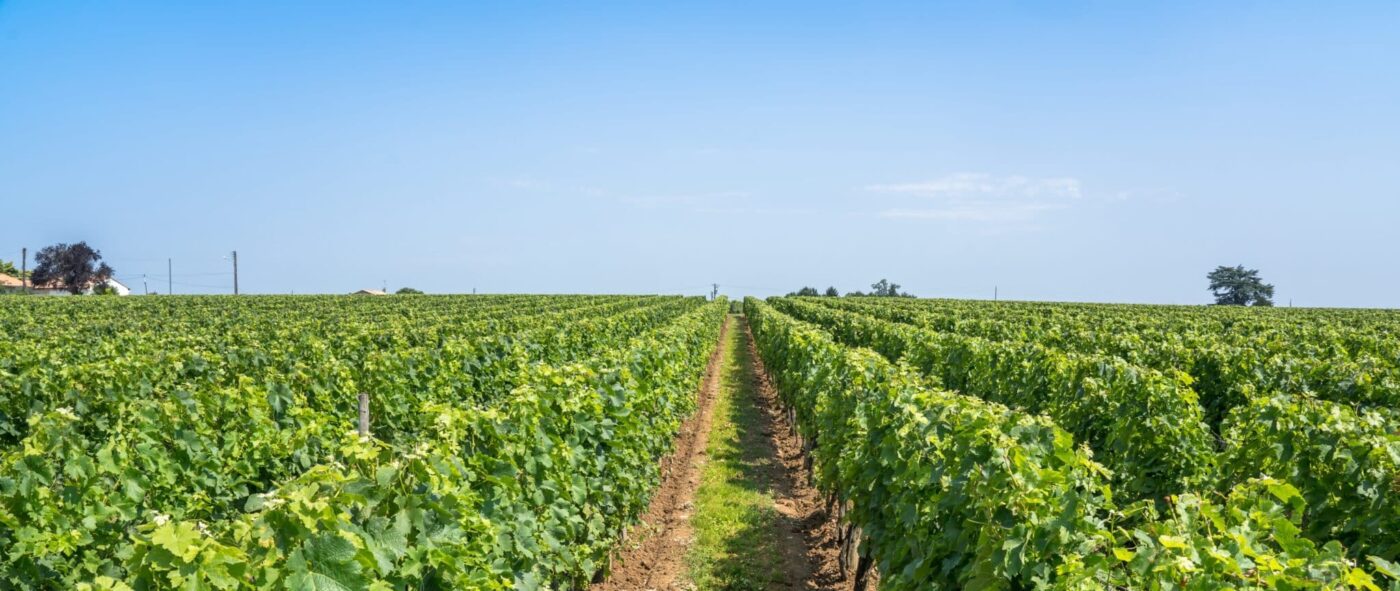
Pomerol occupies barely 800 hectares on Bordeaux’s Right Bank, yet it produces some of the most sought-after wines on earth. There is no château in the grand Médoc sense, no official classification, and no village square. What Pomerol has instead is a plateau of blue clay and a small group of wines, Pétrus and Le Pin chief among them, that regularly outprice the First Growths. This guide explains what makes the appellation unique, how it built its reputation, what its wines taste like, and what it costs to bring a bottle home.
In Brief
- Pomerol is a Right Bank appellation in the Libournais, covering roughly 800 hectares, making it one of the smallest major wine regions in Bordeaux.
- It has never adopted an official classification. Reputation and price are set entirely by the market and by critical opinion.
- Merlot dominates the blend, typically around four-fifths of plantings, grown on a distinctive plateau of blue clay known locally as the crasse de fer.
- Pétrus and Le Pin are the appellation’s best-known names, but Lafleur, Vieux Château Certan, and Trotanoy command comparable respect among collectors.
- Bottle prices span an unusually wide range, from accessible everyday Pomerol under $80 to five-figure sums for the rarest vintages of Pétrus or Le Pin.
- Visits are almost always by appointment, and many estates work exclusively through négociants rather than welcoming walk-in visitors.
What Is Pomerol Wine? A Definition
A small Right Bank appellation in the Libournais
Pomerol sits just north of Libourne, wedged between the Barbanne stream and the western edge of Saint-Émilion. It belongs to the Libournais, the cluster of Right Bank appellations built around Merlot rather than Cabernet Sauvignon. Roughly 150 producers farm the appellation, and many hold less than a hectare of vines. Only a handful, Château de Sales among them, extend beyond twenty hectares. Houses and cellars sit scattered among the vines rather than gathered around a central square, since no real village exists within Pomerol’s boundaries.
No official classification: an appellation apart
Every other major Bordeaux appellation, from the 1855 Médoc classification to the Saint-Émilion ranking, has organized its châteaux into tiers. Pomerol never has. Producers here have consistently declined to formalize a hierarchy, leaving reputation, scarcity, and the judgment of the international trade to set prices instead. A grower with two hectares and no château building can outrank neighbors with centuries of history, provided the wine in the glass justifies it. This is precisely what happened at Le Pin and, decades earlier, at Pétrus itself.
The Geography and Terroir of Pomerol
A tiny appellation of just 800 hectares
At around 800 hectares, Pomerol represents a fraction of one percent of the Bordeaux vineyard. Its scale forces genuine scarcity: annual production across the entire appellation totals only a few million bottles, spread across roughly 150 estates. That scarcity, combined with sustained global demand, has made Pomerol land among the most expensive agricultural real estate in France. Anyone considering a property in this appellation should first understand what really drives the valuation of a Bordeaux vineyard, since parcel size here says little about a wine’s eventual standing.
The famous blue clay of the Pomerol plateau
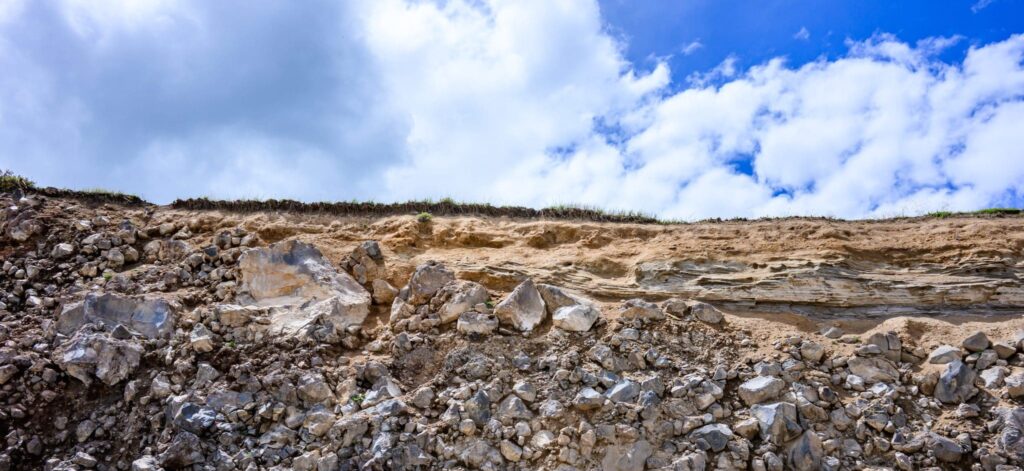
At the heart of the appellation lies a small plateau where deep blue clay comes close to the surface. This clay retains water with remarkable precision, releasing it slowly enough to sustain the vine through dry summers without ever causing the excess vigor that dilutes flavor. Pétrus sits almost entirely on this clay, which is one reason its neighbors, however skilled, rarely match its consistency across difficult vintages.
Iron-rich subsoil (crasse de fer): the secret ingredient
Beneath the clay and gravel runs a band of iron-rich hardpan known locally as crasse de fer or machefer. Roots that reach this layer draw structure and a faintly mineral, almost bloody note that seasoned tasters learn to recognize blind. The composition and depth of this iron layer vary meaningfully from one plot to the next, which explains why estates only a few hundred meters apart can produce wines of noticeably different character.
The Grape Varieties of Pomerol
Merlot: king of Pomerol
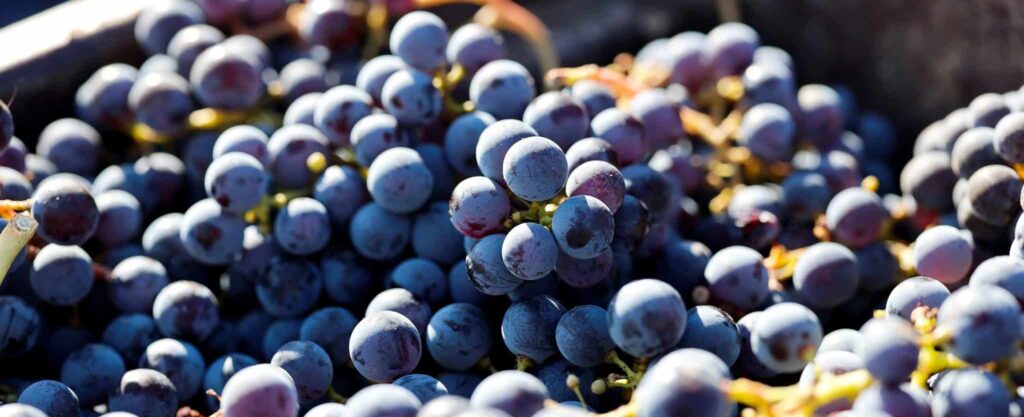
Merlot dominates the appellation, typically accounting for around four-fifths of total plantings. On Pomerol’s clay, it ripens into something denser and more structured than the softer, fruit-forward Merlot found elsewhere in Bordeaux. This is the variety responsible for the appellation’s signature richness and its reputation for wines that can be approachable young yet age for decades.
The Cabernet Franc and Cabernet Sauvignon: the minority varieties
| Grape variety | Typical share of plantings |
|---|---|
| Merlot | Around 80% |
| Cabernet Franc | Around 15% |
| Cabernet Sauvignon | Small remainder |
Cabernet Franc contributes freshness, a savory herbal lift, and the fine-grained tannin that keeps Pomerol from feeling heavy. Cabernet Sauvignon appears only sparingly. Its later ripening cycle suits the appellation’s clay soils less well than Merlot or Cabernet Franc.
The History of Pomerol Wine
Roman origins and medieval winemaking
Vines have grown around Pomerol since Roman times. The site’s position along a trade route made it a natural place to plant. During the Middle Ages, the Knights Hospitaller established a commandery here. Vines grew alongside travelers on the pilgrimage route toward Santiago de Compostela.
A late-blooming reputation: local wine turned global icon
The Médoc’s great châteaux were already famous in the eighteenth century. Pomerol built its international standing almost entirely in the twentieth. For generations, its wines were sold in bulk to négociants and rarely bottled under an estate name. That changed after the Second World War, as a small number of growers began bottling at the property and investing in quality over volume.
The Moueix family and the rise of Pomerol
No single family shaped modern Pomerol more than the Moueix. Établissements Jean-Pierre Moueix, founded in Libourne in 1937, built long-term relationships with growers across the appellation and, from the 1960s onward, championed Pétrus in international markets, including a well-documented introduction to American collectors. The firm went on to acquire or manage several of the appellation’s finest addresses, among them Trotanoy, La Fleur-Pétrus, and Hosanna.
The Great Châteaux of Pomerol
For a broader view of the châteaux that shape the Bordeaux landscape, our insider’s guide to Bordeaux wine estates offers a full panorama. Within Pomerol itself, a small cluster of estates defines the appellation’s upper tier.
Château Pétrus: the most famous name in Pomerol
Pétrus farms just 11.4 hectares at the highest point of the plateau, planted almost entirely to Merlot on the appellation’s purest concentration of blue clay. Owned by the Moueix family, with a minority stake held by an outside investor since 2018, the estate produces around 30,000 bottles a year and makes no second wine. Demand has outstripped supply for decades.
Le Pin: the tiny garage wine legend
Belgian négociant Jacques Thienpont bought a modest parcel here in 1979 for one million francs, at a time when the site produced anonymous bulk wine. He built the estate into one of Bordeaux’s most improbable success stories, working from a tiny cellar and a vineyard that remains only a few hectares. Critical acclaim for vintages such as 1982 transformed Le Pin from an unknown name into a wine that regularly rivals the price of Pétrus itself.
Château Lafleur: the rival of Pétrus
Sitting directly across from Pétrus on the plateau, Lafleur farms 4.5 hectares under the Guinaudeau family, who took full ownership in 2002. Many of its vines were never replanted after the severe frost of 1956, giving the estate an unusually old vine stock. Connoisseurs frequently describe Lafleur as Pomerol’s quiet rival to Pétrus, prized for a wine of exceptional density built on an almost equal split of Merlot and Cabernet Franc.
Vieux Château Certan: history and elegance
One of the appellation’s oldest estates, Vieux Château Certan has belonged to the Thienpont family since 1924, the same family behind Le Pin. Its 14 hectares carry an unusually high share of Cabernet, giving the wine a structure and freshness that sets it apart from more purely Merlot-driven neighbors. It remains one of the most consistent and respected names in Pomerol.
L’Église-Clinet, La Fleur-Pétrus, Trotanoy and other stars
A tier just below these leading names still commands serious attention. L’Église-Clinet, a small estate near the appellation’s church, has built a reputation for concentration on under five hectares. La Fleur-Pétrus, acquired by Jean-Pierre Moueix in 1950 as his first Pomerol purchase, offers refined, plateau-grown Merlot at a comparatively accessible price. Trotanoy, also under Moueix stewardship, sits on some of the highest ground in the appellation and produces a dense, structured wine built for extended cellaring.
| Château | Planted area | Owner | Indicative price (grand vin, per bottle) |
|---|---|---|---|
| Pétrus | 11.4 hectares | Moueix family | $3,000 to $5,000+ |
| Le Pin | Around 2.7 hectares | Thienpont family (Jacques Thienpont) | $3,000 to $4,500+ |
| Lafleur | 4.5 hectares | Guinaudeau family | $1,500 to $3,000 |
| Vieux Château Certan | 14 hectares | Thienpont family (Alexandre and Guillaume Thienpont) | $250 to $400 |
| L’Église-Clinet | Around 4.9 hectares | Historically the Durantou family | $300 to $600 |
| La Fleur-Pétrus | 18.7 hectares | Moueix family | $300 to $450 |
| Trotanoy | Around 7.2 hectares | Moueix family | $300 to $500 |
Figures above are indicative, drawn from cross-referenced trade and estate sources, and vary by vintage and merchant. Exact planted areas fluctuate slightly year to year as estates adjust parcels.
The Style of Pomerol Wines
Aromatic profile: dark fruit, truffle, iron
Pomerol’s Merlot-driven wines lean toward dark plum and black cherry, framed by truffle, damp earth, and a mineral, faintly ferrous edge drawn from the crasse de fer subsoil. Violet and cedar often emerge with age.
Texture, structure and ageing potential
What distinguishes Pomerol is texture as much as flavor. The clay soils produce wines with a plush, velvety mid-palate, supported by tannins that are firm but rarely harsh. Top vintages from estates such as Pétrus, Lafleur, or Vieux Château Certan comfortably age for thirty years or more.
How Much Does a Bottle of Pomerol Cost?
From entry-level Pomerol to Pétrus
Pomerol offers one of the widest price ranges of any Bordeaux appellation.
| Price tier | Approximate range |
|---|---|
| Entry-level Pomerol | $30 to $80 |
| Mid-range estates | $80 to $300 |
| Classified-equivalent tier | $300 to $800 |
| Pétrus and Le Pin | Above $2,000 |
Wines in the entry-level and mid-range tiers still offer genuine Pomerol character, often from young-vine cuvées or smaller estates outside the plateau’s leading names. Pricing generally follows the annual Bordeaux en primeur campaign, when estates release opening prices roughly eighteen months before bottling.
The secondary market and auction highlights
Because production is so limited, much of Pomerol’s top tier trades on the secondary market rather than through standard retail. Pétrus and Le Pin appear regularly at international auction, with exceptional vintages, 1990, 2000, 2005, 2009, and 2015 among them, consistently drawing strong results. Collectors sometimes ask us whether they should focus on cellaring bottles or acquiring an estate outright, a question we explore in our essay on why and how to invest in wine.
Notable Pomerol vintages of the past two decades: 2005, 2009, 2010, 2015, 2016, 2019, 2020, and 2022 are widely regarded among the appellation’s strongest recent years, prized respectively for their concentration, ripeness, or structure depending on the estate and growing conditions of each season.
Visiting Pomerol: What You Need to Know
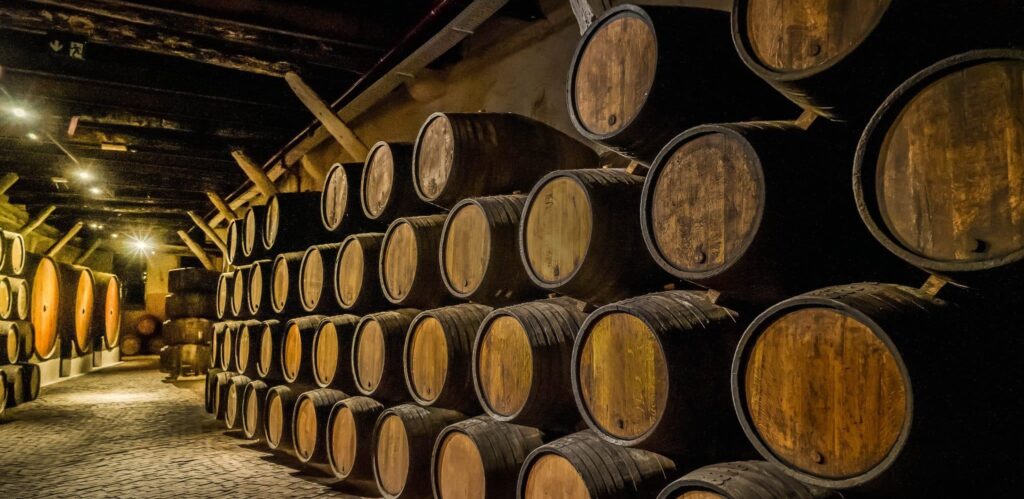
Access to Pomerol châteaux: by appointment only
Pomerol has no visitor infrastructure comparable to the grand Médoc estates. Most properties are family-run, working farms rather than tourist destinations, and visits require an appointment arranged well in advance, often through a specialized broker or the estate’s négociant. Some of the most celebrated names, Pétrus and Le Pin included, rarely open to the public at all.
Combining Pomerol with a Saint-Émilion trip
Given its compact size, Pomerol is best visited as part of a broader Right Bank itinerary. Saint-Émilion lies just minutes away, with its medieval town center and far more developed tourism offer. As with Pomerol, many of the most sought-after estates on the Right Bank rarely reach the open market, and access requires a broker specialized in Saint-Émilion vineyards.
Frequently Asked Questions About Pomerol Wine
What is Pomerol wine exactly?
Pomerol wine is a red Bordeaux from a small Right Bank appellation near Libourne, made predominantly from Merlot grown on clay and iron-rich soils. The appellation covers roughly 800 hectares and produces exclusively red wine.
Why is Pomerol not classified?
Pomerol has never adopted an official classification, unlike the Médoc or Saint-Émilion. Producers have resisted formalizing a hierarchy, leaving critical reputation and market demand to set which estates command the highest prices.
What is the difference between Pomerol and Saint-Émilion?
Pomerol is smaller, entirely unclassified, and built on Merlot grown over blue clay. Saint-Émilion is larger, has an official classification revised periodically, and spans a more varied mix of limestone, clay, and gravel soils.
What grapes are used in Pomerol wine?
Pomerol wines rely primarily on Merlot, typically around four-fifths of the blend, complemented by Cabernet Franc and a small amount of Cabernet Sauvignon.
What makes Château Pétrus so expensive?
Pétrus combines a small production of around 30,000 bottles with a vineyard planted almost entirely on the purest blue clay in the appellation, sustained critical acclaim, and decades of demand that outstrips supply.
How long can a Pomerol wine age?
Top Pomerol estates such as Pétrus, Lafleur, or Vieux Château Certan can age for thirty years or more in strong vintages, while mid-range Pomerol typically drinks well within ten to fifteen years.
What does Pomerol wine taste like?
Pomerol wines typically show dark plum and black cherry fruit, truffle and damp-earth undertones, and a mineral, iron-tinged edge, carried on a plush texture with firm, well-integrated tannins.
Can you visit Pomerol châteaux?
Most Pomerol estates accept visitors by appointment only, generally arranged well in advance through the château or a specialized broker. Several of the appellation’s most famous names do not open to casual visitors at all.
Conclusion
Pomerol remains one of Bordeaux’s most improbable success stories: a handful of hectares, no classification, and no château architecture to speak of, yet a roster of names that regularly outprice the grandest Médoc estates. Its wines reward patience, and its estates change hands quietly and rarely. Understanding Pomerol on its own terms, rather than through the Médoc’s more familiar hierarchy, is the starting point for engaging seriously with it. Our team at Vineyards-Bordeaux works closely with Right Bank estates and their owners, and we are glad to advise on both the wines and the properties behind them.
Sources
- CIVB (Conseil Interprofessionnel du Vin de Bordeaux)
- INAO (Institut National de l’Origine et de la Qualité)
- SAFER
- Union des Grands Crus de Bordeaux
- Liv-ex
- Christie’s International Real Estate market reports
- Établissements Jean-Pierre Moueix, estate documentation
- Vieux Château Certan et Château Lafleur, estate documentation
