

Grande Champagne sits at the top of the six crus that make up the Cognac appellation. Its name alone signals a certain standard among wine and spirits professionals. Centered on the town of Segonzac in Charente, this chalk-and-clay landscape produces eaux-de-vie prized for their finesse. The spirit ages gracefully for decades in oak. For buyers considering a vineyard property here, one thing matters first. Understanding what sets Grande Champagne apart, in terroir and in market terms, starts with the land itself.
In Brief
- Grande Champagne is the first and most prestigious of Cognac’s six crus, classified since 1938 by the Bureau National Interprofessionnel du Cognac (BNIC).
- The zone covers roughly 34,700 hectares. Vines cover around 13,000 to 13,200 hectares of that land, centered on Segonzac in Charente.
- Soils are clay-limestone, dating to the Campanian geological age, prized for their water retention and their ability to produce eaux-de-vie built for long barrel aging.
- Vineyard land prices in Grande Champagne have fallen sharply since 2023, alongside a broader correction across the Cognac basin tied to weaker US and Chinese exports.
- The landscape, often likened to Tuscany, combines open hillsides, stone manor houses and villages such as Segonzac, Bourg-Charente and Ambleville.
What Makes Grande Champagne the First Cru of Cognac
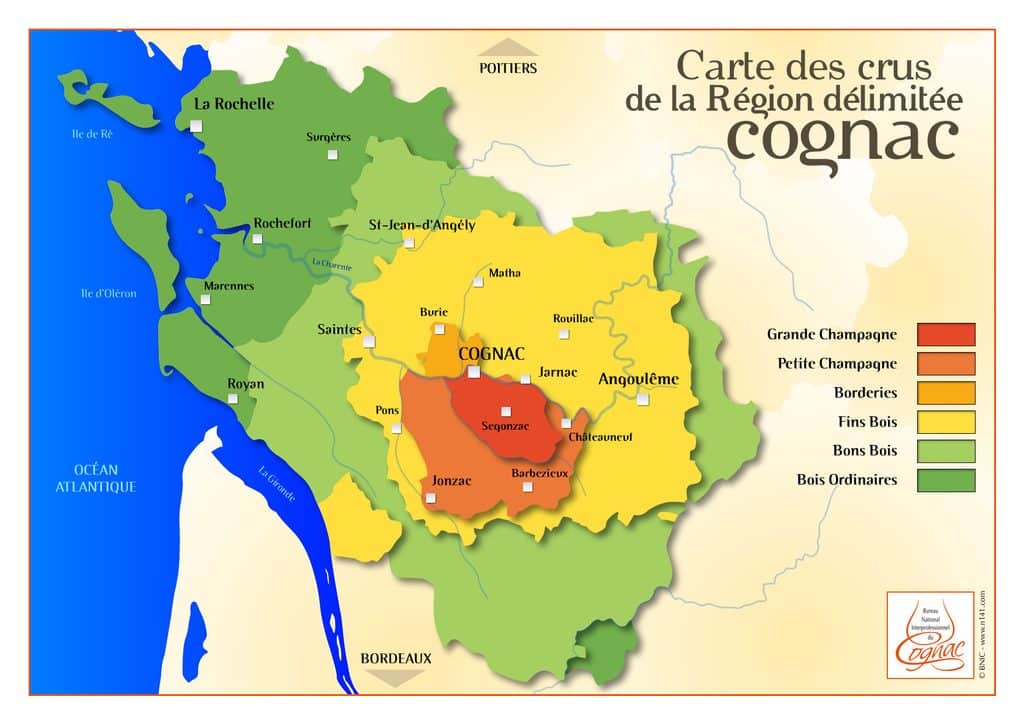
A 1938 decree organizes Cognac production into six crus, ranked by soil quality. From first to last: Grande Champagne, Petite Champagne, Borderies, Fins Bois, Bons Bois and Bois Ordinaires. This classification traces back to geologist Henri Coquand. In the mid-19th century, he mapped the region’s soils and matched them to the character of the eaux-de-vie they produced. That mapping still forms the basis of the crus recognized today by the BNIC.
Grande Champagne occupies the top of this hierarchy. Professionals consider its eaux-de-vie the most refined of the six, and the best suited to extended aging in oak. That’s why the finest XO and Hors d’Age cognacs so often draw on Grande Champagne stock.
Terroir and Geology
The name Grande Champagne has nothing to do with the sparkling wine region further north. It comes from “champagne,” an old term for open, chalky countryside, and the geology bears that out. The soil here is a soft, chalky clay laid down during the Campanian age, part of the Cretaceous period. It sits over a limestone bedrock. This porous ground holds water efficiently. That helps the vines withstand dry spells while still drawing minerality from the chalk below.
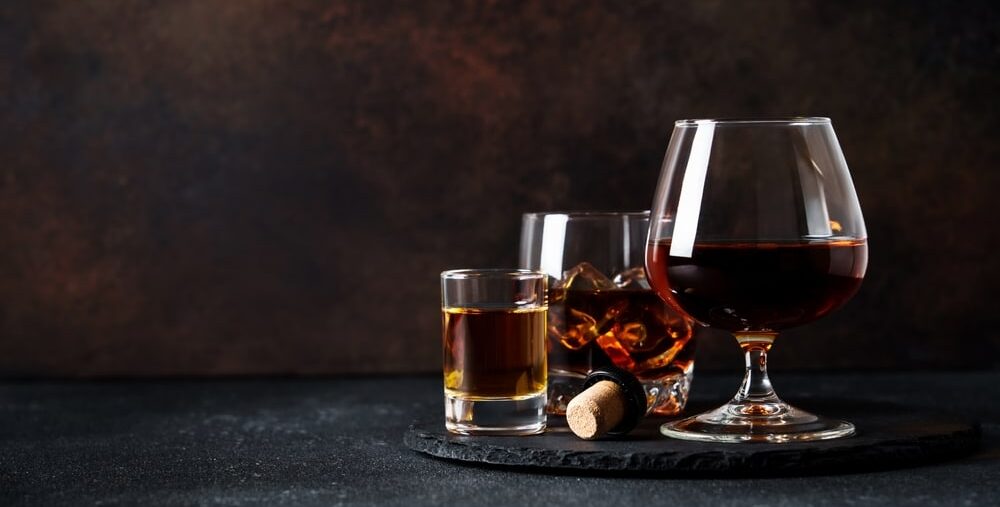
According to the BNIC, this terroir yields eaux-de-vie marked by floral aroAccording to the BNIC, this terroir yields eaux-de-vie marked by floral aromas, notably vine flower and dried lime blossom. Growers also note a character they call “sarment sec,” or dry vine shoot.mas, notably vine flower and dried lime blossom, alongside notes the growers describe as “sarment sec,” or dry vine shoot. In tasting terms, the BNIC lists finesse, distinction and length as the defining traits of a true Grande Champagne cognac.
Where Grande Champagne Lies
The cru sits just south of the town of Cognac, framed by the Charente river to the north and its tributary, the Né, to the south and west. Segonzac, encircled by vines in every direction, marks its heart. The entire zone lies within Charente, unlike several of the surrounding crus, which spill into Charente-Maritime.
The Six Crus of Cognac at a Glance
| Cru | Rank | Soil character | Aromatic profile |
|---|---|---|---|
| Grande Champagne | 1st | Deep clay-limestone, Campanian chalk | Floral, vine flower, long aging potential |
| Petite Champagne | 2nd | Similar chalk base, thinner layer, stronger maritime influence | Floral and fruity, lighter structure |
| Borderies | 3rd | Surface soils decalcified | Violet, iris, matures faster than the Champagnes |
| Fins Bois | 4th | Jurassic “groies” in the north, Cretaceous-Tertiary mix in the south | Fruity, rounder, faster maturing |
| Bons Bois | 5th | Heterogeneous, Jurassic and Cretaceous formations | More pronounced “terroir” character |
| Bois Ordinaires | 6th | Coastal and island soils | Marked Atlantic influence |
A note on the numbers: the BNIC publishes a total appellation surface of 87,648 hectares across all six crus, but does not consistently break that figure down cru by cru. The planted-area estimates for crus other than Grande Champagne and Petite Champagne are therefore left qualitative here rather than forced into a number that no single authoritative source confirms.
Fine Champagne: When Grande and Petite Champagne Meet
A cognac can only carry the Grande Champagne name if every drop in the blend comes from that cru. When a blend draws on both Grande Champagne and Petite Champagne, with at least half coming from Grande Champagne, it earns the designation “Fine Champagne,” a distinction that appears on labels from many of the region’s established houses.
A Landscape of Stone and Vines
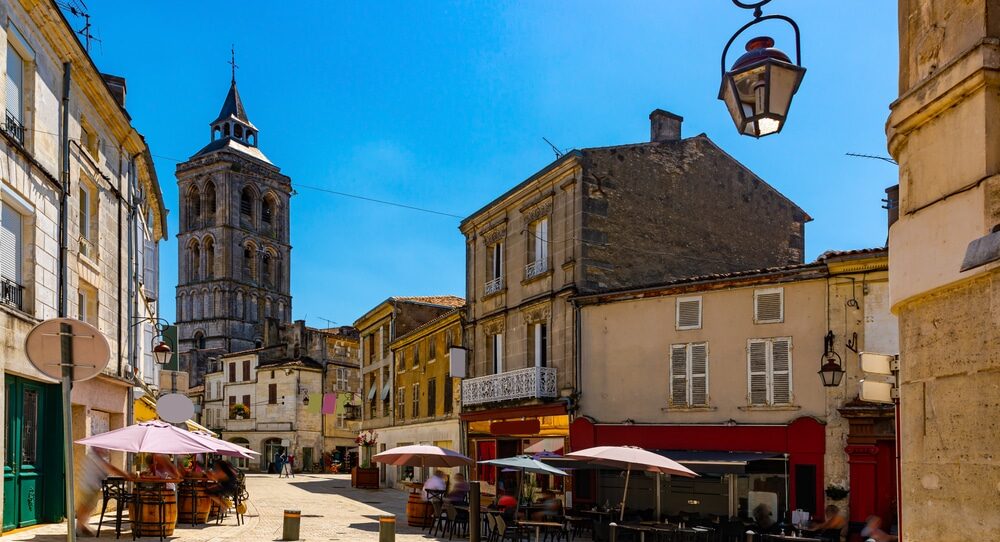
Grande Champagne earns its comparison to Tuscany honestly. The land rolls in open hillsides, vines climbing in every direction, punctuated by handsome logis and manoirs whose courtyards are closed off by carved stone porches. Romanesque churches, old mills, wash houses and dolmens are scattered through the countryside, each with its own local history attached.
Villages worth a detour include Segonzac itself, along with Bassac, Bourg-Charente, Ambleville, Angeac-Champagne and Juillac-le-Coq. The region remains quieter and less publicized than fashionable pockets like the Luberon or the Île de Ré, which is part of its appeal for buyers seeking privacy alongside prestige.
The Vineyard Property Market in Grande Champagne
The Cognac land market has gone through a marked correction since 2023, driven largely by falling exports to the United States and China, Cognac’s two largest markets. According to SAFER, vineyard land classified for AOP eaux-de-vie (Cognac and Armagnac combined) averaged €51,100 per hectare nationally in 2024, down 9.8% on 2023. Within Charente specifically, Grande Champagne land was reported at roughly €60,000 per hectare in 2024, itself down 8% year on year, reflecting its position as one of the two most sought-after crus alongside Borderies.
The correction deepened through 2025. SAFER’s national figures for eaux-de-vie AOP vineyards showed a 54.5% drop to an average of €23,200 per hectare, and regional reporting from Réussir Vigne placed transactions across Charente crus in a range from roughly €15,000 per hectare in Bons Bois up to around €28,000 per hectare for Borderies and Grande Champagne. SAFER notes that many owners in the region are now facing a shortage of buyers even at reduced prices, with some lease renewals and family transfers stalled as a result.
For buyers, this is a market in flux rather than a stable one. Grande Champagne still commands a premium over the outer crus, but the gap has narrowed considerably compared to two years ago, which changes the calculus for anyone weighing entry timing.
| Year | Grande Champagne (approx. €/ha) | Cognac & Armagnac AOP national average (€/ha) |
|---|---|---|
| 2024 | ~60,000 (-8%) | 51,100 (-9.8%) |
| 2025 | ~28,000 (estimate, Charente crus) | 23,200 (-54.5%) |
Source: SAFER / FNSafer, “Le prix des terres,” via Vitisphère and Réussir Vigne reporting. The 2025 Grande Champagne figure is a regional estimate covering Borderies and Grande Champagne together and should be confirmed against the SAFER Charentes-Cognac regional report before use in pricing communications.
Living in Grande Champagne
Despite its low profile compared to more heavily marketed regions, Grande Champagne is well connected. Angoulême, the nearest major hub, sits just 2 hours and 15 minutes from Paris by TGV, or roughly 3 hours direct from Roissy Charles de Gaulle airport. That accessibility, paired with a still-authentic rural character, is drawing a growing number of buyers looking to combine a working estate or a private residence with genuine seclusion.
In Brief
- Grande Champagne is the top-ranked cru of Cognac, delimited since 1938 and centered on Segonzac in Charente.
- The zone spans about 34,700 hectares, with 13,000 to 13,200 hectares under vine, on Campanian-era clay-limestone soils.
- Land prices have fallen sharply since 2023, with Grande Champagne still commanding a premium over most other crus despite the correction.
- The area combines stone architecture, open countryside and a TGV connection to Paris in just over two hours from Angoulême.
- Fine Champagne blends require at least 50% Grande Champagne eaux-de-vie, a mark of quality tied directly to this cru.
Frequently Asked Questions
What is Grande Champagne in Cognac?
Grande Champagne is the highest-ranked of the six crus that make up the Cognac appellation, known for producing eaux-de-vie with exceptional finesse and strong aging potential.
Why is Grande Champagne considered the best cru for Cognac?
Its clay-limestone soil, dating to the Campanian age, gives the eaux-de-vie a floral character and a structure that holds up well over decades in oak, which is why the finest old cognacs so often rely on it.
How large is the Grande Champagne cru?
The delimited zone covers around 34,700 hectares, of which approximately 13,000 to 13,200 hectares are actually planted with vines.
What is the difference between Grande Champagne and Petite Champagne?
Both share a similar chalky soil base, but Petite Champagne’s limestone layer is thinner and the maritime climate has a stronger influence, producing eaux-de-vie that are generally lighter and quicker to mature.
What does “Fine Champagne” mean on a cognac label?
It designates a blend of Grande Champagne and Petite Champagne eaux-de-vie in which Grande Champagne makes up at least half the assemblage.
How much does vineyard land cost in Grande Champagne?
Prices have fallen substantially since 2023. SAFER reported Grande Champagne land at roughly €60,000 per hectare in 2024, with further declines through 2025 amid a broader correction in the Cognac land market.
Is Grande Champagne close to Bordeaux?
Grande Champagne lies in Charente, north of Bordeaux, roughly a two-hour drive from the city, making it a realistic option for buyers already familiar with the Bordeaux vineyard market who want to diversify into eaux-de-vie production.
Where can I find vineyard properties for sale in Grande Champagne or the wider Cognac region?
Properties in Grande Champagne and across the Cognac appellation come to market through specialist vineyard agencies rather than general real estate listings, given the technical and regulatory specifics of AOC eaux-de-vie estates.
Conclusion
Grande Champagne remains the reference point against which the other crus of Cognac are measured, and that reputation still shapes both the eaux-de-vie produced there and the value of the land itself. The current market correction has brought prices down from their recent highs, which for some buyers opens a window that did not exist two years ago. Vineyards-Bordeaux follows the Cognac land market alongside its core Bordeaux activity and can walk you through current opportunities in Grande Champagne and the surrounding crus.
Sources
- Bureau National Interprofessionnel du Cognac (BNIC), cognac.fr, “Les crus de l’appellation Cognac”
- SAFER / FnSafer, “Le prix des terres,” 2024 and 2025 editions, via Vitisphère and Réussir Vigne
- Wine-Searcher, “Cognac Grande Champagne” and “Cognac Grande Fine Champagne” regional profiles
- Wikipedia (FR/EN), “Grande Champagne” and “Crus de cognac,” cross-referenced for zone surface figures
