
By Michael Baynes, Vineyards-Bordeaux
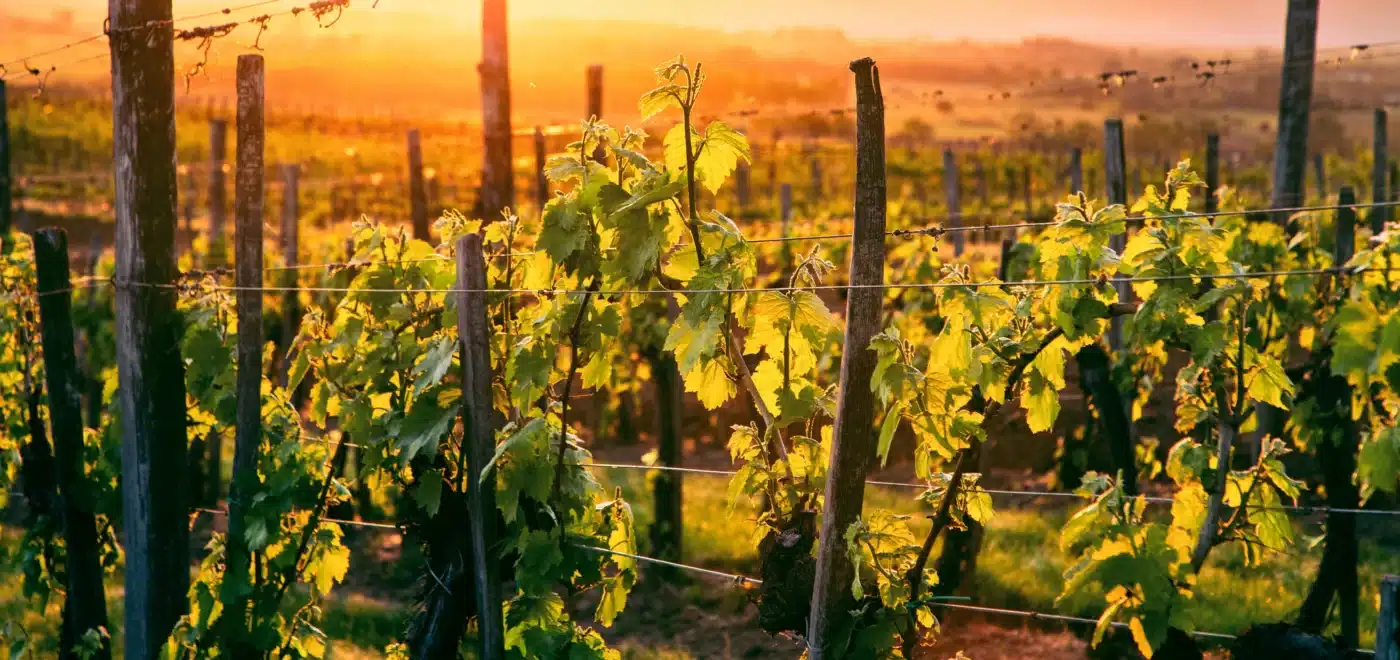
As we move into October, the harvest across Bordeaux vineyards is complete. For the people who make the wine, this is the most significant and intense period of the whole season.In just a few weeks in the cellar, a year’s work in the vineyard becomes wine, and those weeks largely shape the character of the new vintage.
I was recently at a client’s vineyard, walking through their cellar as the new wine took shape. It struck me that a short, plain-English review of the winemaking process would be a helpful tool for our clients to refer to. That’s especially true for anyone dreaming of buying a vineyard in Bordeaux, so this felt like a good moment to share the key steps.
Below are the 12 steps that take a red Bordeaux from the vine to the bottle. Whenever we use French cellar terms, we also give a simple explanation alongside them, and in addition, you will find a full glossary at the end.
In Brief
- Wine making in Bordeaux follows 12 steps, beginning with the harvest (vendanges) and ending with the bottle rest (garde).
- For a typical red Bordeaux, the journey from picking to bottle takes roughly 12 to 24 months.
- Fermentation, extraction and pressing happen in the weeks after harvest. This short window largely sets the style of the vintage.
- Blending (assemblage) of Merlot, Cabernet Franc and Cabernet Sauvignon sits at the heart of the Bordeaux winemaking process.
- For anyone buying a vineyard in Bordeaux, knowing these steps makes a cellar visit far easier to read.
The 12 steps at a glance
In general, for a typical red Bordeaux, the whole journey from picking to bottle takes roughly 12 to 24 months.
| Step | French term | What happens | Typical timing |
|---|---|---|---|
| 1. Harvest | Vendanges | Ripe grapes are picked | September–October |
| 2. Sorting and destemming | Tri / Éraflage | Poor grapes and stalks are removed | Same day |
| 3. Crushing and filling the tank | Foulage / Encuvage | Berries are split open and put in the vat | Same day |
| 4. Fermentation | Fermentation alcoolique | Yeast turns sugar into alcohol | About 7–12 days |
| 5. Extraction | Macération | Skins soak in the juice to give colour and flavour | 12–20 days in total |
| 6. Draining and pressing | Décuvage / Pressurage | Wine is drained off and the skins are pressed | 1–2 weeks |
| 7. Softening | Fermentation malolactique | Sharp acid turns into softer acid | A few weeks |
| 8. Ageing | Élevage | The wine rests and matures | 12–18 months |
| 9. Blending | Assemblage | Separate wines are combined into the final wine | During ageing |
| 10. Clarifying | Collage / Filtration | The wine is made clear and stable | Before bottling |
| 11. Bottling | Mise en bouteille | The wine is bottled and corked | After ageing |
| 12. Bottle rest | Garde | The wine settles in bottle before release | Months to years |
Steps 1–3: From vine to vat
Step 1 – Harvest (vendanges)
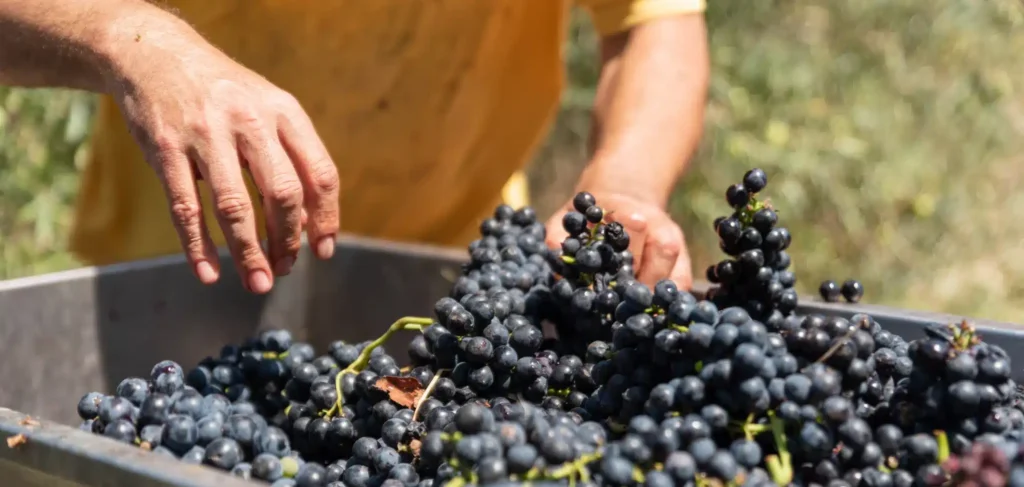
Vendanges simply means “the grape harvest”. The winemaker tastes the grapes in each plot and picks when sugar, acidity and flavour are in balance.
- Pickers usually harvest each grape variety separately (in Bordeaux, mainly Merlot, Cabernet Franc and Cabernet Sauvignon), often plot by plot.
- Pickers or machines bring in the grapes, ideally in the cool of the morning.
- A cellar can only process so much fruit each day, so estates plan their harvest dates around the size of the cellar as well as ripeness.
Step 2 – Sorting and destemming (tri and éraflage)
Tri means “sorting”. Sorters, working by hand at the table or with a machine, remove rotten, unripe or damaged grapes, along with leaves and insects. Éraflage means “destemming”. The winemaker strips off the green stalks (the rafle), which can give the wine a bitter edge.
Step 3 – Crushing and filling the tank (foulage and encuvage)
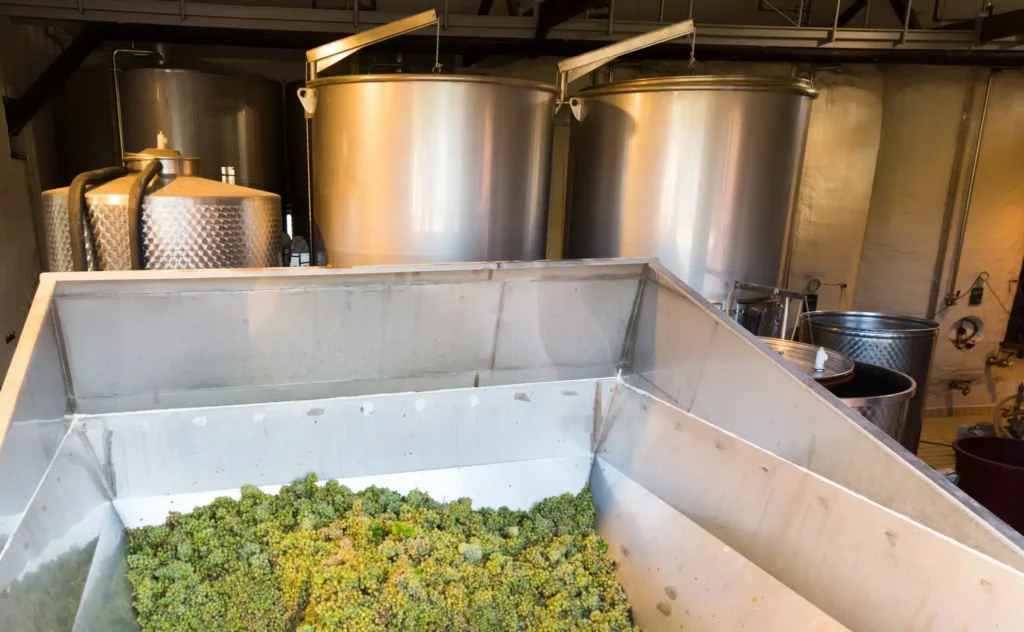
Foulage means lightly crushing the berries so the juice can escape. Encuvage means “putting into the vat” (cuve = tank).
- Winemakers call this mix of juice, skins, pulp and pips the moût (“must”).
- Many cellars chill the grapes first. Cool fruit stays fresh and gives the winemaker time before fermentation begins.
Steps 4–6: Making the wine in the tank
Step 4 – Fermentation (fermentation alcoolique)
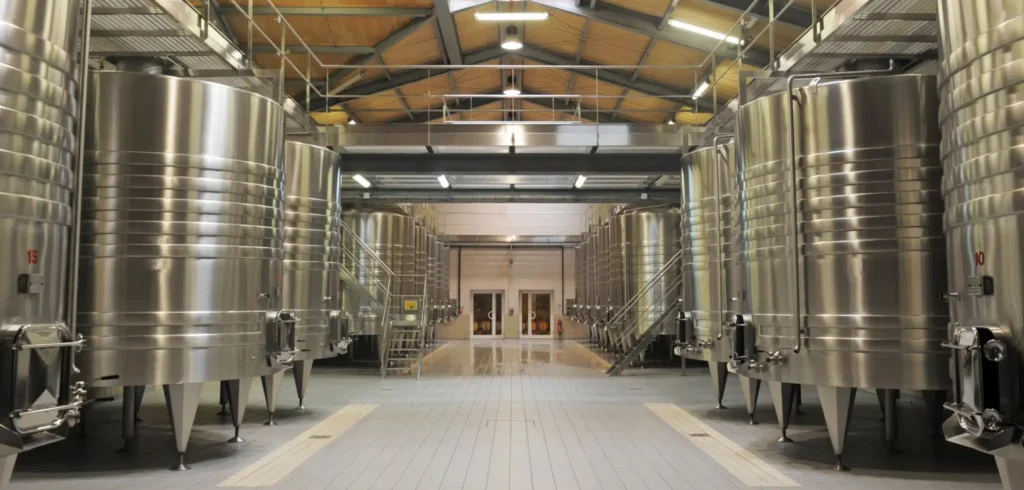
This is where juice becomes wine. Yeast eats the grape sugar and turns it into alcohol, carbon dioxide and heat.
- Yeast (levures): grapes carry natural yeasts (levures indigènes). Many cellars now add selected yeasts (levures sélectionnées) because they are more predictable.
- Temperature is the main control. Fermentation creates heat. If it gets too hot, the yeast can stop working and the fruit flavours cook. Most red Bordeaux ferments at around 22 to 30°C, with winemakers cooling or warming the tanks as needed.
- The cap (chapeau): the gas pushes skins and pips to the top of the tank, where they form a thick floating layer called the chapeau (“hat”).
Step 5 – Extraction (macération)
Macération means “soaking”. Grape juice is almost clear. The colour, tannin (the drying, grippy feel in your mouth) and much of the flavour come from the skins. Because the cap floats, the winemaker has to keep bringing the skins and juice back into contact:
| Technique | Plain meaning | How it works |
|---|---|---|
| Remontage | “Pumping over” | Juice is pumped from the bottom of the tank and sprayed over the cap. The traditional Bordeaux method. |
| Pigeage | “Punching down” | The cap is pushed down into the juice with a plate or paddle, giving a more even soak. |
| Saignée | “Bleeding” | Some juice is drawn off early so the remaining wine has more skins per litre and becomes richer. The pale juice drawn off can become rosé. |
This window of roughly two weeks sets the style of the wine. It might be light and fruity, or deep and powerful (corsé = full-bodied).
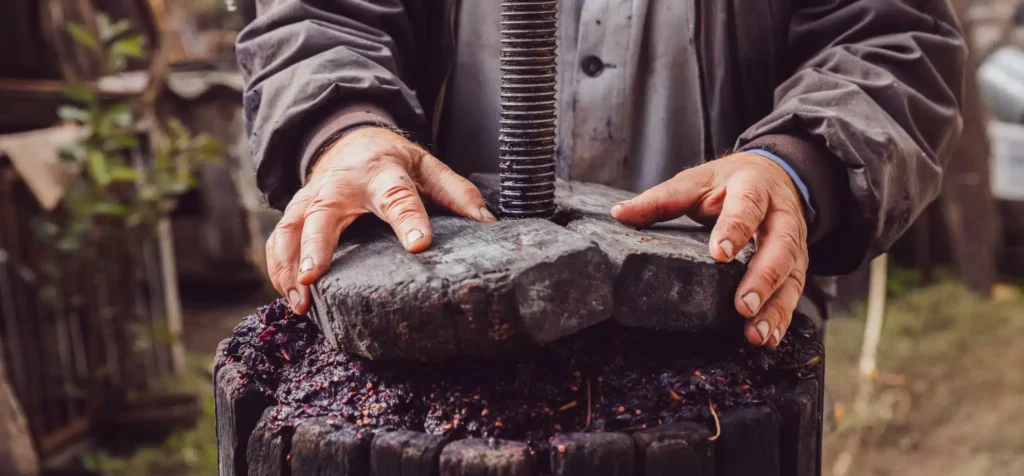
Step 6 – Draining and pressing (décuvage and pressurage)
Décuvage means “emptying the tank”. The wine that flows out by itself is the vin de goutte (“free-run wine”), the finest and softest part.
The mass of skins and pips left behind is the marc (“pomace”). It goes into a press (pressurage = pressing) to squeeze out the vin de presse (“press wine”), which is darker and more tannic. The winemaker keeps it apart and may add small amounts later if the blend needs more structure.
Steps 7–9: Turning young wine into finished wine
Step 7 – Softening (fermentation malolactique)
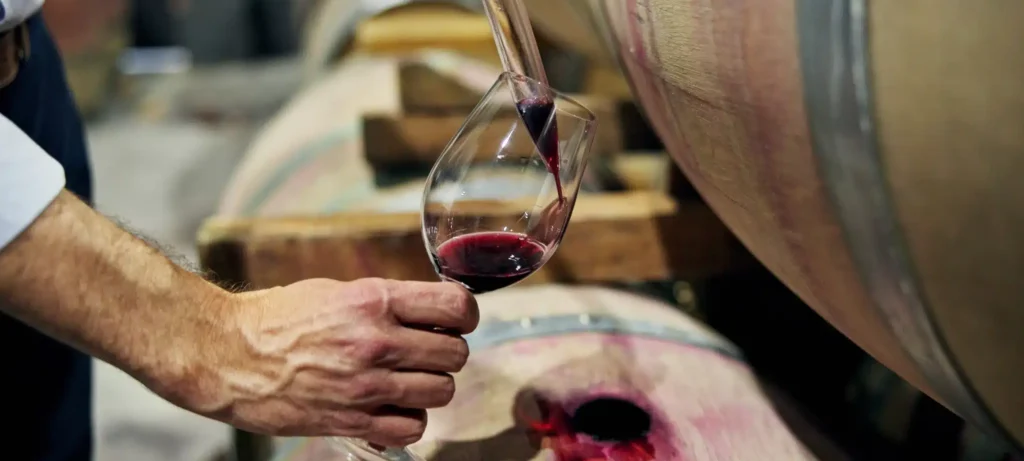
Often shortened to “the malo”. Natural bacteria convert the wine’s sharp malic acid (the acid in green apples) into softer lactic acid (the acid in milk). The wine becomes rounder and smoother. Almost all red Bordeaux goes through this, usually in the weeks after pressing.
Step 8 – Ageing (élevage)
Élevage literally means “raising”, as in raising a child. Young wine is raw and needs time to settle and come together.
- Where: in stainless steel or concrete tanks (cuves), or in oak barrels (barriques, which hold 225 litres in Bordeaux).
- Oak or no oak: new oak adds vanilla, toast and spice flavours and lets in tiny amounts of air. Some estates use no wood at all to keep the fruit fresh and the costs down.
- Racking (soutirage): every few months, the cellar team draws the clear wine off its sediment (lies, or “lees”, the dead yeast that settles at the bottom).
- Topping up (ouillage): the cellar team keeps the barrels full so that air does not spoil the wine.
Step 9 – Blending (assemblage)
Assemblage means “putting together”, and it’s at the heart of Bordeaux winemaking.The winemaker vinifies each grape variety, and often each plot, separately, creating a mosaic of different wines to work with.
- Merlot brings softness and plum fruit, Cabernet Franc freshness and perfume, and Cabernet Sauvignon structure and blackcurrant. A little press wine can add backbone.
- The winemaker tastes many trial blends to find the best recipe for the vintage.
- The aim is a wine that is recognisable from year to year, even though every harvest is different.
Steps 10–12: Into the bottle
Step 10 – Clarifying (collage and filtration)
Before bottling, the wine must be clear and stable so it doesn’t turn cloudy later.
- Fining (collage): the winemaker stirs in a substance such as egg white. It catches tiny floating particles and sinks with them to the bottom. This is a traditional Bordeaux practice.
- Filtration: the winemaker passes the wine through a fine filter. Some winemakers filter lightly or not at all to keep more flavour.
- Stabilisation: the winemaker chills the wine so that natural crystals (tartre, or tartrate, the harmless “wine diamonds”) form in the cellar rather than in the customer’s bottle.
Step 11 – Bottling (mise en bouteille)
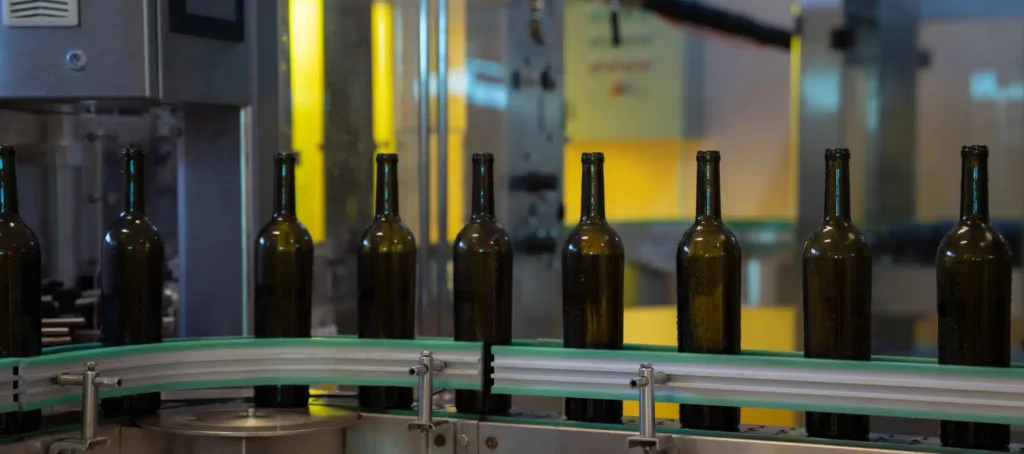
The estate then bottles the wine, seals it with a cork (bouchon) and labels it. Winemakers often use nitrogen to push air out of tanks and bottles so that oxygen doesn’t spoil the wine. “Mis en bouteille au château” on a label means the estate bottled the wine itself.
Step 12 – Bottle rest (garde)
Garde means “keeping”. After bottling, a wine needs a few months to recover from the journey. Simple, fruity wines are ready within a year or two. The best Bordeaux can improve for decades (vin de garde = a wine made for keeping).
The same 12 steps, very different wines
Winemakers across Bordeaux follow these 12 steps. Yet two neighbouring châteaux can make strikingly different wines. That’s because every winemaker brings their own nuances and strategies to each step, shaped by three things:
- Cost. New oak barrels, optical sorting machines and temperature-controlled tanks all cost money. Each estate has to decide where investment makes the biggest difference to the wine, and where a simpler, well-mastered approach does the job just as well.
- The taste they are seeking. A light, fruity wine for easy drinking calls for different choices from a powerful wine built to age for decades. Many winemakers start with the customer and the market in mind, then design the process backwards from there.
- The soils and microclimate. Bordeaux’s terroir varies field by field: gravel, clay and limestone, slopes and plateaus, river influence and frost pockets. Good winemakers adapt to the quirks of their own land and to the conditions of each vintage, rather than following a fixed recipe.
This is what makes Bordeaux so fascinating. Every estate follows the same framework, but each interprets it in its own way.
In Brief: the Bordeaux winemaking process
- Every red Bordeaux passes through the same 12 steps, grouped into four stages: vine to vat, the tank, young wine to finished wine, and the bottle.
- Temperature control during fermentation and the length of maceration shape the colour, tannin and style of the wine.
- Ageing (élevage) lasts 12 to 18 months, in tanks or in 225-litre oak barriques.
- Blending each variety and plot separately gives the winemaker room to adapt to every vintage.
- Cost, target style and terroir explain why two neighbouring châteaux can produce very different wines.
- A cellar visit shows a buyer the estate’s daily capacity, the age of its equipment and the style of wine it makes.
Why this matters if you’re buying a Bordeaux vineyard
If you’re looking at vineyards for sale in Bordeaux, knowing these steps helps you see what you’re really buying. A cellar visit makes much more sense when you know what each tank, press and barrel is for.
It also helps you ask the right questions:
- How much fruit can the cellar handle each day at harvest?
- How do winemakers control temperature during fermentation?
- Is the equipment recent, or will it need investment?
- What style of wine does the estate make, and who buys it?
- How do the soils and plots shape the wine?
At Vineyards-Bordeaux, Michael Baynes and our team help clients find, assess and buy Bordeaux vineyards, from small family estates to classified châteaux. If you’d like to talk about vineyards for sale in Bordeaux, or would simply like to visit a working cellar during the season, please get in touch.
Glossary of French wine terms
| French term | Plain English |
|---|---|
| Appellation (AOC) | A legally defined wine area with its own rules, e.g. Pomerol or Saint-Émilion |
| Assemblage | Blending separate wines into the final wine |
| Barrique | Oak barrel, 225 litres in Bordeaux |
| Bouchon | Cork |
| Chai | The cellar building where wine is made and aged |
| Chapeau | The “cap” of skins and pips floating on top of the tank |
| Collage | Fining: clearing the wine with egg white or similar |
| Corsé | Full-bodied, powerful |
| Cuve | Tank or vat |
| Cuvaison | The total time the wine spends in the tank with its skins |
| Décuvage | Draining the wine out of the tank after soaking |
| Élevage | Ageing and caring for the wine before bottling |
| Éraflage | Destemming: removing the stalks |
| Encuvage | Filling the tank with grapes |
| Fermentation alcoolique | Yeast turning sugar into alcohol |
| Fermentation malolactique | Bacteria turning sharp acid into softer acid |
| Foulage | Lightly crushing the grapes |
| Garde / Vin de garde | Keeping / a wine made to age for years |
| Hectolitre (hl) | 100 litres, about 133 standard bottles |
| Levures | Yeasts (indigènes = natural, sélectionnées = chosen and added) |
| Lies | Lees: dead yeast and sediment at the bottom |
| Macération | Soaking skins in the juice for colour and flavour |
| Marc | The solid skins and pips left after draining |
| Millésime | Vintage: the year the grapes were harvested |
| Mise en bouteille | Bottling |
| Moût | Must: the juice, skins and pips before they become wine |
| Ouillage | Topping up barrels to keep air out |
| Pigeage | Punching the cap down into the juice |
| Pressurage | Pressing |
| Remontage | Pumping juice from the bottom over the cap |
| Saignée | “Bleeding” off some juice to concentrate the red |
| Soutirage | Racking: moving clear wine off its sediment |
| Terroir | The combined effect of soil, climate and site on a wine |
| Tri | Sorting the grapes |
| Vendanges | The grape harvest |
| Vin de goutte | Free-run wine: flows out on its own, the finest part |
| Vin de presse | Press wine: squeezed from the skins, darker and firmer |
Frequently Asked Questions
What are the main steps of wine making in Bordeaux?
A red Bordeaux goes through 12 steps: harvest, sorting and destemming, crushing, fermentation, extraction, draining and pressing, malolactic softening, ageing, blending, clarifying, bottling and bottle rest. The first six take place in the weeks after harvest. The last six unfold over the following one to two years.
How long does it take to make a red Bordeaux wine?
It takes roughly 12 to 24 months to take a red Bordeaux from the vine to the bottle. Ageing (élevage) takes up most of that time, usually 12 to 18 months. The finest wines then rest in bottle for months or years before release.
Which grape varieties go into red Bordeaux?
Red Bordeaux draws mainly on Merlot, Cabernet Sauvignon and Cabernet Franc. The rules also allow smaller amounts of Petit Verdot, Malbec (Côt) and Carmenère. Since 2021, AOC Bordeaux and Bordeaux Supérieur may include a handful of new varieties, among them Marselan and Touriga Nacional, in limited proportions, as a response to climate change.
What is the difference between free-run wine and press wine?
Free-run wine (vin de goutte) flows out of the tank on its own and is the finest, softest part. Press wine (vin de presse) is squeezed from the remaining skins and pips. It is darker and more tannic, so winemakers keep it separate and add small amounts only when the blend needs more structure.
Why are Bordeaux wines aged in oak barrels?
Oak barrels add vanilla, toast and spice notes and let in tiny amounts of air, which helps the wine soften and mature. In Bordeaux the standard barrel, the barrique, holds 225 litres. Some estates prefer stainless steel or concrete tanks to keep the fruit fresh and control costs.
What does assemblage mean in Bordeaux winemaking?
Assemblage is the blending of separately made wines into the final wine. Each grape variety, and often each plot, is vinified on its own. The winemaker then tastes trial blends to build a wine that stays recognisable from one vintage to the next. Top estates usually finalise the blend in the spring after harvest, ahead of the en primeur tastings.
When does the grape harvest take place in Bordeaux vineyards?
The harvest in Bordeaux vineyards generally runs from September to October. White grapes for dry wines are usually picked first, often from late August. Merlot follows, then Cabernet Franc and Cabernet Sauvignon, which ripen later. In Sauternes, picking for sweet wines can continue into November.
What should I check in the cellar when buying a vineyard in Bordeaux?
When buying a vineyard in Bordeaux, check how much fruit the cellar can handle each day at harvest, how fermentation temperature is controlled and how recent the equipment is. Ask what style of wine the estate makes and who buys it. Our selection of Bordeaux vineyards for sale and our guide on how to invest in a vineyard are a useful starting point before any visit.
Sources
- CIVB, Conseil Interprofessionnel du Vin de Bordeaux: Bordeaux grape varieties and winemaking (bordeaux.com).
- INAO, Institut National de l’Origine et de la Qualité: cahier des charges of the AOC Bordeaux and Bordeaux Supérieur.
- Decanter, “What are the new Bordeaux grapes?” (decanter.com/learn/new-bordeaux-grapes-wines-420290/).
Michael Baynes is co-founder of Maxwell-Baynes Christie’s International Real Estate and Vineyards-Bordeaux. He has more than 35 years in property, specialising in Bordeaux vineyards and châteaux for almost 20 years.
