
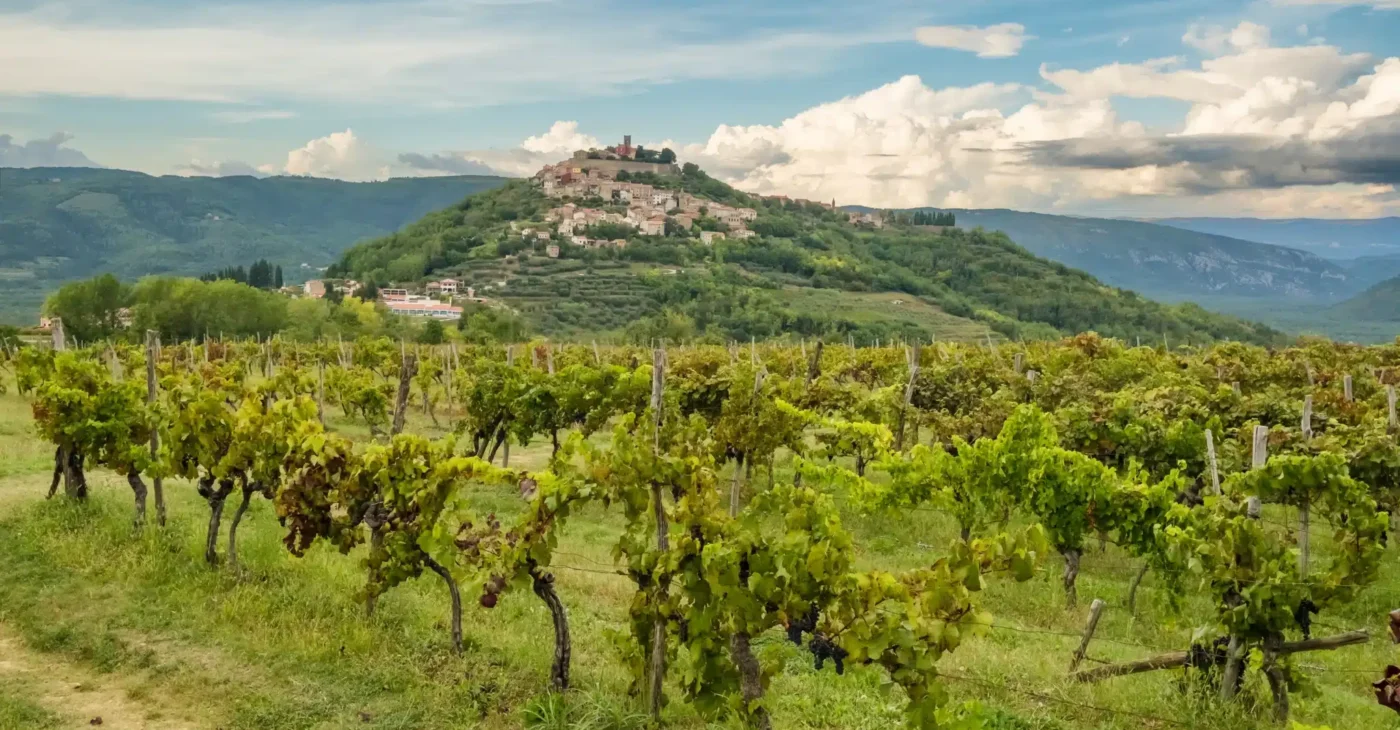
Saint-Émilion is the one place in Bordeaux where a château can lose its rank. In fact, every ten years the appellation reopens its own hierarchy, tastes the wines again and rewrites the list. Above all, the 2022 edition proved how much is at stake: three of the four estates at the summit walked away rather than compete. Finally, what remains is a classification that shapes reputations, bottle prices and, increasingly, the value of the land itself
In Brief
- Saint-Émilion Grand Cru is both an appellation and the gateway to a classification. The two share a name and cause constant confusion.
- Three tiers sit above the appellation: Grand Cru Classé, Premier Grand Cru Classé B and Premier Grand Cru Classé A.
- The classification was created in 1955 and is revised roughly every decade. The 2022 list holds 85 châteaux and runs through the 2031 harvest.
- Château Pavie and Château Figeac are the only Premier Grand Cru Classé A estates today.
- Château Ausone, Château Cheval Blanc and Château Angélus withdrew before the 2022 review. Château La Gaffelière followed.
- Classified status now weighs heavily on vineyard land values, in a Bordeaux market where generic appellations have collapsed.
What Is Saint-Émilion Grand Cru?
An appellation and a classification within the same name
First of all, Saint-Émilion Grand Cru is a protected designation of origin. Moreover, it covers the same ground as the Saint-Émilion appellation, on the right bank of the Dordogne. Altogether 5,400 hectares are shared between the two appellations across nine communes. Therefore, any grower inside that perimeter may claim it, provided the wine meets stricter rules.
Those rules carry real weight. Saint-Émilion Grand Cru caps yields at 46 hectolitres per hectare against 53 for Saint-Émilion, imposes a longer minimum ageing period and submits every batch to compulsory inspection before release. A wine labelled Saint-Émilion Grand Cru is therefore a wine that passed a tasting panel. It is not a ranked wine.
The classification sits on top of that appellation. More specifically, it selects a minority of estates, ranks them, and allows them to print Grand Cru Classé or Premier Grand Cru Classé on the label. In fact, buyers reading a wine list often merge the two. Then, the gap between them is the single most useful thing to understand about Saint-Émilion.
The three tiers of Saint-Émilion Grand Cru wines
| Level | Number of châteaux (2022) | What it recognises | Emblematic examples |
|---|---|---|---|
| Saint-Émilion Grand Cru (appellation only) | Several hundred producers | Lower yields, longer ageing, batch approval by tasting | Wide field of family estates |
| Grand Cru Classé | 71 | Ten vintages tasted, minimum 14/20 overall score | Clos des Jacobins, Balestard La Tonnelle, Tour Saint-Christophe |
| Premier Grand Cru Classé B | 12 | Fifteen vintages tasted, minimum 16/20 | Canon, Clos Fourtet, Troplong Mondot |
| Premier Grand Cru Classé A | 2 | Highest scores plus exceptional reputation and ageing record | Pavie, Figeac |
The Saint-Émilion Classification: A Unique System in Bordeaux
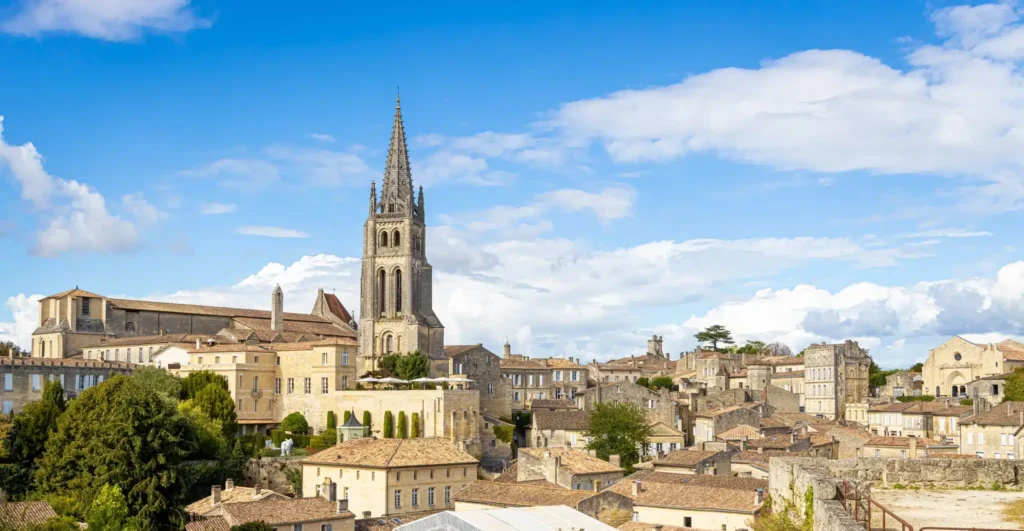
Created in 1955, one century after the 1855 Médoc Classification
The growers’ syndicate voted the principle in 1954, and then the first list appeared in 1955. Altogether, that inaugural classification named 75 châteaux: 63 Grands Crus Classés and 12 Premiers Grands Crus Classés.
A century earlier, the Médoc had received its own definitive ranking, still in force today and detailed in our study of Bordeaux’s First Growths. The 1855 list was built on broker valuations and has barely moved since. Saint-Émilion chose the opposite principle. Its founders wrote revision into the rules from the start, which was an unusually modern decision for the period.
Revised every ten years: what it means and why it matters
Revision means genuine risk. An estate can be promoted, held in place, demoted or dropped entirely. The list ran to 84 châteaux in 1969, 74 in 1986, 68 in 1996, 72 in 2006 and 82 in 2012, before reaching 85 in 2022. The 2006 edition was contested by demoted properties and eventually annulled by the courts, which forced a transitional arrangement until 2012.
Candidacy is voluntary. Nobody is classified automatically, and an owner who declines to apply simply disappears from the list while keeping the appellation. That detail became central in 2022.
How the classification is decided: tasting, ageing, terroir, reputation
The 2020 decree entrusted the process to the INAO, which appointed a seven-member classification commission. All in all, 144 owners filed applications between March and June 2021. Notably, tasting carries 50% of the final score at every level. Overall, that share stood at only 30% in 2012.
The remaining half is where the argument lives. For instance, Grand Cru Classé candidates are assessed on reputation, promotion, wine tourism and distribution for 20%, on terroir for 20% and on winemaking and ageing conditions for 10%. In addition, they submit ten vintages and must reach 14/20. By contrast, Premier Grand Cru Classé candidates see reputation and commercial activity climb to 35%, while terroir falls to 10% and technical criteria to 5%. Consequently, fifteen vintages are tasted and the minimum rises to 16/20.
Read that table twice. At the top of the hierarchy, terroir counts for one tenth of the score and marketing for more than a third.
The 2022 Revision: The Most Controversial Reclassification in History
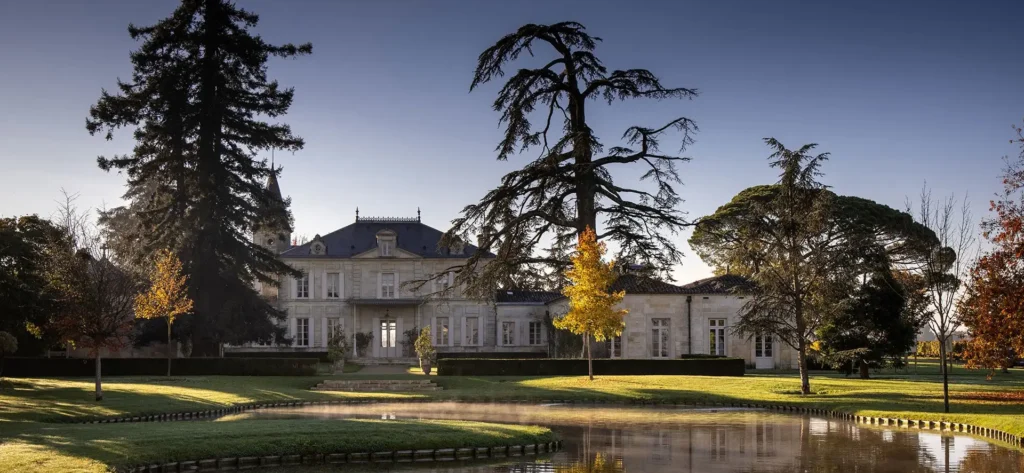
What happened in 2022: the withdrawal of Cheval Blanc and Ausone
In June 2021, the owners of Château Ausone and Château Cheval Blanc announced they would not apply, criticising the commission’s assessment criteria. Soon afterwards, Château Angélus withdrew on 5 January 2022. Finally, Château La Gaffelière followed in June of the same year.
Their objection was precise. The departing estates argued that the criteria had drifted away from terroir and wine quality toward secondary elements such as marketing, social media presence and wine tourism. Three of the four Premier Grand Cru Classé A châteaux of 2012 left in fourteen months. No classification in Bordeaux had lost its summit that way before.
Figeac promoted, Pavie confirmed at Premier Grand Cru Classé A
Finally, the INAO published the definitive list on 8 September 2022: 85 châteaux, 14 Premiers Grands Crus Classés and 71 Grands Crus Classés, valid for the 2022 to 2031 harvests.
Château Figeac, widely considered overlooked in 2012, was the single estate promoted to Premier Grand Cru Classé A, joining Château Pavie, which had reached that rank ten years earlier. Pavie was not promoted in 2022. It was confirmed, and it became the senior name of a category reduced to two.
| Movement | Estate | Status before 2022 | Status after 2022 |
|---|---|---|---|
| Withdrawal | Château Ausone | Premier Grand Cru Classé A | Unclassified, appellation only |
| Withdrawal | Château Cheval Blanc | Premier Grand Cru Classé A | Unclassified, appellation only |
| Withdrawal | Château Angélus | Premier Grand Cru Classé A | Unclassified, appellation only |
| Withdrawal | Château La Gaffelière | Premier Grand Cru Classé B | Unclassified, appellation only |
| Promotion | Château Figeac | Premier Grand Cru Classé B | Premier Grand Cru Classé A |
| Confirmation | Château Pavie | Premier Grand Cru Classé A | Premier Grand Cru Classé A |
The consequences for the appellation and the wine market
The classification lost symbolic weight at the top and gained breadth below. Indeed, fifteen estates were promoted to Grand Cru Classé, among them Badette, Clos Dubreuil, Lassègue, Mangot, Montlabert, Rol Valentin and Tour Baladoz. In contrast, the 2022 list was a commercial turning point.
Collectors barely blinked at the departures. After all, Cheval Blanc and Ausone gave up a distinction they had held for 66 years, although neither appears to have suffered on the secondary market. In short, the market had already priced both estates well above the classification that named them.
The Great Châteaux of Saint-Émilion Grand Cru Today
The current Premier Grand Cru Classé A: Pavie and Figeac
Pavie occupies the south-facing limestone and clay slope below the village, now a single block of around 35 hectares. Its wines are dense, built for long ageing, and were at the centre of Bordeaux’s stylistic debates in the early 2000s.
Figeac answers with a different geology. Its gravel soils support a blend split almost evenly between Cabernet Sauvignon, Cabernet Franc and Merlot, which earned it the nickname of the Médoc of Saint-Émilion. The promotion completed an ambition pursued across two generations of the Manoncourt family.
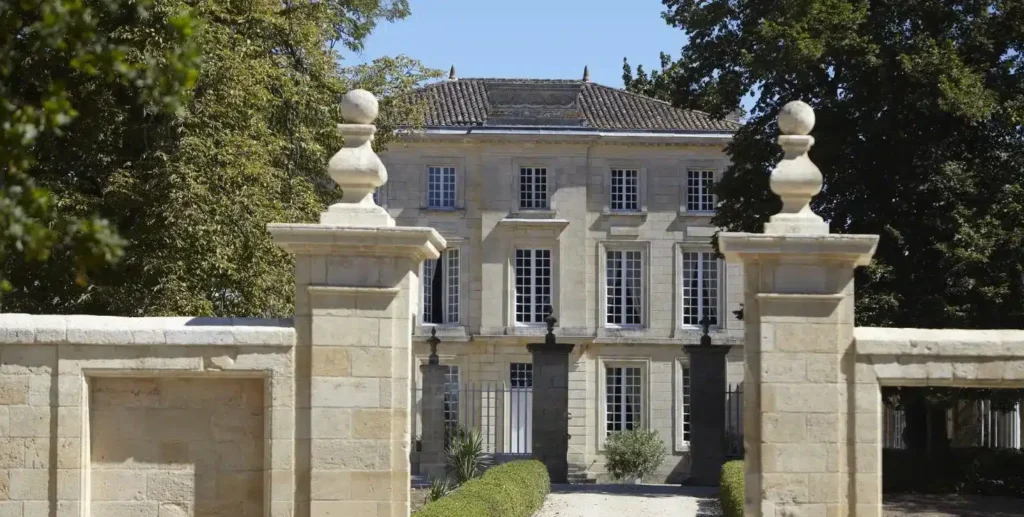
The Premier Grand Cru Classé B: Canon, Clos Fourtet, Troplong Mondot and the others
Twelve estates hold the B rank under the 2022 list: Beauséjour (Héritiers Duffau-Lagarrosse), Beau-Séjour Bécot, Bélair-Monange, Canon, Clos Fourtet, Canon La Gaffelière, Larcis Ducasse, La Mondotte, Pavie Macquin, Troplong Mondot, Trotte Vieille and Valandraud.
The group is stylistically wide. Canon and Clos Fourtet work the limestone plateau and produce precise, mineral wines. Valandraud began as a garage project in 1991 and reached Premier Grand Cru Classé B in 2012, which shows what a revisable classification allows.
| Château | Tier (2022) | Reached current tier |
|---|---|---|
| Pavie | Premier Grand Cru Classé A | 2012 |
| Figeac | Premier Grand Cru Classé A | 2022 |
| Beauséjour (Héritiers Duffau-Lagarrosse) | Premier Grand Cru Classé B | 1955 |
| Beau-Séjour Bécot | Premier Grand Cru Classé B | 1996 (reinstated) |
| Bélair-Monange | Premier Grand Cru Classé B | 1955 (as Château Bélair) |
| Canon | Premier Grand Cru Classé B | 1955 |
| Clos Fourtet | Premier Grand Cru Classé B | 1955 |
| Trotte Vieille | Premier Grand Cru Classé B | 1955 |
| Pavie Macquin | Premier Grand Cru Classé B | 2006 |
| Troplong Mondot | Premier Grand Cru Classé B | 2006 |
| Canon La Gaffelière | Premier Grand Cru Classé B | 2012 |
| Larcis Ducasse | Premier Grand Cru Classé B | 2012 |
| La Mondotte | Premier Grand Cru Classé B | 2012 |
| Valandraud | Premier Grand Cru Classé B | 2012 |
| Balestard La Tonnelle | Grand Cru Classé | 1955 |
| Barde-Haut | Grand Cru Classé | 2012 |
| Fombrauge | Grand Cru Classé | 2012 |
| Lassègue | Grand Cru Classé | 2022 |
| Tour Saint-Christophe | Grand Cru Classé | 2022 |
Notable Grand Cru Classé estates worth knowing
The 71 Grands Crus Classés form the working heart of the appellation. Balestard La Tonnelle, Clos des Jacobins, Fombrauge, Quintus and Tour Saint-Christophe sit here. This tier is also where transactions happen most often, since the properties remain within reach of private buyers. Before committing to a classified property, buyers should familiarise themselves with the key questions to ask when acquiring a Bordeaux vineyard.
Cheval Blanc and Ausone: the ex-Premier Cru A story
Both estates continue to label their wines Saint-Émilion Grand Cru, without any classified mention. Cheval Blanc, bought in 1998 by Bernard Arnault and Albert Frère, remains the most celebrated Cabernet Franc based wine in the world. Ausone works barely 7.3 hectares on the limestone escarpment. Their prices confirm that scarcity and track record outrank any official list.
The Style of Saint-Émilion Grand Cru Wines
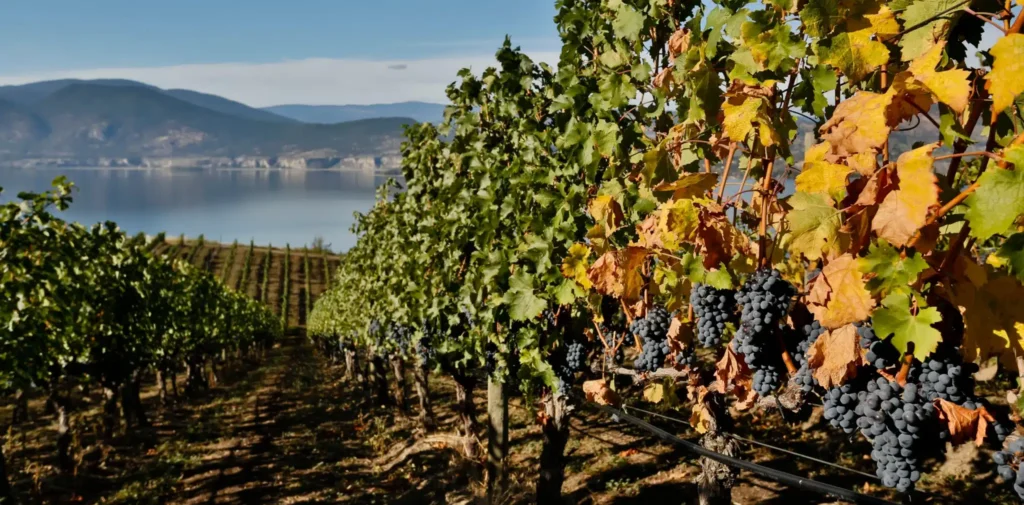
Merlot-driven wines with a Cabernet Franc backbone
Merlot dominates almost every blend. It ripens early on clay and limestone and brings flesh, dark fruit and a round texture. Cabernet Franc supplies structure and a savoury finish. Cabernet Sauvignon appears in smaller proportions, mostly on gravel.
Terroir drives the differences more than technique. The limestone plateau gives tension and length. The sandy zones near Libourne produce lighter, earlier drinking wines. Gravel plots on the Pomerol border yield the most Médoc-like profiles of the appellation.
Aromatic profile and ageing potential
Young classified wines show plum, black cherry, violet and graphite, with oak spice from barrel ageing. Time brings truffle, tobacco leaf and leather.
Ageing potential follows the hierarchy. Appellation-level wines drink best between three and eight years. A Grand Cru Classé typically rewards ten to twenty. A Premier Grand Cru Classé in a strong vintage holds for several decades.
How Much Does a Bottle of Saint-Émilion Grand Cru Cost?
Grand Cru vs Grand Cru Classé vs Premier Grand Cru Classé prices
Indicative US retail levels for recent vintages:
- Saint-Émilion Grand Cru, appellation only: roughly $20 to $45
- Grand Cru Classé: roughly $45 to $150
- Premier Grand Cru Classé B: roughly $120 to $350
- Premier Grand Cru Classé A: Figeac averages close to $303 per bottle and Pavie close to $404
- Former Premier Grand Cru Classé A: Cheval Blanc averages above $800
Auction highlights and the secondary market
The secondary market has corrected hard. Indeed, Liv-ex’s Right Bank 500 index peaked in January 2023, then fell by 30.8% to September 2025. Afterwards, it rallied slightly, although it remains around 29% below its high. As a result, older vintages of the leading estates now offer better value than recent releases. Nevertheless, two rules survive every cycle: provenance governs price at auction, and large formats from acclaimed vintages outperform standard bottles.
The Classification and Vineyard Value: A Property Perspective
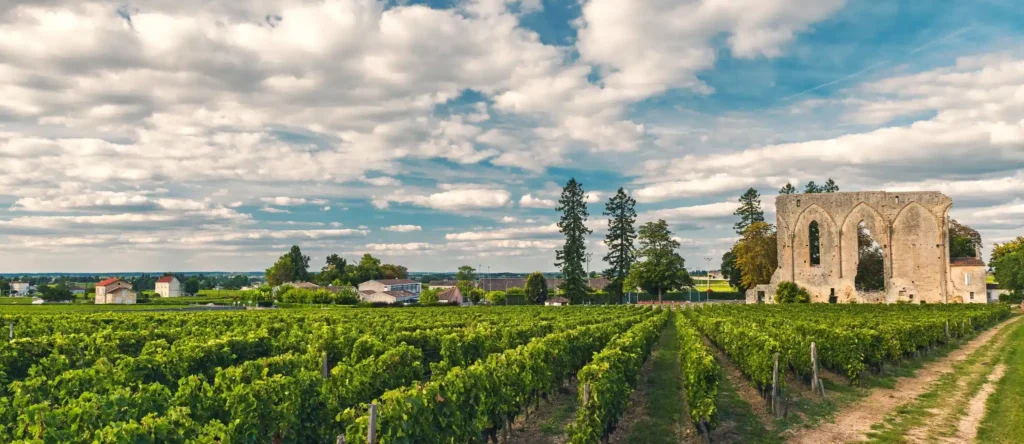
But, how classification impacts land prices per hectare
Land in Saint-Émilion has never traded on a single price. For instance, SAFER reports that the least attractive terroirs in the appellation change hands at around €150,000 per hectare. Meanwhile, values on the best sites are being recalibrated by buyers making aggressive offers. The dominant figure quoted for the appellation sits near €250,000 per hectare. On the other hand, classified plots on the plateau trade far above it.
So, the contrast with the rest of Bordeaux has become brutal. Generic Bordeaux and Côtes de Bordeaux now trade on the same basis, around €8,000 per hectare, the lowest level since 2011, while Saint-Émilion itself fell 7% in 2024. Estate valuation in this context becomes highly technical, as we explain in our practical breakdown of how to value a wine estate.
What promotion or demotion does to an estate’s valuation
A classified mention is a permanent premium attached to the land, renewed every ten years. As a result, it lifts the price per bottle, widens distribution and raises the multiple applied to the whole property. In practice, promotion to Grand Cru Classé can reprice an estate within a single campaign.
The reverse risk is what makes Saint-Émilion unlike any other Bordeaux appellation. In fact, a demotion, or a failed candidacy, removes a commercial argument that the balance sheet was built on. Our regular reports on the current state of the Bordeaux vineyard market confirm the widening price gap between classified and unclassified terroirs. Discreet transactions on classified estates rarely appear on public listings, and remain accessible through specialists in Saint-Émilion wine properties.
In Brief: Key Takeaways
- Saint-Émilion Grand Cru on a label means the appellation. Grand Cru Classé and Premier Grand Cru Classé mean the classification.
- The 2022 list holds 85 châteaux and expires after the 2031 harvest.
- Tasting counts for 50% of the score. Reputation and commercial activity count for 35% at Premier Grand Cru Classé level.
- Pavie and Figeac stand alone at Premier Grand Cru Classé A.
- Ausone, Cheval Blanc and Angélus left voluntarily and lost nothing in market terms.
- Classified status now separates two land markets inside the same appellation.
Frequently Asked Questions About Saint-Émilion Grand Cru
What is Saint-Émilion Grand Cru exactly?
Saint-Émilion Grand Cru is a Bordeaux appellation, not a ranking. It covers the same territory as Saint-Émilion but applies stricter rules: lower yields, longer ageing and compulsory tasting approval before release.
What is the difference between Grand Cru and Grand Cru Classé?
Grand Cru is the appellation. Grand Cru Classé is a rank inside the classification, held by 71 châteaux under the 2022 list. Every Grand Cru Classé wine is a Saint-Émilion Grand Cru, and the reverse is false. The classified mention requires a successful application, ten vintages assessed by blind tasting and a minimum score of 14/20.
How often is the Saint-Émilion classification revised?
Approximately every ten years. Editions were published in 1955, 1969, 1986, 1996, 2006, 2012 and 2022. The current list applies to the 2022 through 2031 harvests, which places the next revision around 2032.
Why did Cheval Blanc and Ausone leave the classification in 2022?
Both announced in June 2021 that they would not apply, objecting to the assessment criteria. They argued that reputation, communication and wine tourism carried too much weight against terroir and wine quality. Angélus withdrew in January 2022 for the same reasons, and La Gaffelière followed in June 2022.
Which châteaux are Premier Grand Cru Classé A today?
Château Pavie and Château Figeac. Pavie reached the rank in 2012 and was confirmed in 2022. Figeac was promoted in 2022 and was the only estate elevated to the top tier that year.
How much does a Saint-Émilion Grand Cru wine cost?
Entry-level appellation wines usually sell for $20 to $45 in the United States. Grand Cru Classé bottles run from roughly $45 to $150, and Premier Grand Cru Classé B from around $120 to $350. Figeac averages near $303 and Pavie near $404, while the unclassified Cheval Blanc averages above $800.
What is the difference between Saint-Émilion Grand Cru and First Growth Bordeaux?
First Growth refers to the five top estates of the 1855 Médoc classification, on the left bank, where Cabernet Sauvignon leads the blends. Saint-Émilion sits on the right bank, works mainly with Merlot and Cabernet Franc, and runs its own classification created in 1955. The 1855 list has been fixed for 170 years. The Saint-Émilion list is rewritten every decade.
How long can a Saint-Émilion Grand Cru wine age?
It depends on the tier. Appellation-level wines are best within three to eight years. Grand Cru Classé bottles generally improve for ten to twenty years. Premier Grand Cru Classé wines from strong vintages age thirty years or more, and the historic estates regularly exceed fifty.
Can you buy a classified wine estate in Saint-Émilion?
Yes, though the market is narrow and largely private. Classified properties in Saint-Émilion change hands rarely, often without a public listing, and transactions are handled discreetly between advisers. Land values inside the appellation run from roughly €150,000 per hectare on the least favoured sites to several hundred thousand euros on classified plateau terroirs. Buyers generally work with a specialist familiar with the vineyard market and the classification calendar, since the next revision affects future valuation.
Conclusion
Saint-Émilion built the only classification in Bordeaux that can still surprise anyone. That openness has a cost, visible in the 2022 departures, and a benefit, visible in the fifteen estates promoted the same year. For anyone reading the appellation as an asset rather than a wine list, the classification works as a valuation instrument with a ten-year clock attached.
Vineyards-Bordeaux advises buyers and owners of classified and unclassified estates across Saint-Émilion and the wider Bordeaux vineyard. Our team is available to discuss valuations, confidential sales and acquisition strategy.
Sources
- INAO, Saint-Émilion grand cru: classification for the next decade, September 2022
- Conseil Interprofessionnel du Vin de Bordeaux, Saint-Émilion appellation and classification pages, bordeaux.com
- Jane Anson, Inside Bordeaux, St Emilion 2022 Classification, September 2022
- The Wine Cellar Insider, List of Current St. Emilion Classifications
- Decanter, Decanter Fine Wine Index, Liv-ex Right Bank 500 data, 2026
- Wine-Searcher, average market prices, Château Pavie, Château Figeac, Château Cheval Blanc
- SAFER, Le prix des terres, vineyard land market report, 2025
- Wikipédia, Classements des vins de Saint-Émilion
